The iPhone 18 Pro is not your HomeKit upgrade
'HomeKit upgrade' has two meanings in 2026: the new Apple Home architecture that Apple has enforced since February 10, and the iPhone 18 Pro arriving this September. This guide keeps them separate with a dated verdict on what the new phone does and doesn't change for your Thread and Matter setup.
Last updated
As of August 25, 2026, the clean answer to “iPhone 18 Pro smart home features HomeKit upgrade” is this: buying the next Pro iPhone is not how you satisfy Apple’s Home architecture requirement. The mandatory HomeKit upgrade people saw warnings about is already an Apple Home software migration, enforced earlier this year. The iPhone 18 Pro may become a nicer controller, a better local pairing device, and a convenient surface for iOS 26 Home features, but it is not the thing that runs your home.
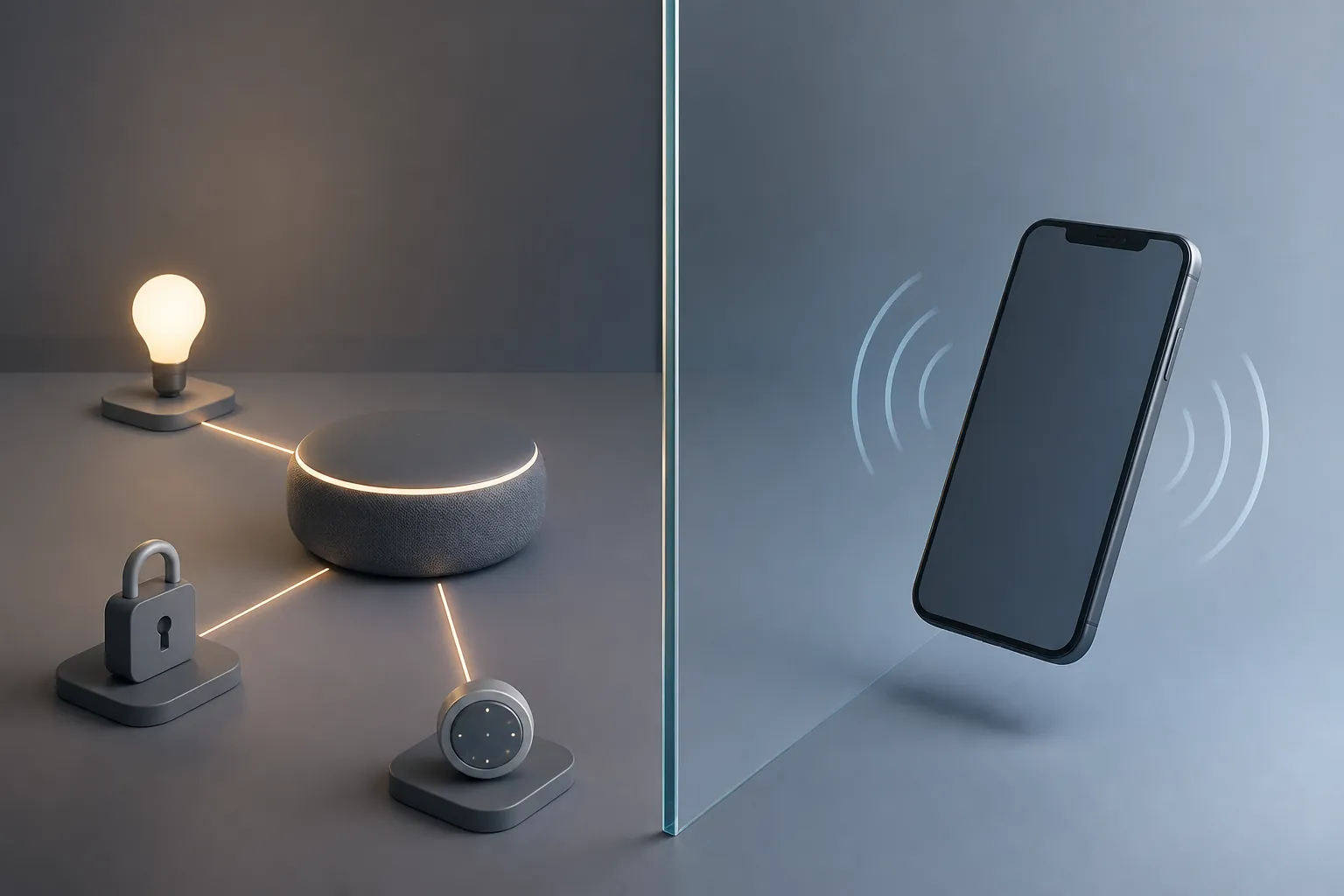
The distinction matters because Apple’s Home warnings were not waiting for a September phone cycle. Apple’s new Home architecture was introduced with iOS 16.2, temporarily removed in December 2022, re-released with iOS 16.4, and support for the previous architecture ended on February 10, 2026; Apple also says homes that had not upgraded may be upgraded automatically after that date. [1][2]
So the buying decision starts in the equipment closet, not at the Apple Store. If your Apple Home is blocked, unreliable, or still tied to unsupported devices, check the home hub and OS versions first. If your home is already on the new architecture with a supported Apple TV or HomePod-class hub, the iPhone 18 Pro is optional polish, not the missing migration.
“HomeKit upgrade” now means two different things
Apple still has a long tail of users who say “HomeKit” when they mean the Home app, Matter accessories, Thread networks, automations, HomeKit Secure Video, and whatever their Apple TV is doing in the background. That shorthand is understandable. It is also why the 2026 confusion is so easy to create.
| The phrase you see | What it actually refers to in 2026 | What changes it |
|---|---|---|
| Home architecture upgrade | Apple’s new Home architecture, already enforced after February 10, 2026 | Supported hubs and devices on the required OS versions, not a new iPhone [1] |
| iPhone 18 Pro upgrade | A rumored September 2026 phone hardware cycle with new radios and iOS 26 support | A phone purchase, if you want the new controller hardware and verified launch features [5][6] |
| Thread or Matter upgrade | Accessory-network behavior inside the home | A real home hub or border router setup; an iPhone radio alone does not become the home hub [4] |
Only the first line was mandatory. The second may be useful. The third depends on which device is actually maintaining the network when your phone is out of the house, asleep, updating, or in someone else’s pocket.
The architecture event is already over
Apple’s support timeline is the part to trust here. The new Home architecture was not a quiet iPhone 18 Pro dependency planted for later. It shipped in the iOS 16 era, had a messy enough first run that Apple pulled it in December 2022, returned with iOS 16.4, and became the supported path by February 2026. [1][2]
For any device that accesses an upgraded home, Apple lists minimum software versions: iOS 16.2, iPadOS 16.2, macOS 13.1, tvOS 16.2, and watchOS 9.2 or later. Apple also states that iPad is not supported as a home hub on the upgraded architecture. [1]
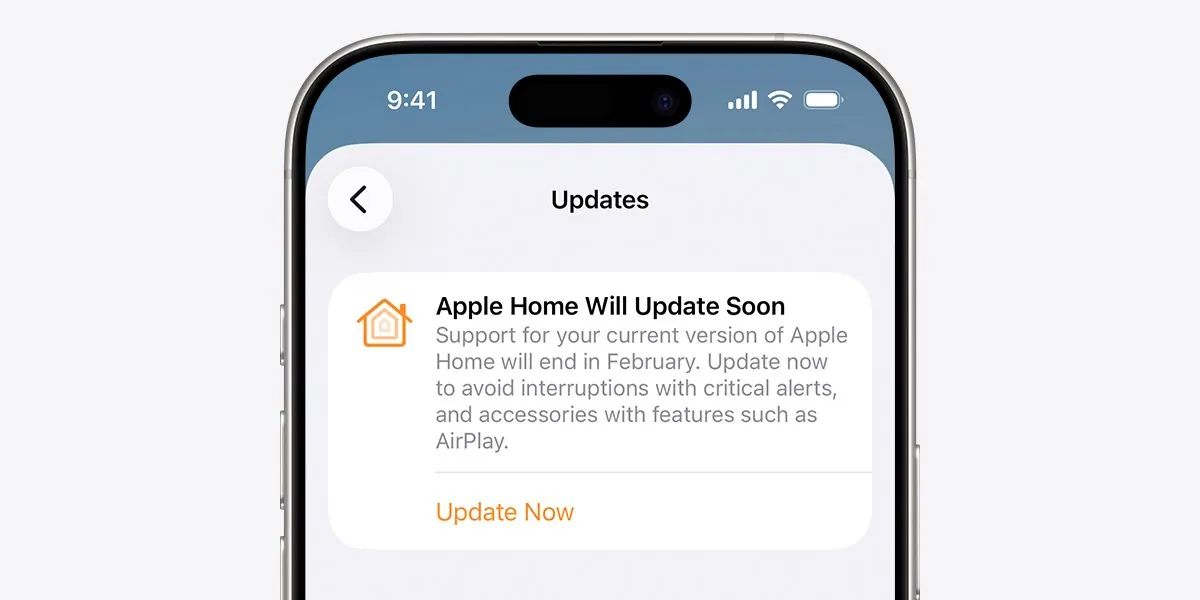
That is the practical reason a new phone cannot rescue an old setup by itself. If someone in the household still uses an older iPad, Mac, Apple Watch, or Apple TV that cannot meet those minimums, the problem is not that the family skipped the iPhone 18 Pro. The problem is that the upgraded home expects clients and hubs that can participate in the newer Home architecture.
The cost of postponing was not just an annoying badge in the Home app. Apple’s final-warning coverage ahead of the cutoff pointed to features tied to the newer architecture, including robot vacuum support, guest access, and Activity History, while Macworld also framed the update as part of staying current with security fixes. [2][3]
That does not mean every home instantly broke on February 10. Apple’s own language allowed for automatic upgrading after the support window ended. But it does mean the old architecture is no longer the safe planning assumption for a 2026 Apple Home setup. If a household is making purchases now, it should be buying for the new architecture.
The phone controls the home; the hub runs the home
The easiest mistake is to see “Thread” in an iPhone rumor and mentally promote the phone into a HomePod mini or Apple TV 4K. Apple’s own support distinction is narrower. A compatible iPhone with Thread can locally pair and manage Thread accessories, while home hub duties still belong to devices such as Apple TV 4K and HomePod. Apple ties remote access, automations, notifications, HomeKit Secure Video, and related always-on home functions to having a home hub. [4]
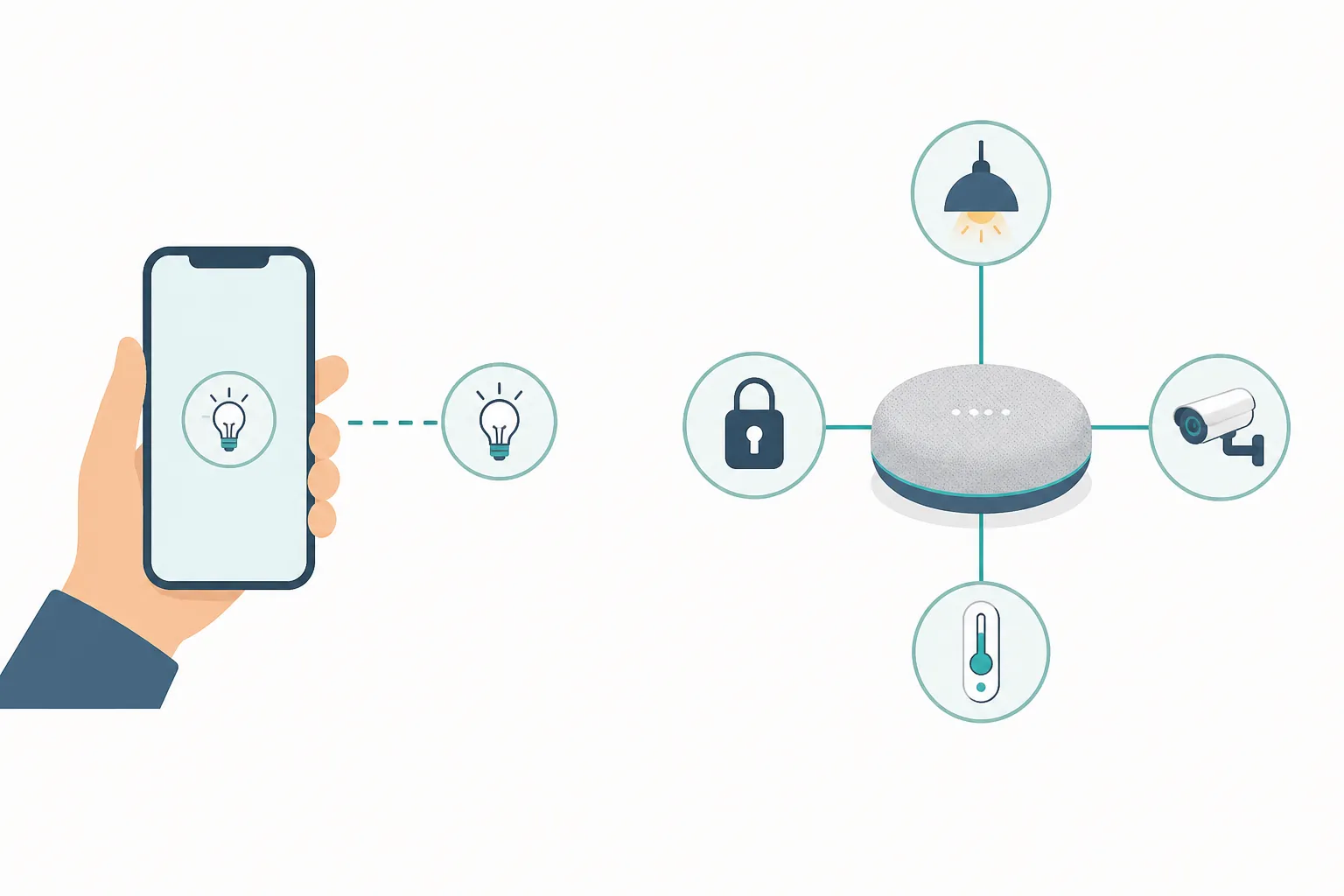
That split is not pedantry when you are trying to diagnose a home that “worked yesterday.” Your iPhone can be the screen you use to unlock the door, change the temperature, add a Matter accessory, or approve an invitation. The hub is the device expected to keep automations available, relay remote commands, maintain parts of the accessory network, and stay present when every phone has left the house.
This is also why the old iPad-as-hub habit needs to be retired in upgraded homes. Apple’s newer architecture does not support iPad as a home hub, so a household relying on an iPad mounted in the kitchen has a hardware problem even if every person in the house buys the newest iPhone. [1]
If you want the fuller hub audit, including what an iPhone can and cannot replace, the companion piece Can the iPhone 17 Pro replace your smart home hub? is the better place for that checklist. The short version for this article is enough: do not treat a Thread radio in a phone as a border router or as the Home hub.
Where the iPhone 18 Pro still matters
None of this makes the iPhone 18 Pro irrelevant to Apple Home owners. It just puts the phone in the right job description.
As of August 25, 2026, the iPhone 18 Pro is still unreleased hardware. Current reporting expects Apple to announce it in the first half of September 2026 and release it later that month. The smart-home-relevant rumors center on a new Apple-designed N2 wireless chip with Thread, Wi‑Fi 7, Bluetooth 6, and other radios, alongside broader wireless features such as updated UWB and satellite capabilities. [5][6]
Those radio claims are interesting. They are also not yet launch-tested facts. Until shipped iPhone 18 Pro hardware is in hand, the responsible status label is “rumored,” not “confirmed.” It is reasonable to expect a newer Pro iPhone to be a better day-to-day Home controller than an aging model. It is not reasonable to promise that the N2 chip will repair a weak hub placement, replace a missing border router, or make unsupported Home clients compatible with the enforced architecture.
| iPhone 18 Pro smart-home question | Status on August 25, 2026 | What to do with it |
|---|---|---|
| Will it satisfy the February 2026 Home architecture requirement? | No. That requirement belongs to Apple Home architecture, supported hubs, and supported OS versions. [1] | Audit the Apple TV/HomePod hub and older client devices. |
| Will it become the Home hub because it has Thread? | No support basis for that. Apple describes iPhone Thread use as local pairing and management, not hub or border-router duty. [4] | Keep a supported always-on home hub in the home. |
| Will it make adding Thread or Matter accessories feel better? | Plausible, but unverified until launch hardware is tested. | Wait for post-launch testing before buying for this reason alone. |
| Will it run iOS 26 Home features? | Yes, assuming normal iOS 26 support for the new phone; individual Home features can still require hubs and compatible accessories. | Check the feature’s accessory and hub requirements, not just the phone model. |
iOS 26 Home features do not change the architecture answer
The iPhone 18 Pro is expected to be one of the cleanest ways to use Apple’s newest Home app features, but those features still sit on top of the architecture and hub requirements. Adaptive Temperature is a good example: early coverage described it as an iOS 26 Apple Home feature that requires a home hub and a compatible Matter thermostat, with the Aqara Smart Thermostat W200 cited as the first shipping support in April 2026. [7]
Multipack pairing in iOS 26.2 is similarly a convenience feature, not an architecture escape hatch. It can reduce the friction of adding multiple supported accessories, but it does not turn the phone into the home’s always-on coordinator or exempt older devices from Apple’s minimum software requirements. [8]
This is the more useful way to think about the September phone: it may improve the surfaces you touch. It does not rewrite which device is responsible for the home when no one is touching a phone.
What to check before using the iPhone 18 Pro as your smart-home reason
Before treating the iPhone 18 Pro as a HomeKit upgrade, check the pieces that actually decide whether the home is healthy:
- Confirm the home is on Apple’s new Home architecture, or assume Apple may already have moved it there after the February 10, 2026 support cutoff. [1]
- Make sure every device that needs to access the upgraded home meets Apple’s minimum OS versions: iOS 16.2, iPadOS 16.2, macOS 13.1, tvOS 16.2, or watchOS 9.2 and later. [1]
- Do not rely on an iPad as the home hub in an upgraded home. Apple no longer supports that role for iPad. [1]
- Verify that an Apple TV 4K or HomePod-class device is present, powered, signed in, and positioned sensibly for the accessories it is expected to support.
- Treat iPhone 18 Pro radio improvements as a launch-verification item, especially for Thread and Matter pairing behavior.
Only after those checks does the iPhone 18 Pro become a clean smart-home purchase question. If your current phone is old, your Home app use is frequent, and you want the newest iOS 26 conveniences, waiting for launch reviews makes sense. If the house is failing because the hub is missing, underpowered, badly placed, or because older devices cannot access the upgraded home, the phone is the wrong fix.
The dated buying verdict
Do not buy an iPhone 18 Pro to satisfy Apple’s Home architecture requirement. That requirement is already in force, and it belongs to the Home setup’s architecture, hub, and OS compatibility.
If your Apple Home is already upgraded, your Apple TV or HomePod hub is current, and your household devices meet Apple’s minimum versions, the iPhone 18 Pro can be considered optional smart-home polish. Buy it for the phone, the controller experience, and verified iOS 26 conveniences after launch. If your setup is broken or blocked by old devices, fix the hub path first; then decide whether the rumored iPhone 18 Pro radios are worth paying for once they are confirmed on shipping hardware.
References
- Upgrade to the new Apple Home architecture — Apple Support, February 12, 2026
- Apple smart home users need to upgrade their iPhone today — Macworld, February 10, 2026
- Apple Gives Final Warning to Home App Users — MacRumors, February 3, 2026
- Use Thread-enabled accessories with Apple Home — Apple Support, May 7, 2026
- iPhone 18 Pro Launching Next Month With These 12 New Features — MacRumors, August 23, 2026
- iPhone 18 Pro: Six new features are coming this fall — 9to5Mac, August 17, 2026
- Apple Home recently got better in three ways — here’s what’s new — 9to5Mac, April 29, 2026
- 5 New Features Added To Apple Home In iOS 26 — BGR
Known issues with this device / protocol
Spec-version history
For active regressions on this protocol, see Update Watch.
No linked Update Watch entries yet.