
What a humanoid robot home cleaning service costs in SF
Verified August 2026 pricing for San Francisco's humanoid home-cleaning options: a $30/hour invite-only service, a $150 flat-rate app booking, and a $20,000 home robot. Each price is checked against the local human-cleaner market, with the waitlists, teleoperation, and limited task lists that news coverage buries called out explicitly.
Last updated
| Path | Headline cost | Booking model | Confirmed as of 2026-08-02 | Workaround conditions | Still investigating | Verification date |
|---|---|---|---|---|---|---|
| Tau Robotics | $30/hour; one-hour flat-fee cleaning session [1][2] | Invite-only San Francisco service | The offer is live; sessions are operated by humans with AI assistance; the CEO-confirmed cleaning tasks are vacuuming and basic kitchen-counter wiping [1][2] | You may be joining or waiting on an invite list, and the service is closer to a supervised robotic cleaning session than a full replacement for a human house cleaner | Cleaning quality, repeat availability, privacy impact of head/wrist cameras, video retention, and what happens when the robot reaches a task it cannot do | 2026-08-02 |
| Gatsby | $150 flat rate for an any-size apartment clean [3][4] | Booked through an iOS app [3] | Gatsby says it completed the first U.S. consumer humanoid home clean on May 14, 2026; a San Francisco clean was logged from 8:42 to 11:47 AM; the company promises to replace damaged items [4] | The “no humans present” framing is qualified by remote teleoperation for hard tasks [5] | Independent cleaning-quality evidence, how often a robot is actually available, task completion without intervention, and what remote operators can see | 2026-08-02 |
| 1X NEO | $20,000 outright, or $499/month with a $200 refundable deposit [6][7] | Consumer-orderable home robot; deliveries expected in 2026 [6][7] | NEO is marketed for household chores including laundry and cleaning [6][7] | This is ownership, not a San Francisco cleaning-service booking; you are taking on setup, reliability, maintenance, and product-risk questions | Whether NEO can deliver apartment-cleaning results comparable to a paid cleaner in real homes, and what ownership actually costs after maintenance, repairs, and time | 2026-08-02 |
If you are searching for the humanoid robot home cleaning service cost in San Francisco, the safest answer is not a single number. It is a dated status table. Tau’s $30/hour price is real. Gatsby’s $150 flat-rate apartment clean is real. NEO’s $20,000 purchase path is real. None of those prices, by itself, confirms that a humanoid will clean your apartment well, cheaply, privately, or autonomously.
That distinction matters because home cleaning is not a demo-stage task once it crosses your threshold. The apartment is not a robotics lab with better lighting. It is where your mail is visible, your medicine cabinet may be one open door away, and the mess changes every week. A booking flow can be genuine while access is constrained. A robot can be physically present while a remote operator handles the hard parts. A price can be confirmed while the cleaning result remains unverified.
I’m using the same dated-status discipline we use for smart-home deal checks and comparison-table installation guides: separate the price from availability, the booking flow from the result, and the manufacturer claim from independently observed performance.
Tau Robotics: the $30/hour price is the most aggressive, and also the most conditional
Tau Robotics is the cleanest example of why the headline price needs a status label. The company is offering a $30/hour humanoid cleaning service in San Francisco, with one-hour sessions and an invite-only model [1][2]. That is below the local hourly range for many human cleaners. It is also not the same thing as saying a general-purpose robot housekeeper has arrived.
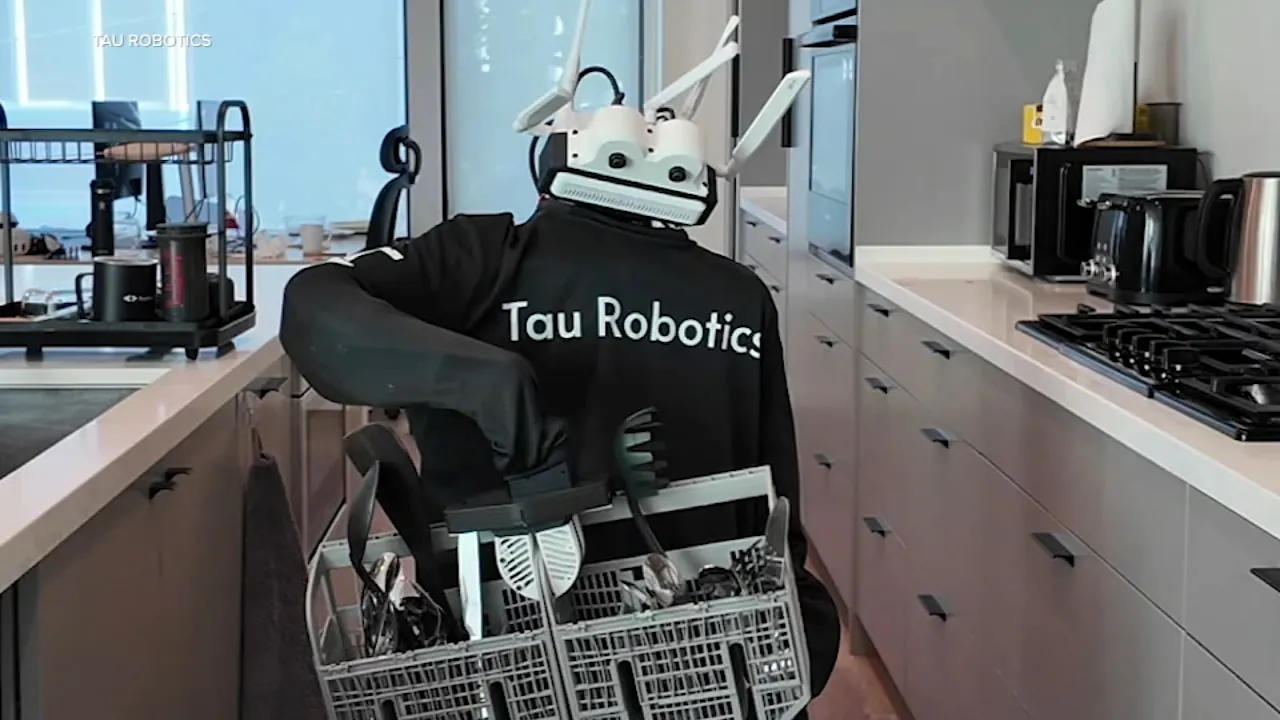
The operational facts are narrower. Coverage of the launch says Tau’s sessions are operated by humans with AI assistance, and Tau’s CEO identified vacuuming and basic kitchen-counter wiping as the confirmed working tasks [2]. Those are useful tasks, especially if the service can show up reliably and finish them without making the resident babysit the session. But the confirmed task list does not yet support broad claims about bathrooms, clutter handling, stovetops, laundry, bed-making, dishwashing, or the judgment calls that make human cleaners valuable in real apartments.
The $30/hour rate also appears in the right market context: it is a customer-acquisition price aimed partly at people who have not hired a human cleaner before, not proof that humanoid labor has already beaten the economics of human cleaning [2]. In other words, Tau may be cheaper for the narrow session it is offering. That does not prove the robot can complete the same scope in the same time, at the same quality, with the same privacy expectations, or with the same recourse if something goes wrong.
The privacy surface is not incidental. Tau robots use cameras, including head and wrist cameras, and the company’s materials raise video-retention questions that a renter should treat as part of the cost [1]. A human cleaner can also see private spaces, of course. The difference here is that machine vision, remote operation, and retained video can turn a one-hour cleaning appointment into a data-handling relationship. Before treating $30 as cheap, ask what rooms the robot can enter, what the operator can see, whether video is stored, how long it is retained, and whether you can restrict camera access without breaking the service.
UC Berkeley professor Ken Goldberg’s “too early” assessment of humanoid home cleaning is a useful brake here, not because it makes the service fake, but because it keeps the claim sized correctly [2]. Tau is a real San Francisco option as of this verification date. Its confirmed price is lower than the usual local hourly cleaner range. Its confirmed cleaning scope is still narrow.
Gatsby: $150 is simple to understand, but the work model is not simple
Gatsby’s pitch is easier for a consumer to compare with a conventional apartment clean: $150, any-size apartment, booked through an iOS app [3][4]. The company says it completed the first U.S. consumer humanoid home clean on May 14, 2026, and Business Wire’s account includes a logged San Francisco cleaning window from 8:42 to 11:47 AM, or just over three hours [4].
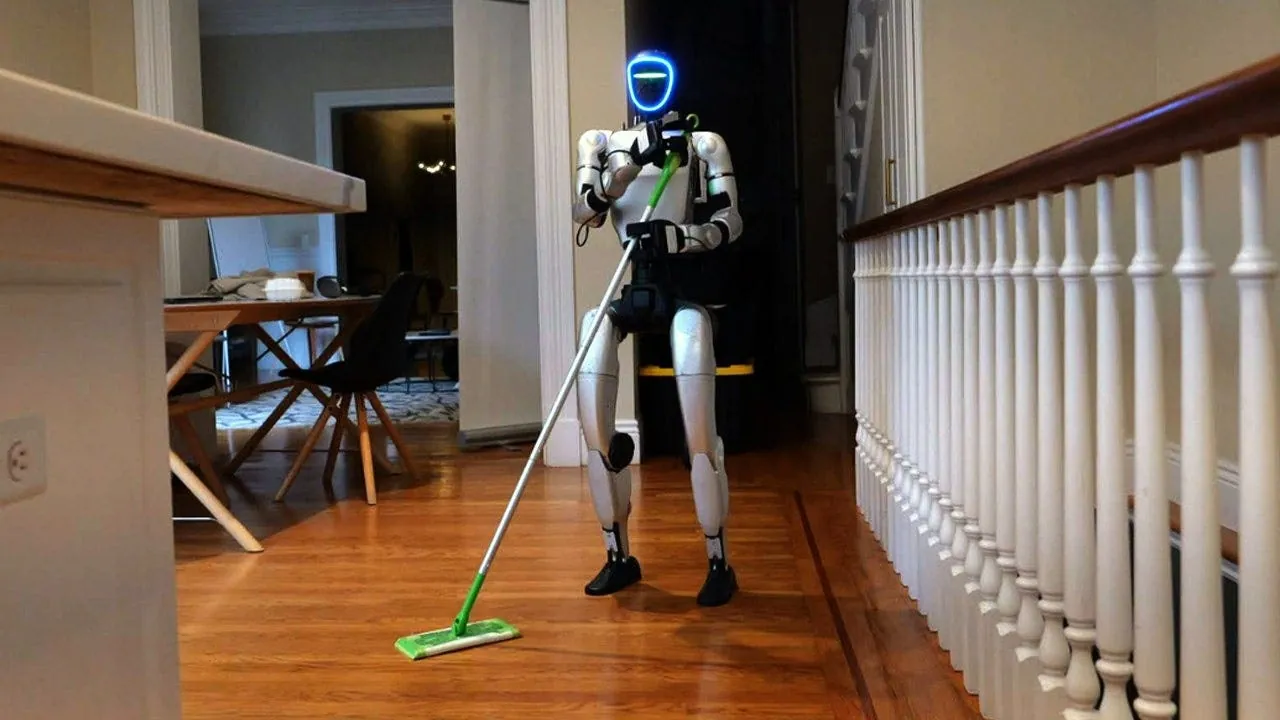
That three-hour detail is more useful than the novelty claim. It lets a San Francisco renter compare the booking to a familiar service shape: someone, or something, is in the apartment for a meaningful part of the morning. The flat rate avoids the awkwardness of watching a meter run while an experimental robot navigates a kitchen. It also means Gatsby is taking the time risk, at least at the advertised price.
The autonomy claim needs a narrower reading. Gatsby coverage describes the clean as happening with no humans physically present, but hard tasks may still be handled through remote teleoperation [5]. That is not a minor footnote. For a resident, remote help changes the privacy model and the service model. The question is not only “Did a person enter my apartment?” It is also “Did a person see my apartment through the robot, when, and with what recording or retention rules?”
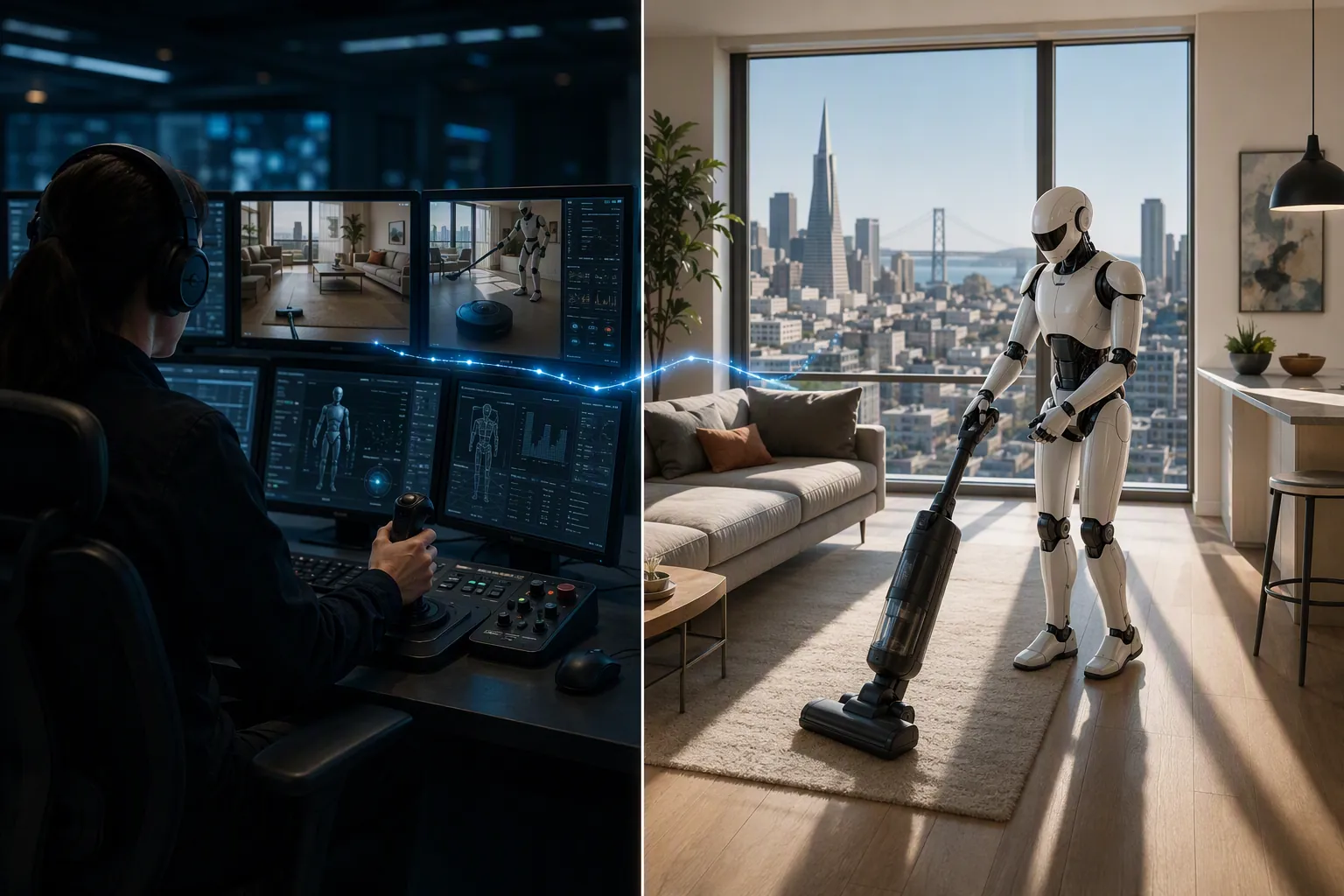
Gatsby’s damage-replacement promise is a meaningful consumer-facing detail [4]. It acknowledges the part of the household-service bargain that demo videos usually skip: the robot is moving near furniture, dishes, cords, rugs, pets, and objects the resident may care about more than their market value. The promise still needs ordinary pre-booking follow-up. What counts as damage? How is replacement valued? Who decides? Is there a claim window? Does the company document the apartment before and after?
Gatsby also says San Francisco human cleaners average $150 to $300 [4]. Treat that as a company comparison, not an independent market study. The $150 Gatsby price sits at the low end of that claimed range, and at the low end of other San Francisco standard-clean ranges discussed below. That can make Gatsby interesting. It does not yet make Gatsby independently proven to be cheaper for an equivalent clean.
NEO: ownership math belongs in a different bucket
1X’s NEO is the only path here that looks like buying a home appliance instead of booking a cleaning appointment. The consumer-orderable humanoid is listed at $20,000 outright, or $499/month with a $200 refundable deposit, with deliveries expected in 2026 [6][7]. 1X markets NEO for household chores including laundry and cleaning [6][7].
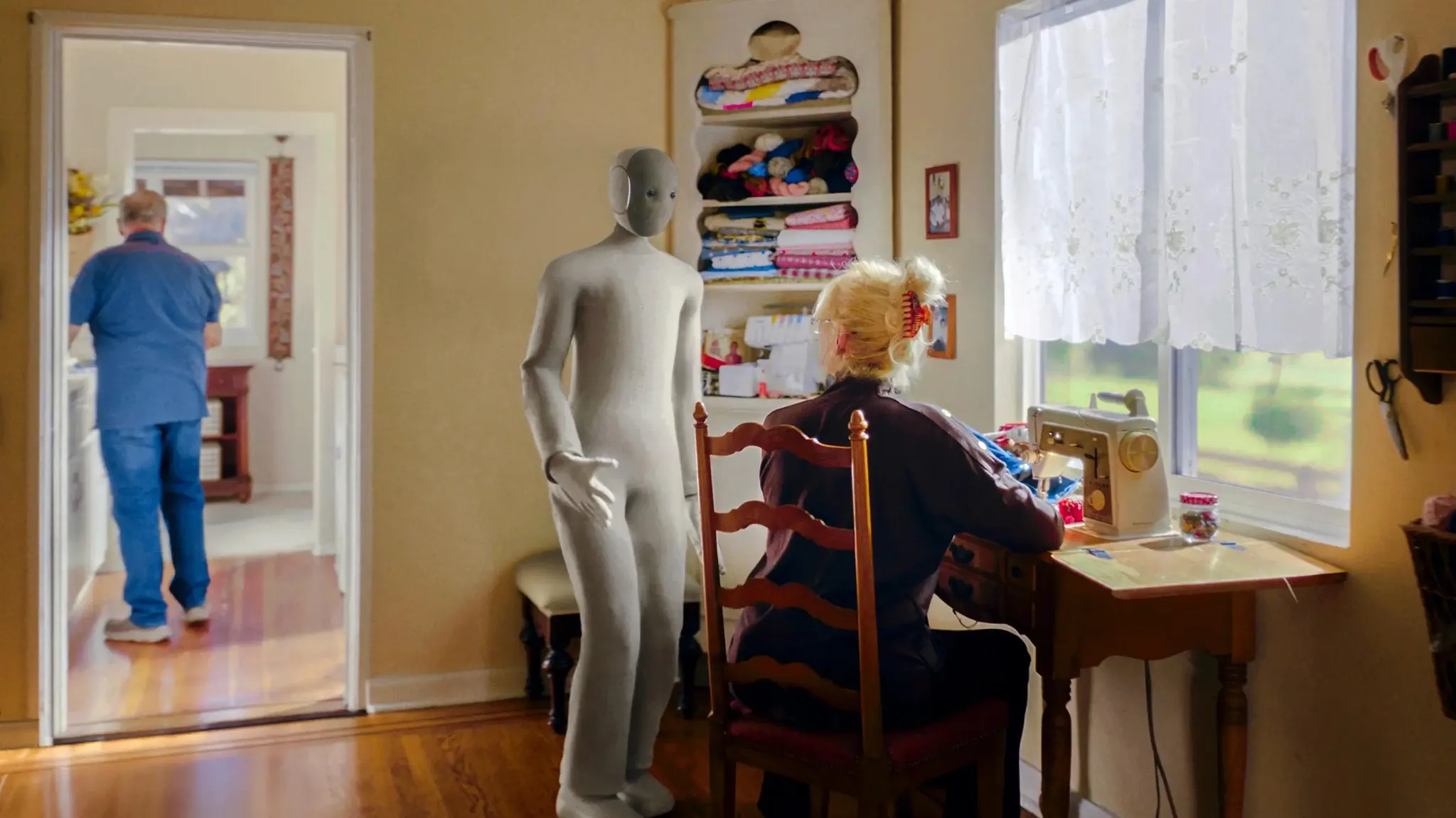
The cost comparison is tempting and dangerous. Calculated only from the listed purchase price, a $20,000 NEO used every day for one year works out to roughly $55/day before maintenance, repairs, electricity, replacement parts, downtime, setup time, and whatever tasks still require human intervention. That is arithmetic, not verified ownership economics.
For a San Francisco resident who wants the apartment cleaned next week, NEO is not a direct substitute for Tau or Gatsby. It is a product bet. You would be buying the possibility of repeated household labor, not a completed clean with a service provider responsible for the result. That may appeal to robotics early adopters. It should not be priced against a one-time cleaner unless the buyer is also willing to price in responsibility for failures, updates, repairs, and task gaps.
The San Francisco human-cleaner benchmark is messy, which is the point
San Francisco cleaning prices do not collapse into one tidy benchmark. SanCrew’s local guide puts a standard clean at about $150 to $320, hourly cleaning at $35 to $60, and deep cleaning at $250 to $450, citing Care.com and Thumbtack as underlying market references [8]. A separate Angi snippet surfaced during verification puts a San Francisco average near $191 per visit, but that figure is snippet-only here, so it should not carry the same weight as a full visible methodology. Gatsby’s own comparison puts human cleaners at $150 to $300, which is useful mainly as Gatsby’s framing of the market [4].
| Option | How it compares with the human-cleaner benchmark | What that comparison does not prove |
|---|---|---|
| Tau Robotics at $30/hour | Below SanCrew’s $35–$60 hourly range for San Francisco cleaners [8] | That the robot completes the same task scope, quality level, or amount of work per hour |
| Gatsby at $150 flat | At the low end of SanCrew’s $150–$320 standard-clean range and Gatsby’s own $150–$300 human-cleaner comparison [4][8] | That a remotely assisted humanoid clean is equivalent to a conventional standard clean |
| NEO at $20,000 or $499/month | Not directly comparable to a per-visit cleaner unless you assume frequent use and assign value to unfinished or assisted tasks [6][7] | That ownership produces lower real cleaning costs after maintenance, downtime, and supervision |
This is where the “robots are cheaper” headline gets too compressed. Tau does undercut the local hourly floor on paper. Gatsby does sit near the low end of standard flat-rate cleaning. But cheaper than what: a one-hour vacuum-and-counter session, a full apartment reset, a move-out deep clean, a recurring cleaner who knows your place, or a first-run robotics service with remote human backup?
The unresolved variables are not cosmetic. Availability affects whether the price is actually obtainable. Task limits affect whether you need to hire a human anyway. Remote supervision affects privacy. Lack of independent quality data affects whether the result can be compared with a normal cleaner’s work. A resident does not save money if the robot session is cheap and the unfinished work becomes a second booking.
What to verify before you book
Before inviting a humanoid cleaning service into a San Francisco apartment, verify the boring details. They are the service.
- Is the slot actually bookable today, or are you joining an invite list or waitlist?
- Which tasks are included at the advertised price, and which are explicitly excluded?
- Will a remote operator be involved at any point? If yes, when do they take over, and what can they see?
- What cameras does the robot use, which rooms can it enter, and is video stored or retained?
- What happens if the robot breaks, stains, drops, or scratches something? Ask for the actual damage process, not only the promise.
- Is there independent customer-quality evidence, or only company video, executive statements, and launch coverage?
- If the robot cannot complete the clean, do you get a re-clean, a refund, a credit, or just a very interesting morning?
As of 2026-08-02, San Francisco’s humanoid cleaning prices are real and sometimes at or below the human-cleaner floor. Tau’s $30/hour and Gatsby’s $150 flat rate deserve attention. They do not yet prove a robotic efficiency win. Until availability, task scope, supervision, privacy, and independent cleaning quality are verified together, “robot cleaning is cheaper” remains a marketing condition, not a settled household-service fact.
References
- Tau Robotics — Tau Robotics
- Can you hire humanoid robots? Tau Robotics to clean home in San Francisco — ABC7 KGO
- Gatsby — Gatsby
- Gatsby Makes History with First Humanoid Robot Cleaning for a U.S. Consumer — Business Wire, May 18, 2026
- Humanoid robot cleans first US apartment — Fox News
- NEO — 1X
- NEO humanoid robot: What to know — USA Today, October 29, 2025
- House Cleaning Cost San Francisco — SanCrew
Known issues with this device / protocol
Spec-version history
For active regressions on this protocol, see Update Watch.
No linked Update Watch entries yet.