
Can Grok voice control your smart home?
Which Grok voice smart-home control paths are real as of mid-2026 — and which routes don't exist yet. Each path (Home Assistant adapters, xAI Voice API, Tesla vehicle commands, Alexa/Zapier bridges) carries a status label and verification date so you can check what works before committing.
Last updated
Short answer: Grok voice can participate in smart-home control in mid-2026, but only through adapters. It is not, as of Aug. 2, 2026, a smart-home platform in the Alexa, Google Home, Apple Home, Home Assistant, Matter-controller, or dedicated-hub sense. If a light turns off after a Grok voice command, the useful compatibility question is not whether Grok understood the sentence. It is where the command actually terminated.
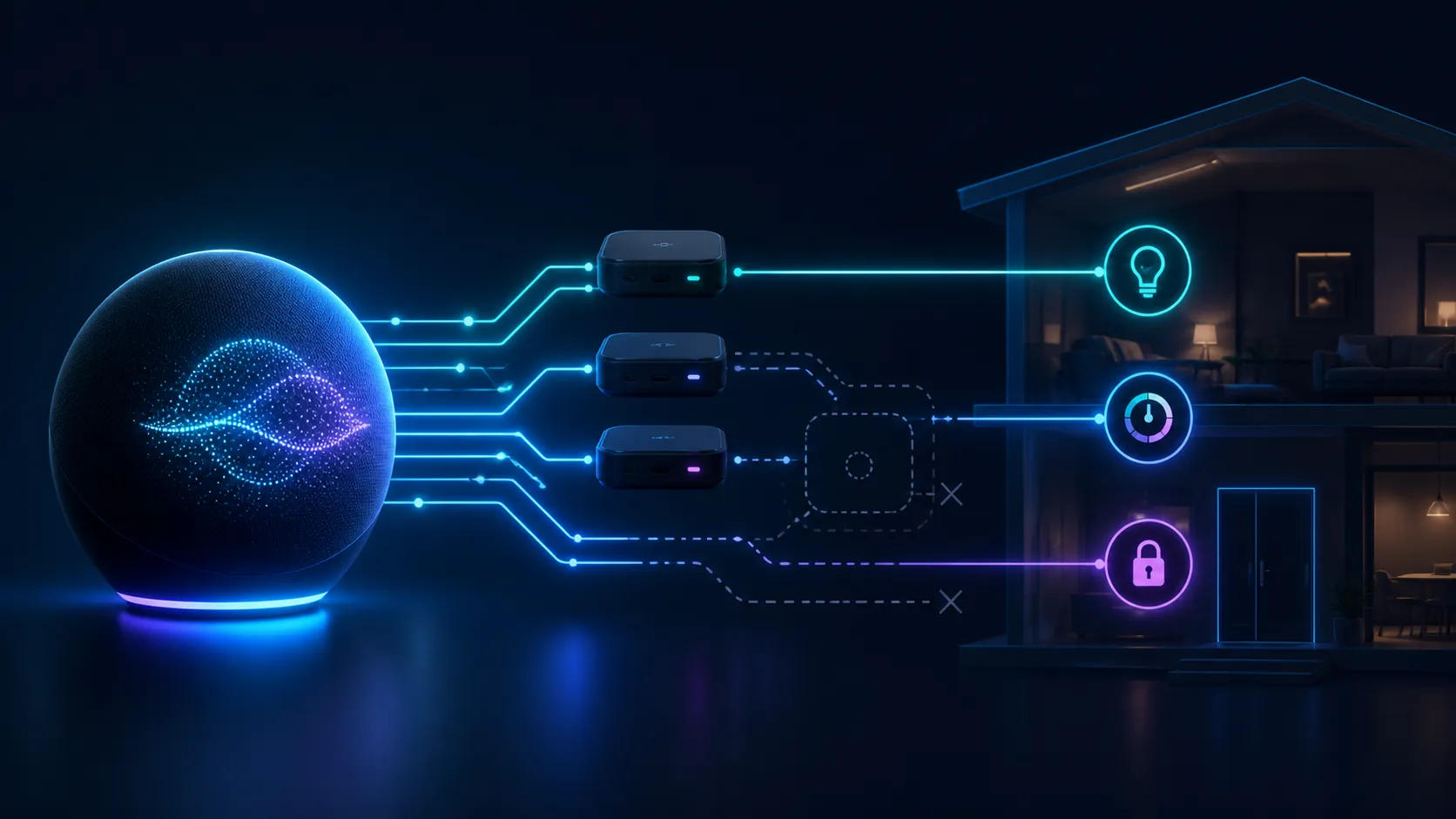
Grok voice smart-home control status map — verified Aug. 2, 2026
Here is the practical map before getting into voice speed, benchmarks, or demos. “Confirmed” means there is a named route that can be checked today. “Workaround” means Grok is reachable through a bridge, but the bridge is not a native smart-home device-control layer. “Investigating” means no verified native route was visible in the reviewed public sources as of the verification date.
| Status | Route | What it actually controls | Compatibility gates | Source |
|---|---|---|---|---|
| Confirmed | Home Assistant via braytonstafford/grok_conversation | Home Assistant entities exposed to Assist/LLM tools. Grok is the conversation agent; Home Assistant remains the control layer. | Requires an xAI API key, LLM HASS API selection, and exposed entities. Documented failure modes include “LLM HASS API not configured,” tool-call failures, slow responses addressed by model/token changes, and OpenAI integration conflicts. | GitHub project documentation [1] |
| Confirmed | Home Assistant via pajeronda xai_conversation v3.0.0+ | Home Assistant entities and extended tools, depending on the selected mode. Still an HA-mediated route, not native Grok device control. | Requires Home Assistant configuration, xAI access, and the integration’s operational mode choices. The project describes Zero Data Retention mode, three operational modes, extended tools, and live search with citations. | Home Assistant Community thread [2] |
| Confirmed — developer-only | xAI Voice API | Voice input/output for a custom app. Smart-home control exists only if the developer builds the device integration behind it. | Requires API implementation, authentication, app logic, and ongoing usage cost. Published pricing includes realtime speech-to-speech from $0.05/min, TTS at $15 per 1M characters, and STT at $0.10/hr batch or $0.20/hr streaming. | xAI voice documentation [3] |
| Confirmed — vehicle-only | Tesla Grok in software 2026.26 Summer Update | Vehicle functions such as calls, media, climate, glovebox, and multi-part car commands. It does not verify a car-to-home smart-device route. | Gated by Tesla software version, regional rollout, and the in-car Grok surface. Summer Update coverage described rollout progress and expansion to India, Malaysia, Philippines, Singapore, and Thailand. | Not a Tesla App, TechRadar, and Tesla support page [4][5][6] |
| Workaround | Amazon “Grok Assistant” Alexa skill | Conversation with a Grok-themed assistant through Alexa. This is not native Alexa smart-device intent handling by xAI. | Unofficial third-party skill from JN2 Consulting. Treat as a conversational skill listing, not official xAI smart-home support. | Amazon skill listing [7] |
| Workaround | Zapier Amazon Alexa → Grok by xAI bridge | Text/workflow routing between Alexa and Grok by xAI. Device control depends on whatever other Zapier actions or services you wire in. | Requires Zapier automation design and service permissions. It is a bridge, not a native voice assistant replacing Alexa’s device-control layer. | Zapier integration listing [8] |
| Investigating | Native Grok speaker or smart-home hub | No verified consumer Grok speaker or hub path found in the reviewed sources. | No visible native hub role to terminate light, thermostat, lock, sensor, or scene commands. | No confirmed source as of Aug. 2, 2026 |
| Investigating | Matter, Thread, Zigbee, or Z-Wave controller role | No verified Grok controller role found for local smart-home protocols. | No visible Grok border-router, Matter controller, Zigbee coordinator, or Z-Wave controller role. | No confirmed source as of Aug. 2, 2026 |
| Investigating | Native Apple Home, Google Home, or Alexa device-control integration | No verified native integration where Grok directly becomes the device-control voice layer inside Apple Home, Google Home, or Alexa. | The Alexa skill and Zapier path are workarounds. They do not prove native Alexa device-intent integration. | No confirmed source as of Aug. 2, 2026 |
Why people are asking: Grok Voice Think Fast 2.0 looks genuinely quick
The excitement is not random. xAI announced Grok Voice Think Fast 2.0 on July 29, 2026, and reported a 0.70-second time-to-first-audio figure. It also reported a 56.5% score on the τ-voice agentic benchmark, compared with GPT-Realtime-2.1 at 45.7% and Gemini 3.1 Flash at 37.7% [9].
Those are xAI’s own numbers, not independently reproduced compatibility tests. They help explain why Grok voice is tempting as a front end. They do not show that Grok has a Matter controller, an Apple Home bridge, an Alexa device-intent integration, or a hub that can accept “lock the front door” and terminate that command locally.
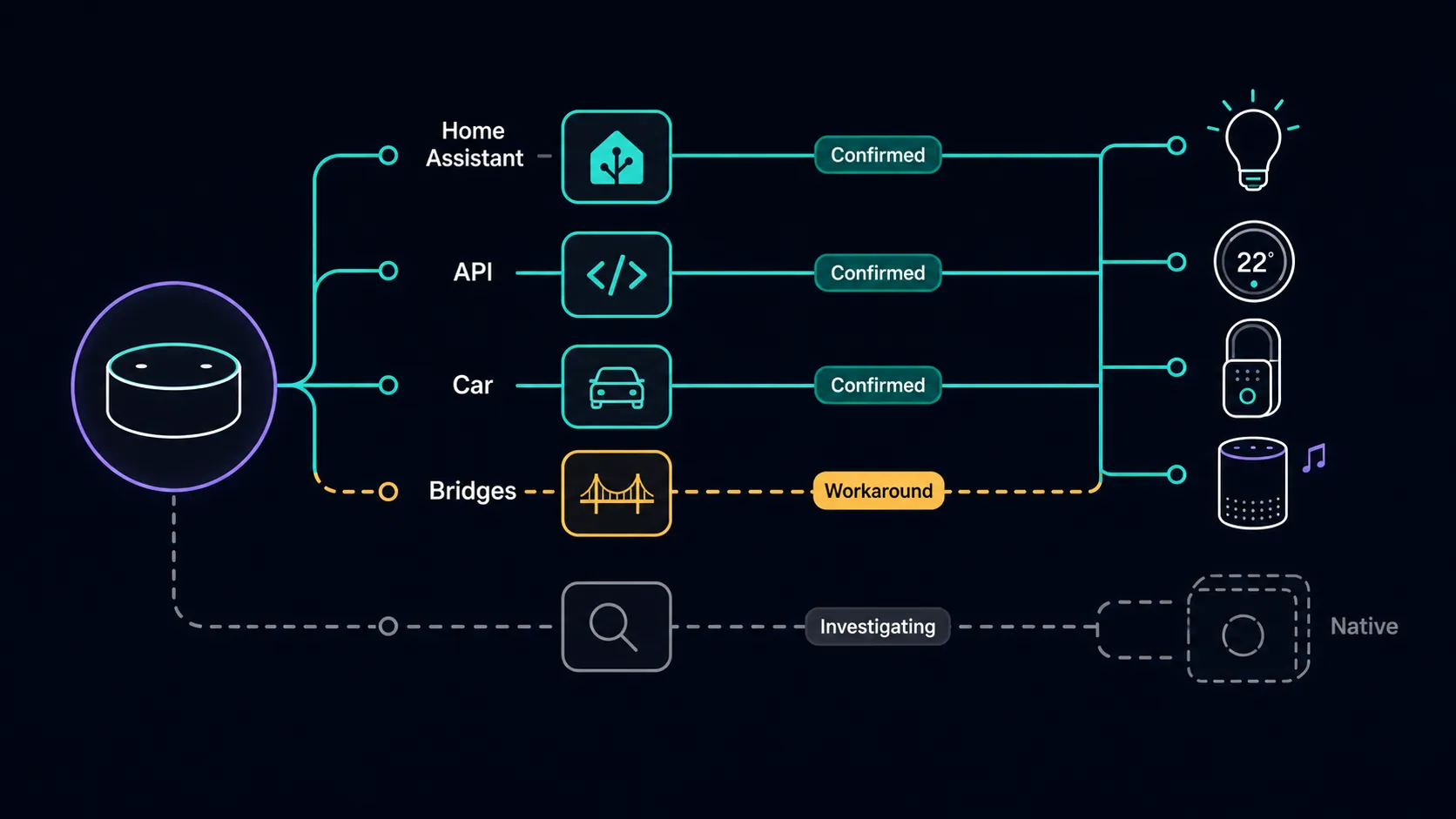
The Home Assistant route is the closest thing to real smart-home control
If someone says Grok can control lights today, the most defensible version of that claim usually means Home Assistant is doing the device work. Grok receives or reasons over the request, but Home Assistant exposes the entities, checks the available tools, and calls the actual service that changes the state of a light, thermostat, lock, switch, or scene.
That distinction matters because Home Assistant can make an assistant feel native when the integration is configured well. It also makes failures easier to diagnose. If a kitchen light is not exposed to the LLM, Grok may understand the sentence perfectly and still have no valid tool to call.
Route 1: braytonstafford/grok_conversation
The braytonstafford/grok_conversation custom component is the more direct “make Grok a Home Assistant conversation agent” path in the reviewed material. Its own documentation makes the control boundary clear: device control depends on selecting the LLM HASS API and exposing the relevant entities. Without that, the assistant can talk but cannot reliably operate Home Assistant devices [1].
In plain setup terms, the route looks like this:
- Install the custom Grok conversation integration in Home Assistant.
- Provide an xAI API key.
- Select the LLM HASS API so the assistant has Home Assistant tools available.
- Expose only the entities you actually want the assistant to see and control.
That is enough detail for compatibility screening. If you want a copyable Home Assistant Assist-style implementation path, use the existing Home Assistant conversation-agent setup recipe as the pattern: the model changes, but the important discipline is the same — expose the right entities and verify which tool layer is actually being called.
The documented failure modes are also useful because they sound like the problems a real household hits after the demo. The project calls out “LLM HASS API not configured,” tool calls not working, slow responses that may be addressed by using grok-4-fast or lowering max_tokens, and conflicts with the OpenAI integration [1]. None of those are arguments against the route. They are reminders that this is an adapter path with moving parts.
Route 2: xai_conversation v3.0.0+
The pajeronda xai_conversation integration is another Home Assistant route, and the v3.0.0+ discussion describes a more expansive feature set: Zero Data Retention mode, three operational modes, extended tools, and live search with citations [2]. That makes it interesting for Home Assistant users who want more than a minimal conversation-agent connection.
It does not change the compatibility category. The smart-home control still terminates in Home Assistant. The integration can broaden what the assistant can do inside that environment, but it is not evidence that Grok has become a standalone smart-home ecosystem.
For Home Assistant households, that may be exactly the right trade. You keep your existing radios, integrations, automations, dashboards, and entity registry, then test Grok as a conversational layer on top. For a newcomer who only wants to plug in a speaker and say “turn on the hall light,” it is a much heavier answer.
The xAI Voice API is real, but it shifts the burden to the developer
The xAI Voice API gives builders a real voice surface. That is different from giving consumers a ready-made smart-home assistant. If you build an app that listens through Grok, maps utterances to device intents, authenticates against a home platform, and sends commands to lights or locks, then Grok voice can be part of that product. The device-control layer is still yours to design.
Cost is also a compatibility constraint, not just a billing footnote. xAI’s voice documentation lists realtime speech-to-speech from $0.05 per minute, text-to-speech at $15 per 1 million characters, and speech-to-text at $0.10 per hour for batch or $0.20 per hour for streaming [3]. A dedicated smart speaker hides that kind of meter from most households. A DIY Grok voice layer does not.
This is why the API path belongs in the “Confirmed — developer-only” bucket. The voice capability exists. The smart-home product does not assemble itself around it.
Tesla Grok controls the car, not your house
Tesla is the easiest place to overread Grok’s smart-home reach because it looks like a fluent assistant sitting in a high-value connected device. Owner discussion around bringing Grok home from a Cybertruck shows the misconception clearly enough: if Grok is in the vehicle, surely it should be able to reach the home too [10].
The 2026.26 Summer Update coverage supports a narrower conclusion. Grok vehicle commands are real, with examples around calls, media, climate, glovebox access, and multi-part in-car commands [4][5]. Tesla’s support surface confirms Grok as a Tesla feature, but the reviewed support page is JavaScript-rendered, so it should be treated cautiously for snippet-level confirmation rather than as a full compatibility matrix [6].
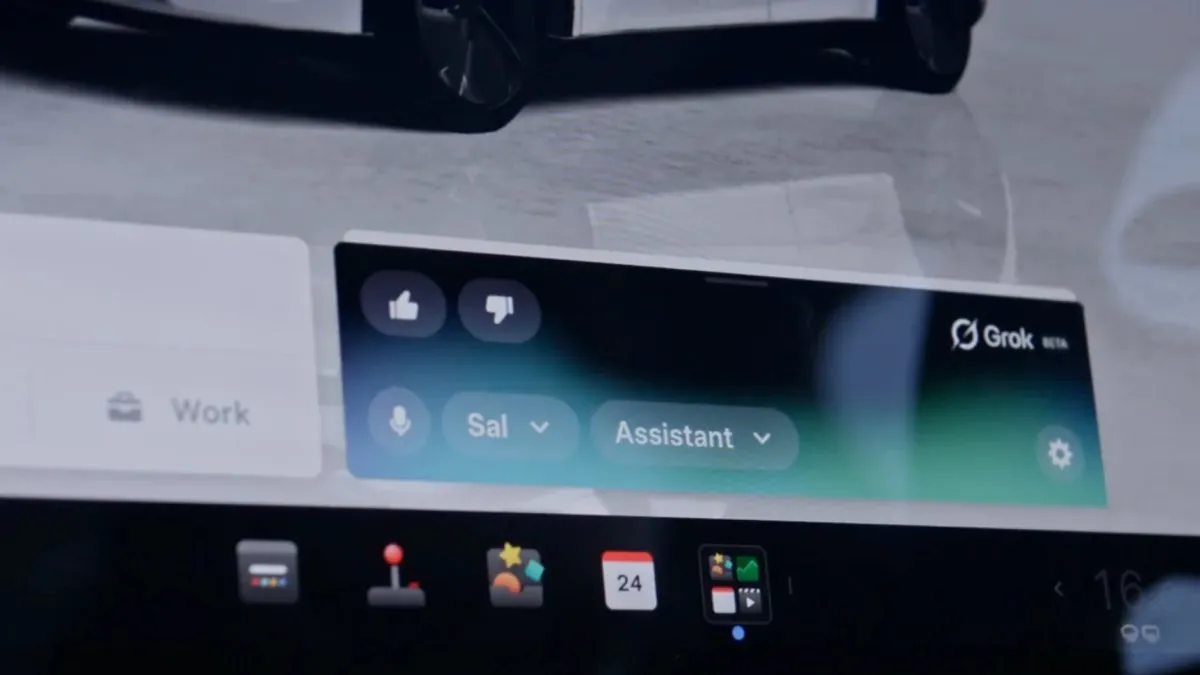
For smart-home planning, the important word is “vehicle.” A Tesla owner should not assume the car’s Grok can operate a home lock, thermostat, light, or garage device unless a separate home-control adapter is configured and verified. The car route is Confirmed, but its scope is the car.
Alexa and Zapier bridges are workarounds, not native Grok device control
The Amazon “Grok Assistant” listing is easy to misread if you are scanning for compatibility in a hurry. The listing is for an Alexa skill from JN2 Consulting, not an official xAI Alexa smart-home integration [7]. That matters because Alexa skills can provide conversational experiences without becoming the native device-intent layer that Alexa uses to control smart-home devices.
Zapier’s Amazon Alexa to Grok by xAI listing belongs in the same broad family of bridges. It can route automation steps between services, but the smart-home outcome depends on what else you connect in Zapier and which permissions those services have [8]. A bridge can be useful. It should not be described as Grok natively supporting your smart-home devices.
What still does not exist as a native Grok smart-home path
The unsupported list is just as important as the confirmed list, because these are the assumptions that lead to bad purchases. As of Aug. 2, 2026, the reviewed sources did not verify a native Grok speaker, a Grok smart-home hub, a Grok Matter controller, or a Grok role as a Thread border router, Zigbee coordinator, or Z-Wave controller.
The same goes for native Apple Home, Google Home, and Alexa device-control integrations. The current evidence supports adapter routes and workarounds, not a clean replacement for those ecosystems. If Matter and Apple Home gaps are part of your buying decision, compare this with the broader Apple Home and Matter hardware setup gap map before assuming a conversational model can stand in for a controller.
Those rows stay “Investigating,” not “impossible.” Compatibility can change quickly when a vendor ships a new integration, skill, hub, or API surface. But a shopper deciding today should not buy on the hope that an unannounced native path already exists.
How to decide whether Grok voice belongs in your setup
If you already run Home Assistant and are comfortable with custom components, entity exposure, API keys, and occasional integration debugging, Grok voice is worth testing as an alternate conversation agent. Home Assistant is doing the home-control work, which is exactly why the route is more credible than a vague cloud-to-cloud claim.
If you are building a product or personal app against xAI’s Voice API, the path is also real. Budget for the API, design the device-intent layer, and treat every lock, camera, thermostat, and alarm command as a permissioned integration problem rather than a speech problem.
If you want to replace Alexa, Google Assistant, Siri, a Matter hub, or a dedicated smart-home controller with a Grok device, the answer is no as of Aug. 2, 2026. The available paths do not add up to a drop-in ecosystem replacement. For broader ecosystem shopping, use a compatibility-first guide such as the 2026 smart-home buyers guide and choose based on the hub and adapters you already trust, not on Grok’s voice benchmark scores.
References
- braytonstafford/grok_conversation, GitHub
- XAI Conversation, Home Assistant Community
- Voice, xAI Docs
- Tesla’s Grok Vehicle Commands in Action, Not a Tesla App
- Tesla's Summer Update makes Grok the smart assistant it was always meant to be, TechRadar
- Grok, Tesla Support
- Grok Assistant, Amazon
- Connect Amazon Alexa to Grok by xAI, Zapier
- Grok Voice: Think Fast 2, xAI, July 29, 2026
- 🦾what’s the best way to bring Grok home from the Cybertruck, Cybertruck Owners Club
Known issues with this device / protocol
Spec-version history
For active regressions on this protocol, see Update Watch.
No linked Update Watch entries yet.