
The Best GPS Tracker for Dementia Depends on the Network
Every 'tested' dementia GPS tracker list is self-reported, and the differences that matter — battery, alert latency, indoor fix, and subscription — rarely survive an audit. This dated, status-labeled comparison covers the credible 2026 field so caregivers can see which trackers hold up and which 'best of' claims fall apart.
Last updated
The phrase “best GPS tracker for dementia patients tested” sounds more settled than the evidence behind it. As of Q3 2026, there is no independent lab standard for this category: no shared alert-latency protocol, no published geofence-trigger benchmark, no indoor-location scoring method, and no carrier-by-carrier reliability matrix. SafeWise says it tested a dozen trackers across more than 25 in-home tests and ranks the Tranquil Watch first, which is more disclosure than many roundups provide, but it is still a self-reported review rather than a category standard. [1]
That does not make the devices useless. It means the word “tested” has to be pinned down: tested by whom, on what network, with which app or firmware version, under what subscription terms, and with what known failures. Caring Village’s July 2026 pricing snapshot is useful for that reason: it shows how quickly monthly costs and battery claims diverge across the credible field, even before a caregiver gets to the harder questions of indoor fixes, false alerts, and whether the person with dementia will keep the device on. [2]
Q3 2026 tracker audit: what is confirmed, what is not
The table below does not crown a universal winner. It separates disclosed facts from assumptions. “Confirmed” means the cited source gives enough current information to treat the claim as usable for pre-purchase screening. “Workaround” means the device may solve one real caregiving problem but should not be treated as a primary dementia GPS solution without more checks. “Investigating” means the source discloses some pricing or battery information, but the network, app version, alert behavior, or practical wearing setup remains too thin to rely on without direct verification.
| Device | Q3 2026 status | Carrier / app disclosure | Cost and subscription disclosed | Battery claim disclosed | Form factor | Audit note |
|---|---|---|---|---|---|---|
| Tranquil Watch | Confirmed with conditions | Carrier and app/firmware version not disclosed in the cited review | $945 device + $44.95/mo in SafeWise’s 2026 review [1] | About 7 days [1] | Watch with tamper-resistant locking strap [1] | Strongest disclosed candidate in the current field because SafeWise gives price, battery, strap, beacon range, and geofence limitations; still not an independent lab result. |
| AngelSense | Investigating | Network and app/firmware version not disclosed in the July pricing snapshot | $44.99–$64.99/mo [2] | 16–24 hours [2] | Wearable tracker; exact wearing setup should be confirmed before purchase | Subscription range and short battery window make caregiver charging workflow a primary question. |
| Theora Connect | Investigating | Network and app/firmware version not disclosed in the July pricing snapshot | $247.97 device + $39.97 activation + $29.97/mo [2] | 18–24 hours [2] | Wearable tracker; exact wearing setup should be confirmed before purchase | Lower monthly fee than some peers in the cited snapshot, but daily charging and carrier verification still matter. |
| Medical Guardian MGMini | Investigating | Network and app/firmware version not disclosed in the July pricing snapshot | $149.95 device + $39.95/mo [2] | Up to 5 days [2] | Small mobile medical-alert style device; exact carrying method should be confirmed | Battery claim is better than the 16–24 hour group, but dementia use depends on whether the person will carry or wear it. |
| GPS SmartSole | Workaround / investigating | Network and app/firmware version not disclosed in the July pricing snapshot | $229 device + $49/mo [2] | Not disclosed in the supplied July pricing facts | Shoe insole insert | Potentially important when wrist devices are removed, but network, battery, shoe fit, and subscription terms need direct confirmation. |
| Bay Alarm | Investigating | Network and app/firmware version not disclosed in the July pricing snapshot | From $34.95/mo [2] | Not disclosed in the supplied July pricing facts | Mobile safety device; exact wearing or carrying setup should be confirmed | Low starting monthly price is not enough to judge dementia suitability without battery, alert, and carrier specifics. |
| AirTag 2 | Workaround only | No GPS/cellular radio in the cited comparison; depends on nearby Apple network behavior | $29, no subscription [2] | About 1+ year coin-cell battery [2] | Small tag | Backup layer only: not a primary dementia GPS tracker because it lacks GPS/cellular tracking and real geofence-alert behavior for this use case. |
Why Tranquil rises to the top — and why that still is not a blank check
Tranquil gets the longest look because the available disclosure is unusually concrete. SafeWise ranks it first, lists a $945 device price plus $44.95 per month, reports about seven days of battery life, describes a tamper-proof locking strap, and gives a Bluetooth beacon exit-alert range of about 33 feet. It also states that the geofence radius is roughly ten times the beacon radius, which matters because a wide geofence can turn a doorstep event into a delayed alert. [1]
Those details are exactly the kind caregivers should demand. A locking strap is not a luxury feature when the real-world failure mode is “Mom took it off and left it on the nightstand.” A seven-day battery estimate changes the charging burden compared with a device that must be charged every night. A local beacon can be more relevant than a broad map pin if the immediate risk is leaving the house unnoticed.
The caution is just as important. SafeWise’s review is self-reported, and the cited disclosure still does not give the carrier, app version, firmware version, measured alert latency, or a repeatable indoor/outdoor test route. A caregiver can reasonably put Tranquil at the top of the call list. They should not treat “best overall” as permission to skip the boring verification call.
The audit factors that matter more than feature counts
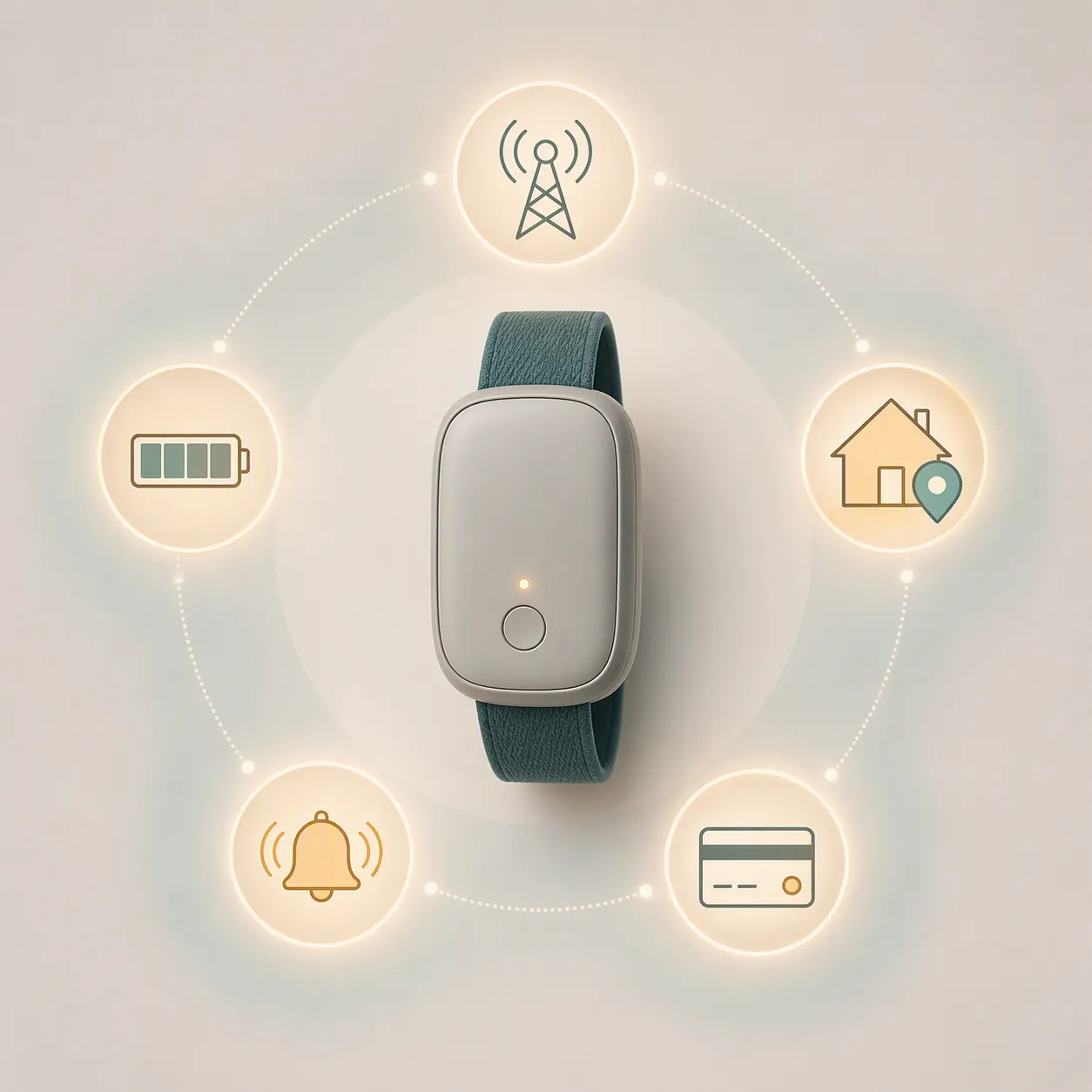
Most tracker pages are organized around features: SOS button, two-way talk, app map, safe zones, fall detection, caregiver sharing. Some of those features may help. None of them matters if the device is off-body, out of battery, on the wrong network, delayed at the door, or producing so many false alerts that the caregiver stops trusting it.
Network comes before the app screen
A dementia tracker is not just a little map. It is a cellular device, a subscription, a carrier relationship, and a caregiver app. If the source does not name the carrier or explain whether the device uses its own managed SIM, a data-only SIM, an MVNO arrangement, or a customer-supplied plan, the status should stay “Investigating.”
The useful pre-purchase question is not “Does it have 4G LTE?” It is: “Which carrier network does this exact model use in my ZIP code, and will voice, SOS, location upload, and alerts all work on that setup?” The 2G and 3G shutdowns are already a historical problem in the U.S.; the 2026 risk is legacy hardware, unsupported LTE bands, reseller confusion, and carrier-specific certification.
This is the same discipline used in broader smart-home compatibility work: start with the system the device must live inside, not the prettiest spec line. The comparison method is closer to a head-to-head compatibility audit than to a normal gadget ranking.
App and firmware version are part of the test, not trivia
A tracker tested in February on one app build can behave differently after an app redesign, backend change, firmware update, or carrier provisioning change. None of the cited 2026 roundup disclosures in this audit gives a full app-version and firmware-version trail for each device. That does not make their observations worthless; it limits how far the observations can travel.
For a caregiver, the practical version of this is simple: before relying on the tracker, record the model, app version, firmware version if visible, subscription tier, carrier/network answer from the vendor, purchase date, and the date you ran your own door-exit test. A tracker that was “tested” somewhere else becomes relevant only after it is tested in the home where the risk actually exists.
Battery life is a caregiving workflow, not a number on a box
The battery spread in the current field is not small. SafeWise reports about seven days for Tranquil. Caring Village lists 16–24 hours for AngelSense, 18–24 hours for Theora Connect, and up to five days for Medical Guardian MGMini. [1][2]
A one-day device may still be the right device if the person tolerates it and the caregiver has a reliable charging routine. But daily charging creates a predictable failure point: the device comes off, gets charged, and may not go back on. A multi-day battery can reduce that handling, though it still needs a tested charging habit. Battery life should be judged against who is available every morning, every evening, and after a bad night.
Indoor location and geofence behavior are where roundups get thin
SafeWise’s most useful disclosure may be its least flattering one: indoor GPS was “hit or miss” on all trackers tested, and geofence-only alerts can produce false alarms. [1]
That single limitation explains why a clean app screenshot is not enough. A caregiver does not only need to know where a person is after the tracker settles. They need to know whether an exit alert fires soon enough to matter, whether the alert fires when the person is still on the property, whether it fails inside a building, and whether repeated false alerts train everyone to ignore the phone.
The right home test is modest but non-negotiable: door exit, mailbox or driveway, end of block, car ride, common store, and return home. Run it with the caregiver phone that will actually receive alerts. Keep the device in the exact place it will be worn or carried. A pendant in a pocket, a watch under a sleeve, and an insole inside a shoe are not the same test.
The device the person will keep wearing usually beats the cleaner spec sheet
Doyle et al.’s 2024 UK feasibility study is not a U.S. product ranking, and it should not be treated like one. Its value is more basic: it shows why acceptability and operation are separate problems. In 45 wearer-carer dyads, 91% of wearers accepted the tracker and 82.4% of carers found the app easy to use, but 60.6% of people with dementia found operating the device hard. [3]
That split is the heart of this category. A caregiver can like the app. The wearer can accept the device. The person with dementia can still struggle to operate it. Features that depend on the wearer remembering, interpreting, charging, pressing, or explaining something under stress deserve skepticism.
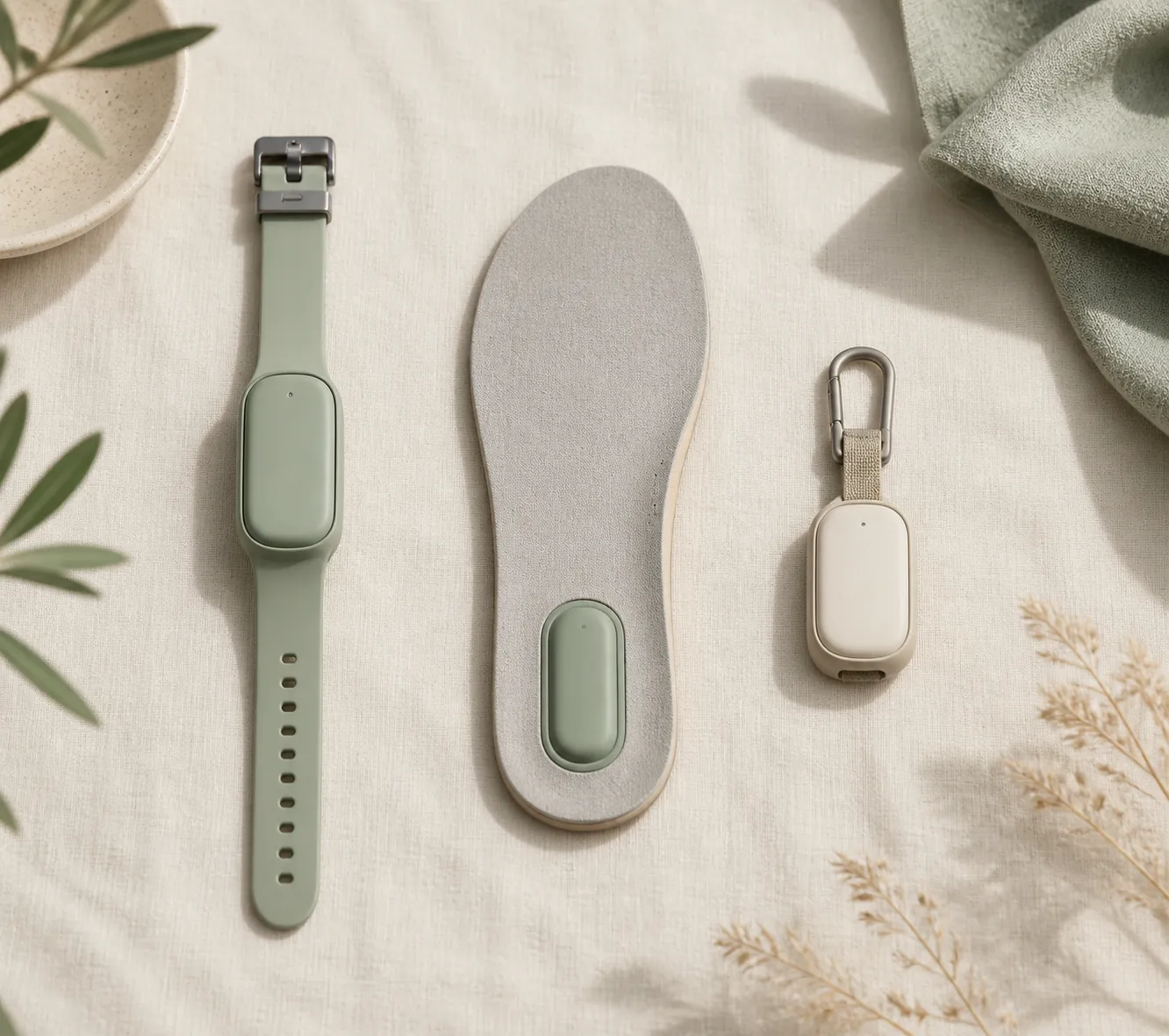
This is where form factor becomes more than preference. A locking watch may be appropriate when removal is the main risk and the person tolerates a wrist device. A shoe insert may work when the person reliably leaves with shoes and would reject a watch or pendant. A small pendant or mobile device may be fine for someone who already carries items consistently, but it is fragile for someone who empties pockets, changes clothes unpredictably, or leaves bags behind.
The purchase decision should look less like “Which feature list is longest?” and more like choosing a smart-home ecosystem: the device has to fit the person, the home, the caregiver’s phone, and the network it depends on.
Subscription and carrier mechanics are where “best of” lists fall apart
The up-front device price is only part of the cost. In the July 2026 Caring Village snapshot, Theora Connect is listed at $247.97 plus a $39.97 activation fee and $29.97 per month; AngelSense is $44.99–$64.99 per month; Medical Guardian MGMini is $149.95 plus $39.95 per month; GPS SmartSole is $229 plus $49 per month; and Bay Alarm starts at $34.95 per month. [2]
SafeWise lists Tranquil at $945 plus $44.95 per month. [1] That makes Tranquil expensive up front, even before considering whether another public roundup shows a different effective price because of bundle timing, promotional pricing, included service, or update lag. The same caution applies to GPS SmartSole and any device sold through multiple pricing pages. A caregiver should assume price snapshots are dated evidence, not permanent truth.
The subscription question is not just “Can I afford it?” It is also “What stops working if I cancel?” Some devices are inseparable from their managed service. Some may involve SIM provisioning, APN settings, or plan features such as voice and SOS behavior. A data-only setup may be enough for location uploads and still fail the way a caregiver expects for calls or emergency buttons. Vendor support can answer these questions; a roundup usually cannot.
This is the tracker version of tier comparison. A lower monthly fee is attractive only if the tier includes the alert behavior, caregiver access, network service, and support path the household will rely on. The same habit that helps compare smart-home subscription tiers applies here: write down what is included, what is locked behind the plan, and what disappears if billing stops.
Where AirTag belongs
AirTag-style trackers belong in this conversation because caregivers ask about them, not because they are equivalent to dementia GPS trackers. Caring Village’s 2026 comparison lists AirTag 2 at $29 with no subscription and about a one-year-plus coin-cell battery, but it also places it outside the primary GPS/cellular tracker group. [2]
The limitation is structural. An AirTag does not have its own GPS and cellular radio. It depends on nearby Apple-network conditions, does not provide the kind of purpose-built geofence exit alerts this use case needs, and may chime in ways that confuse or distress someone who does not understand why an object is making noise. As a backup in a bag, shoe, coat, or key ring, it may be useful. As the primary plan for a wandering emergency, it is the wrong tool.
A practical verdict for 2026 buyers
On the evidence available in Q3 2026, Tranquil is the strongest disclosed dementia GPS tracker candidate because SafeWise gives more concrete test and product detail than the rest of the field: price, subscription, battery estimate, locking strap, beacon exit alerts, and known geofence limits. That is a conditional judgment, not a universal award. It still needs carrier confirmation, app/firmware recording, in-home exit testing, and a clear answer on subscription mechanics before a caregiver treats it as dependable.
AngelSense, Theora Connect, Medical Guardian MGMini, GPS SmartSole, and Bay Alarm remain plausible devices, but the current public evidence does not let them be ranked cleanly by “best.” Their monthly costs, battery claims, and form factors point to different households. A daily-charge wearable may be acceptable for one family and impossible for another. A shoe insert may be the only tolerable option for someone who removes watches. A lower monthly fee may be irrelevant if the carrier answer is vague.
The best GPS tracker for a person with dementia is the one they will actually keep wearing or carrying, on a carrier and subscription setup the caregiver can verify before relying on it, with known limits around indoor fixes, geofence behavior, charging, and alerts. “Best” is allowed only when it is attached to a date, device model, network, app state, and caregiver workflow. Anything broader is just another unverified roundup claim.
References
Known issues with this device / protocol
Spec-version history
For active regressions on this protocol, see Update Watch.
No linked Update Watch entries yet.