
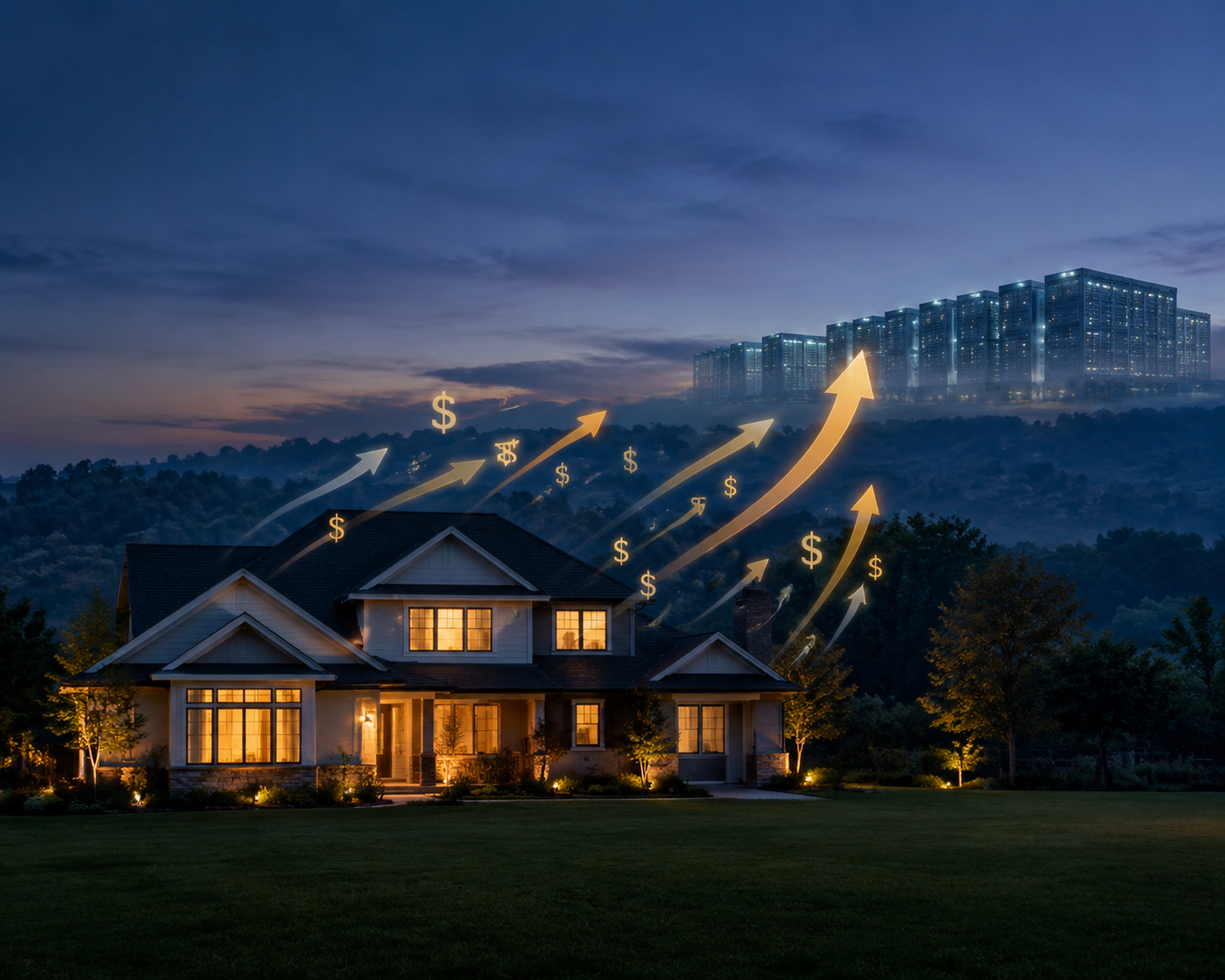
The annoying part is not that AI exists somewhere in a distant data center. It is that the smart home in your house is quietly becoming more expensive and less predictable: the electric bill creeps up, the camera plan costs more, and the assistant that was supposed to be convenient starts feeling gated and slower than it used to. Consumer Reports said residential electricity prices rose 7.1% in 2025, about twice the inflation rate, and found that areas with heavy data center concentration saw price jumps of 267% over five years; it also reported that 78% of Americans were worried data centers would raise their bills. [1]
Electricity Is The First Place It Shows Up
That electricity number matters because it is the cleanest bridge from a macro story about AI infrastructure to a household story about monthly pain. A homeowner does not need to believe every claim about data center expansion to notice that the utility bill is higher than it should be. If the grid gets more expensive to run, the first smart device you feel it through is often the one you bought to save money in the first place: the thermostat, the camera system, the voice assistant, or the always-on hub.
The concern is not abstract, either. The same Consumer Reports survey that accompanied the March 2026 data showed that homeowners are already connecting higher bills to data center growth, even if they do not yet see the wiring between the two. [1] That is a rational reaction. The benefit of a cloud-connected smart home is obvious on a good day; the cost shows up later, one rate increase at a time.
The Grid Problem You Can Hear In Appliances
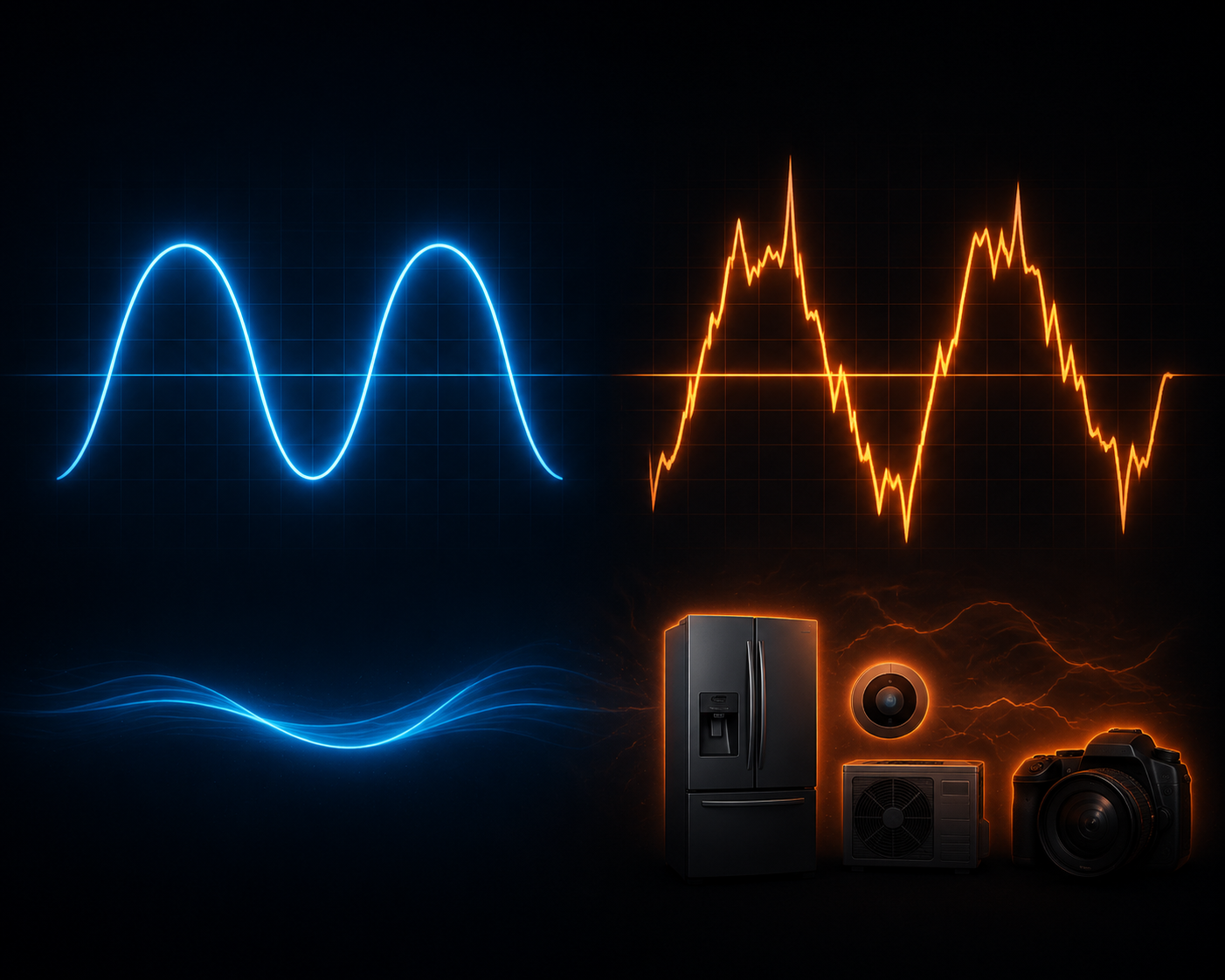
There is a second cost that is harder to see because it does not look like a bill. Bloomberg, working with Whisker Labs, reported in December 2024 that more than 3.7 million Americans live where power distortion exceeds safe thresholds, and that more than 75% of distorted readings occurred within 50 miles of data center activity. [2] Bloomberg also noted that sustained harmonic distortion above 8% can degrade appliance efficiency and raise fire risk, based on IEEE standards. [2]
This is where the conversation gets uncomfortable, because the mechanism is real even if the conclusion is still contested. Dominion Energy and ComEd disputed the sensor methodology Bloomberg used, so this should not be read as settled proof that any one data center is damaging a specific home. [2] But it is enough to take power quality seriously. If the waveform feeding your house gets dirtier, the appliances that live on that power do not care whether the cause was a server farm, a utility issue, or a local grid bottleneck. They only care that the electricity is not as clean as it should be.
That matters for smart homes because the most fragile devices are often the ones that sit in the background all day: refrigerators, HVAC systems, charging gear, and networked controllers. A cloud-heavy smart home can look modern while quietly depending on infrastructure that is doing more work, under more strain, for more hours of the day than it used to.
Subscriptions Are The More Obvious Trap
The easiest cost to recognize is the one that appears as a line item. The Verge reported in May 2026 that top-tier smart home plans have roughly doubled since 2021: Ring went from $100 to $200 a year, Nest Aware from $120 to $200, and Arlo from $117 to $216. [3] Amazon also charges $20 a month for Alexa+ without Prime. [3]
The Verge put the complaint plainly: "Subscription fatigue is real, and AI has already driven up the cost of smart home ownership." [3] That is the part homeowners feel first, because it is visible. The less visible part is that the same cloud model can make the device itself depend on a payment stream just to stay useful. A camera that was sold as a security device becomes, in practice, a service subscription with a lens attached to it.
Why Local AI Starts To Make Sense
The answer is not to pretend the cloud has no value. Remote access, backup, and large-language-model queries can still belong there when they need scale. But the core of a smart home should not need a distant server to decide whether a motion event is real, whether a voice command should fire a light scene, or whether a thermostat should react to the tariff schedule you already know you are on.
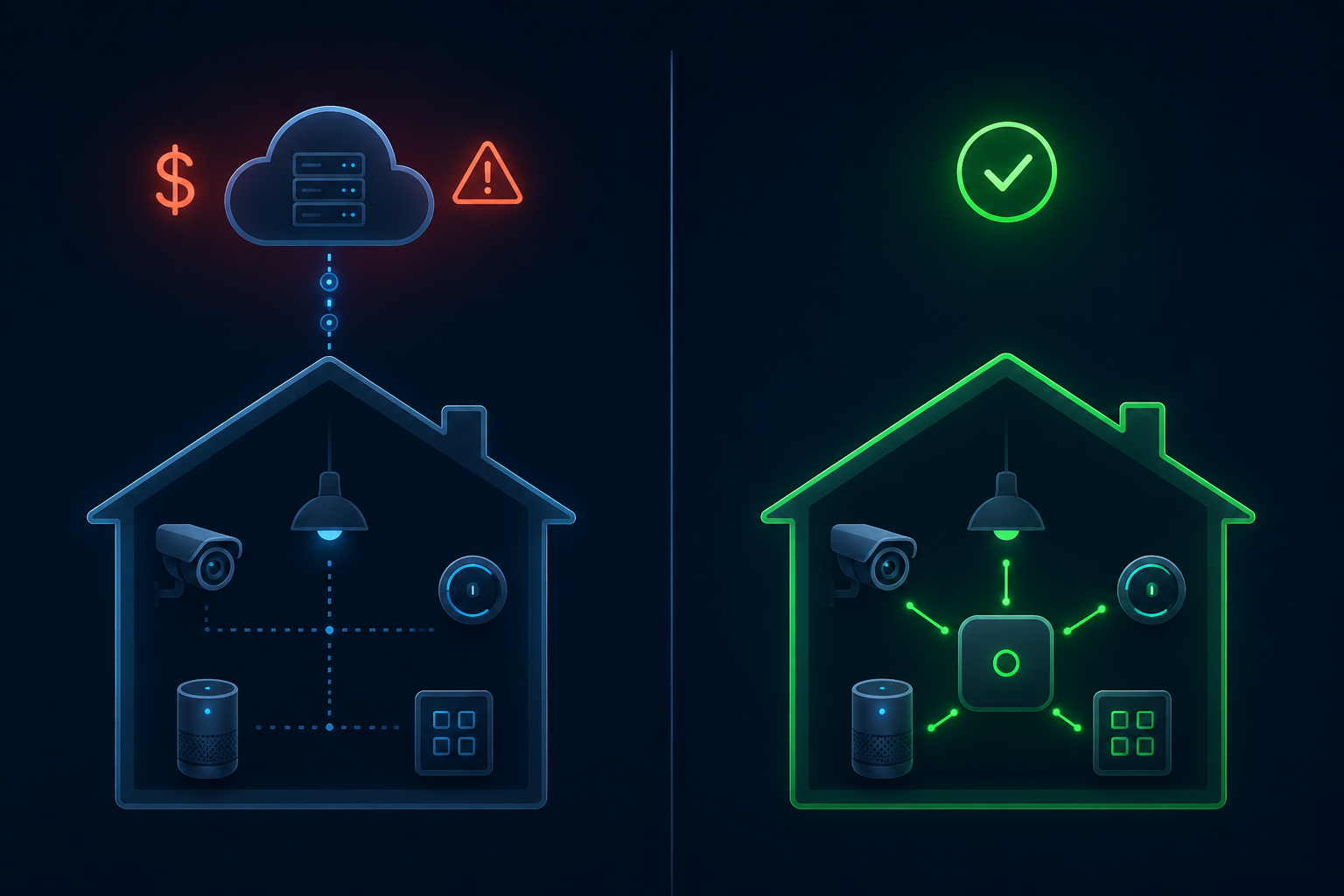
Industry groups and vendors say on-device classification can cut false alerts by 60% to 80%, bring local voice response down to about 50 milliseconds instead of 1 to 2 seconds, and save $15 to $40 a month on HVAC in time-of-use markets. Those figures are manufacturer-reported or industry-estimated, not independently verified across the board, but the architectural logic is still sound. If the decision happens inside the house, response is faster, internet outages hurt less, and there are fewer moments when a vendor can turn a useful feature into a paywall.
Matter and Thread 1.4 push in the same direction because they make it easier for devices to work locally instead of routing every action through a cloud account. [4] That is the practical shift worth caring about: not a flashy promise that AI will solve home automation, but a cleaner operating model in which the home can still turn on the light, classify the motion, and run the thermostat even when the internet is flaky or the subscription tier changes.
The rule of thumb is simple: keep the cloud where it genuinely adds value, but make the home do as much as it reasonably can on its own.
References
- Consumer Reports electricity data on residential rates and data centers, Consumer Reports, March 2026, Consumer Reports
- AI Power and Home Appliances, Bloomberg, December 2024, bloomberg.com/graphics/2024-ai-power-home-appliances/
- Smart home cost increase and AI subscription fatigue, The Verge, May 2026, theverge.com/tech/935298/smart-home-cost-increase-ai-subscription-fatigue
- Edge AI Foundation estimates on local processing, Edge AI Foundation / Edge AI Vision / Synaptics, Edge AI Foundation