
Devices
Smart Home Weather Stations That Track Hurricanes for Your Hub
Not all smart weather stations expose hurricane-critical data like wind gusts and pressure drops to Alexa, Google Home, HomeKit, or Home Assistant. This comparison shows which models support reliable alert automation and which fail when you need them most.
- Apple HomeNot stated
- Google HomeNot stated
- AlexaNot stated
- SmartThingsNot stated
- Home AssistantNot stated
A smart home weather station for hurricane tracking only matters if it can expose the right storm data to a hub that still works when the weather gets ugly. The practical test is narrower than most product pages suggest: wind, gust, pressure, rain, and an automation path that does not collapse the moment cloud services or home internet fail. On that test, Tempest is the broadest automation option, Ambient Weather WS-5000 is the strongest vendor-alerting option, Ecowitt WS90 is the most resilient local-control pick, Netatmo is a poor fit for HomeKit hurricane wind tracking, and Davis is accurate hardware with thin smart-home reach.
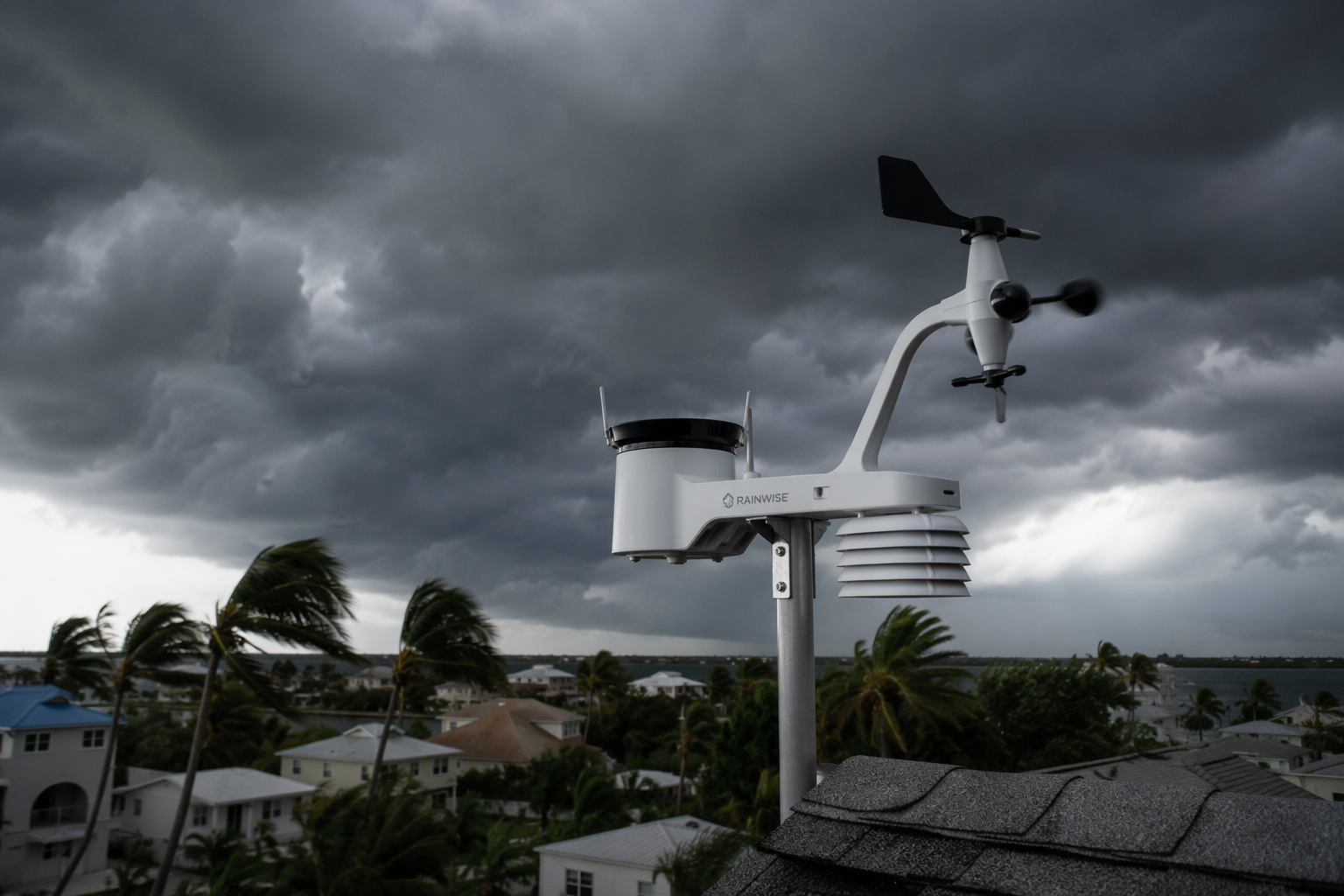
What the hub actually needs
- Wind speed or gusts that can trip an alert at hurricane-force levels.
- Pressure changes if you want early warning, not just obvious wind.
- Rain or lightning if you want layered automations instead of a single threshold.
- A data path that still works when the cloud path does not.
| Model | What reaches the hub | Where it fits best | Main constraint |
|---|---|---|---|
| Tempest | 22 IFTTT triggers, including wind speed rises above, pressure drops below, lightning strike, and rain detected; Home Assistant can read it locally over UDP port 50222 [1][2] | Broad IFTTT users and Home Assistant setups | IFTTT polling can be too slow on the free tier |
| Ambient Weather WS-5000 | Alexa and Google skill support; AWN+ adds SMS, push, and email alerts plus tropical cyclone map layers; ultrasonic updates every 4.9 seconds [3][4] | Users who want the vendor network to handle alerts | The cloud chain still matters |
| Ecowitt WS90 | Community-documented local Home Assistant operation with no cloud dependency | Users planning for internet loss | Model specifics are less formally documented |
| Netatmo | HomeKit exposes indoor temperature, humidity, CO2, and air quality, but not wind, rain, or pressure [5][6] | Indoor monitoring, not hurricane automation | The critical storm fields never reach HomeKit |
| Davis Vantage Pro2 | Popular Mechanics ranked its anemometer the most accurate in its roundup [7] | People prioritizing measurement quality over hub automation | Smart-home reach is too limited for this comparison |
Tempest gives the widest trigger surface
Tempest is the easiest station here to bend into storm automations because it exposes a lot more than a pretty weather dashboard. Its IFTTT integration lists 22 triggers, including wind speed rises above, pressure drops below, lightning strike, and rain detected [1]. That is the kind of trigger surface that can actually drive house-level actions instead of just mirroring a forecast. Home Assistant also has a local integration path over UDP port 50222, which means the station can keep feeding your hub without internet access [2].
The caveat is speed, because a broad cloud ecosystem is not the same thing as a fast one. The free IFTTT tier checks every 60 minutes, while Pro checks every 5 minutes [1]. Five minutes is better, but it is still a polling chain, not a direct local feed. For a hurricane escalation, that distinction matters.
The visual-alert use case is real, not hypothetical. TidBITS documented a setup that used IFTTT with Weather Underground to turn Philips Hue lights red when wind hit 60 mph [8]. That is the right mental model for this category: not a weather app, but an automation signal the whole house can notice.
Ambient Weather WS-5000 is the stronger alerting ecosystem
Ambient's advantage is not local resilience. It is the strength of its own alerting network. AWN+ adds SMS, push, and email alerts, tropical cyclone map layers, and up to 10 SMS alerts per day [4]. For a household that wants the vendor ecosystem to do more of the work, that is a meaningful package.
The hardware side is also worth paying attention to. The WS-5000's ultrasonic sensor updates every 4.9 seconds, while the WS-2000's mechanical anemometer updates every 16 seconds [3]. That is a real gap when wind is changing quickly. If your main concern is seeing the storm evolve in near real time inside Ambient's own network, the WS-5000 is the stronger choice.
Ecowitt WS90 is the local-control answer
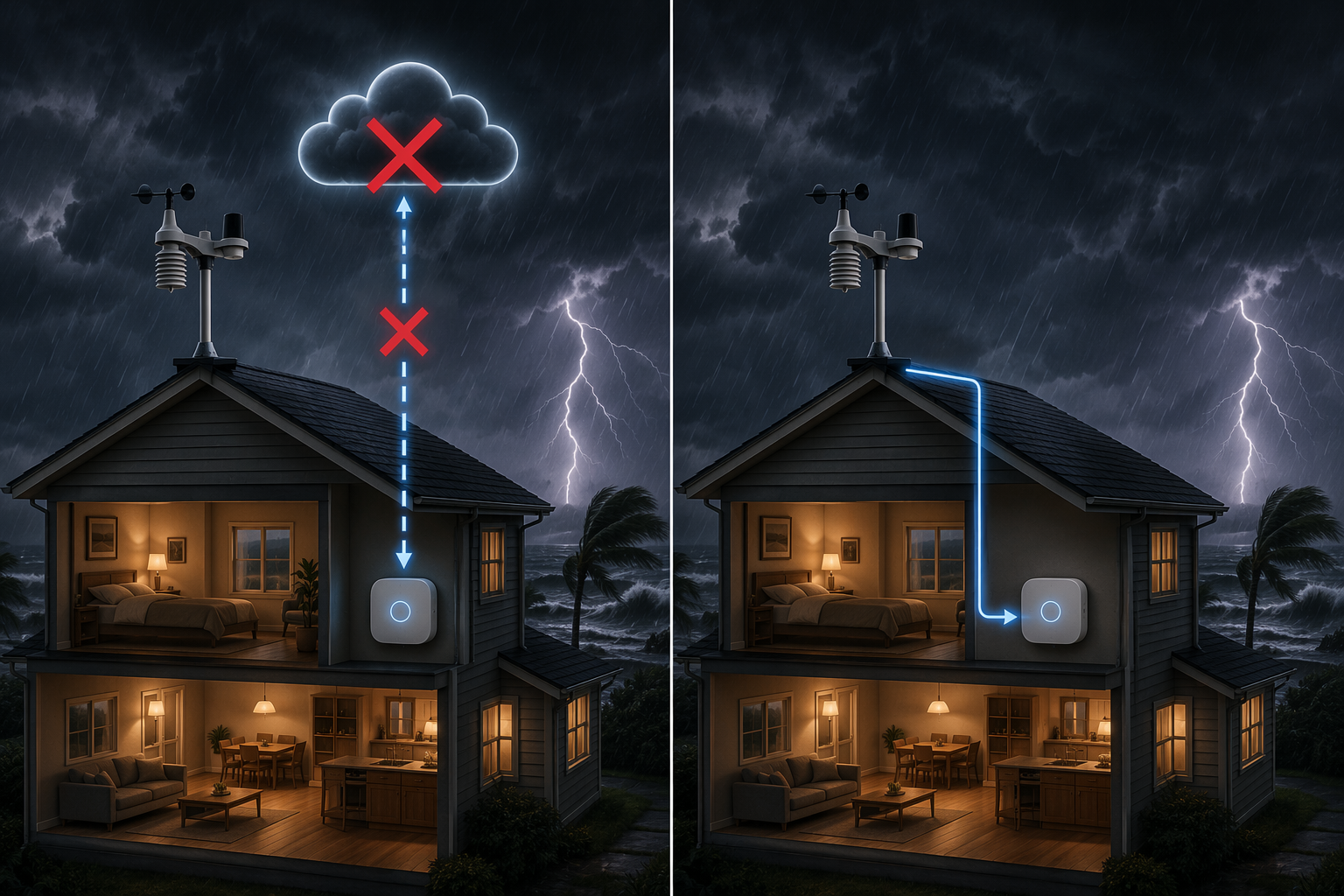
Ecowitt's appeal is simpler than the others: keep the path local and reduce the number of things that can fail when the storm starts knocking services offline. The WS90/Wittboy is the pick in this comparison when local Home Assistant operation matters more than cloud polish. That makes it the most resilient choice here for anyone who expects the internet to be the first thing to go.
Netatmo and Davis show why hardware quality is not enough
Netatmo is the clearest example of a station that looks compatible until you inspect the exposed fields. Its HomeKit support covers indoor temperature, humidity, CO2, and air quality, but not wind, rain, or pressure [5][6]. That means HomeKit can see the inside of the house while missing the storm values you actually wanted for hurricane automation.
Davis Vantage Pro2 sits at the other end of the problem. Popular Mechanics ranked it the most accurate anemometer in its home-weather-station roundup [7], and that is real value if you care about measurement quality. But the smart-home layer is too thin to carry this comparison, so the station stays impressive as hardware without becoming the best hurricane-tracking station for a hub.
Cloud dependence is the hidden failure mode
This is where the ranking changes. Cloud-first paths such as IFTTT, Alexa skills, Ambient Weather Network, and HomeKit bridges are useful while the internet is healthy. They are much less convincing when the storm is the thing stressing the network. If you only need routine push alerts during ordinary weather, the cloud chain can be fine. If you are trying to keep a hub responsive during hurricane conditions, local integration becomes the deciding factor.
That is why the final choice depends on what kind of risk you are planning around. Tempest leads if you want the widest trigger surface and already use IFTTT or Home Assistant. Ambient Weather WS-5000 is the better fit if you want Ambient's own alert network and tropical cyclone mapping. Ecowitt WS90 is the most resilient answer if the assumption is that internet service may disappear before the wind does. None of these stations replaces official hurricane warnings or emergency alerts.
References
- WeatherFlow — IFTTT
- WeatherFlow integration — Home Assistant
- WS-2000 Smart Weather Station — Ambient Weather
- Hurricane Season Preparation Starts With Better Weather Monitoring — Ambient Weather
- Weather Station HomeKit compatibility — Netatmo Help Center
- Netatmo weather station HomeKit article — 9to5Mac, 2021-04-23
- Best Home Weather Stations — Popular Mechanics
- Using Philips Hue Lights as a Hurricane and Tornado Alert — TidBITS, 2017-03-03
Report an issue with this profile
If a compatibility claim looks stale or incorrect, tell us — we re-verify before changing what's published.