
Last verified: July 20, 2026. The UBTech U1 is one of the first consumer humanoid robots that deserves a serious smart home buyer’s attention, but it is not yet a normal household purchase. In China, the U1 Lite starts at 119,800 yuan, roughly $17,650, while the Ultra reaches 990,000 yuan, roughly $145,835; deliveries are targeted from September 2026, and there is no confirmed US or global availability yet.[1]
That puts the U1 in an awkward but interesting place. It is more substantial than a screen-based companion device, more home-oriented than many lab humanoids, and far more expensive than any smart speaker, display, or home hub it might partly overlap with. UBTech is also making unusually intimate claims for it: silicone skin, 88 servo joints, local emotional AI, and recognition of more than 20 emotional states at over 90% accuracy, according to manufacturer statements reported by Reuters.[2]
| Purchase Question | What Is Known In Q3 2026 |
|---|---|
| Availability | China-only launch context; US/global availability has not been announced. |
| Price | Lite starts around $17,650; Ultra around $145,835. |
| Delivery timing | Deliveries targeted from September 2026. |
| Battery | UBTech says full-size humanoids typically run for 2-4 hours. |
| Smart home role | Walker-derived AIoT control is documented, but Matter, Zigbee, Z-Wave, Thread, Alexa, Google Home, HomeKit, SmartThings, and Home Assistant support are not publicly confirmed. |
| Loneliness role | The form factor is promising, but there are no independent home reviews proving loneliness reduction for this specific full-size humanoid. |
The short version: the U1 is a category signal worth watching closely. It is not something most US smart home buyers should budget for as a plug-and-play hub, elder-care device, or loneliness solution in July 2026.
What The UBTech U1 Actually Is
UBTech is selling the U1 in three variants: Lite, Pro, and Ultra. The public attention naturally goes to the entry price, because even the Lite costs more than many whole-home automation projects, but the more important distinction is that this is being framed as a lifelike companion robot rather than a wheeled display or a toy-scale home robot.[1]
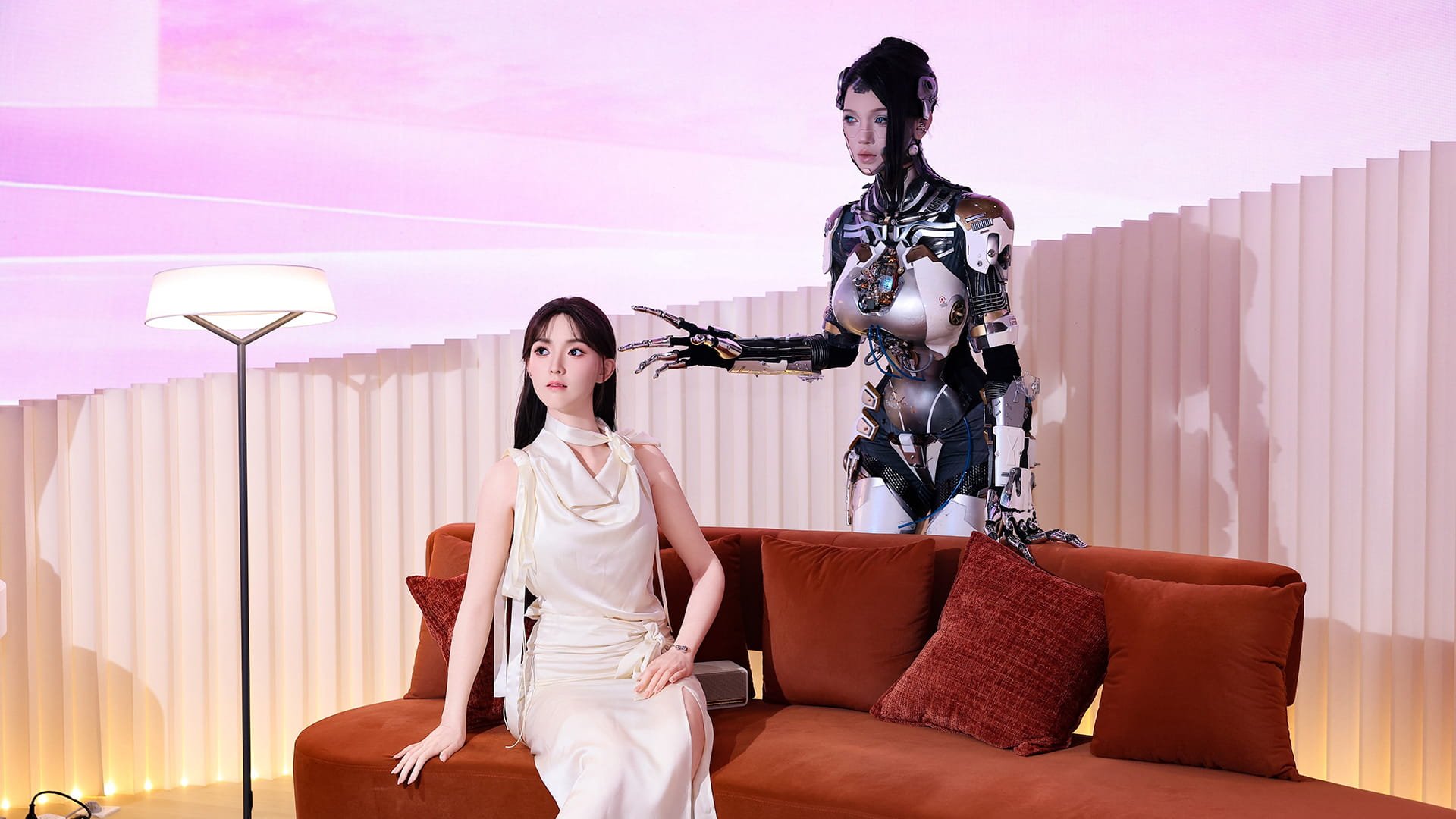
The hardware choices explain why the U1 feels different from the usual companion-robot conversation. Its humanoid body uses 88 servo joints and silicone skin, which are not decorative details when the product promise is companionship.[1] A robot that turns toward someone, gestures, shifts posture, and occupies adult-scale space in a room can change the social reading of an interaction before it says anything.
The AI stack is also being pitched for proximity rather than novelty. Reuters reported that the U1 can identify more than 20 emotions with over 90% accuracy and uses a Rockchip RK3588 processor for local processing.[2] Local emotional processing matters in a home context because latency and privacy are not side issues when a device is watching faces, listening to speech, and responding to mood.
The careful reading is that these are manufacturer-sourced performance claims, not independent household findings. They say something meaningful about the intended architecture of the device. They do not yet tell us how well the U1 recognizes a tired spouse in poor evening light, a grandparent speaking from another room, or a visitor who does not want a robot reading their expression at all.
Demand is real enough to notice. SCMP reported 13,361 pre-orders as of early July 2026.[1] For a device at this price, that is not a casual signal. It shows that UBTech has found an early-adopter audience for a home humanoid, even before the rest of the ownership story is settled.
The Loneliness Promise Needs Careful Handling
The U1 is not just being judged as a robot; it is being asked to stand in a very human gap. China has more than 120 million single people and more than 320 million adults aged 60 and older, according to SCMP’s launch coverage.[1] In the US, the CDC says about one in three adults reports loneliness, and nearly one in four adults aged 65 and older is socially isolated.[6]
Those numbers explain why a company would build a companion humanoid. They do not prove that a companion humanoid works. A full-size robot may feel more present than a tabletop device because it can stand, move, gesture, and share physical space. That embodied interaction could be especially relevant for people who respond poorly to phones, tablets, or voice-only assistants. It is also exactly why the standard of proof should be higher, not lower.
Smaller companion robots and social robots can help frame the question, but they cannot answer it for the U1. A tabletop companion that chats from a counter is not the same intervention as a life-size humanoid with silicone skin standing in a living room. The emotional weight, privacy implications, maintenance burden, and possible discomfort are all different.
For a household considering the U1 for an older adult, the first questions should be practical rather than sentimental. Does the person want an embodied robot in the home? Can they stop or mute emotional features easily? Who maintains the device? What happens when the robot misreads mood, fails to respond, or needs charging during the part of the day when companionship matters most?
The U1 may eventually become a meaningful companion category. In Q3 2026, the narrower and fairer claim is that UBTech has built a serious hardware and AI platform aimed at companionship, not that it has already demonstrated loneliness reduction in ordinary homes.
Smart Home Control Is The Part Buyers Should Inspect Closely
The U1 becomes much more interesting if it is not only a companion but also a moving smart home interface. UBTech’s Walker materials describe an open AIoT interface that can connect with smart home equipment and control lights, appliances, and sockets.[3] That lineage matters because the U1 is being introduced by a company that has already spent years presenting humanoids as household control agents, not just conversation partners.
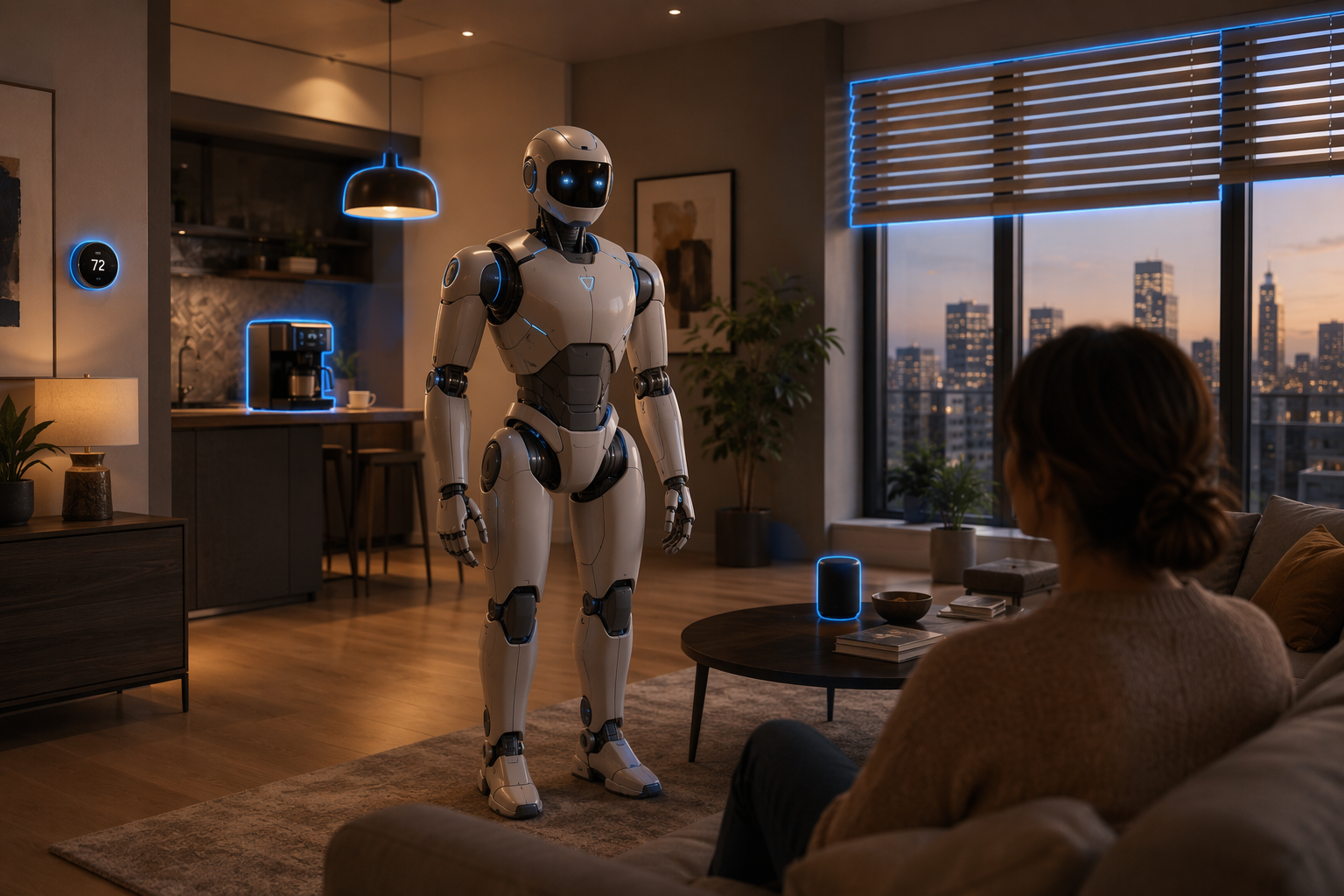
Walker X demonstrations go further, showing control of home devices including refrigerators, coffee machines, and vacuum cleaners, with perception hardware that includes a quadranocular stereo camera and dual RGB-D sensors.[4] That is a useful preview of what UBTech thinks a home humanoid should do: see the room, understand device context, and act as a physical and conversational bridge to connected appliances.
But “can control smart home devices” is not the same as “will work with your home.” The public materials do not confirm support for Matter, Zigbee, Z-Wave, Thread, Alexa, Google Home, Apple HomeKit, Samsung SmartThings, or Home Assistant. For a buyer, that missing line item is not a footnote. It decides whether the robot can join an existing automation system or requires a separate vendor-controlled path.
A useful buying test is simple: do not count a device as compatible until UBTech names the protocol, platform, hub requirement, region limitation, and supported device classes. A lamp turning on in a controlled demo does not tell you whether the U1 can operate a mixed home with Matter bulbs, Zigbee sensors, Wi-Fi plugs, a Home Assistant dashboard, and automations that already run without it.
The integration burden also changes once the robot is sold as a companion. If a smart display fails to trigger a routine, someone taps a screen or opens an app. If a humanoid companion promises to help an older adult control lights, sockets, or appliances, the failure lands differently. Someone has to troubleshoot the account linking, device discovery, network issue, firmware change, or regional service limitation. That person may not be the person living with the robot.
What Would Need To Be Confirmed Before Treating It As A Smart Home Device
- Protocol support: Matter, Zigbee, Z-Wave, Thread, Wi-Fi, Bluetooth, or a proprietary bridge.
- Platform support: Alexa, Google Home, HomeKit, SmartThings, Home Assistant, or China-specific ecosystems.
- Automation depth: voice commands only, scene triggering, sensor-based routines, or two-way state awareness.
- Local versus cloud control: what runs on-device, what requires UBTech servers, and what happens during an outage.
- Service ownership: who fixes broken integrations after app updates, router changes, or device replacements.
Battery Life Turns Into A Household Scheduling Problem
Battery life is where the U1 stops feeling like a futuristic household member and starts feeling like an early-generation robot. After criticism, UBTech said full-size humanoid robots typically run for only two to four hours and described that range as industry-standard.[5]
That may be fair inside the humanoid robotics category. It is still inconvenient inside a home. A companion robot with two to four hours of runtime is not an all-day presence unless its day is divided into scheduled sessions, docking periods, and clear expectations about when it is available.
For smart home control, the constraint is even plainer. A home hub is expected to be boring infrastructure: always powered, always reachable, and quietly present when a routine fires at 6 a.m. or a leak sensor reports trouble at midnight. A humanoid that needs to preserve battery, dock, or recharge can still be a useful interface, but it should not be treated as the primary automation controller unless UBTech provides a separate always-on control layer.
This is not a reason to dismiss the U1. It is a reason to place it correctly. Think of it as a scheduled embodied assistant, not a replacement for a stable smart home backbone.
How It Sits Beside ElliQ, 1X NEO, And Unitree G1
The U1 should not be flattened into a generic “humanoid robot” comparison. ElliQ is useful mainly because it shows how companionship robots are often evaluated around daily check-ins, conversation, reminders, and emotional engagement. It is not a full-size walking humanoid, so evidence or user comfort around that kind of tabletop device should not be treated as proof for the U1.
1X NEO and Unitree G1 are better orientation points for the word “humanoid,” but even there the comparison has limits. A humanoid body can mean a general-purpose robotics platform, a developer device, a mobility showcase, a domestic assistant, or a companion product. The U1’s distinguishing claim is not just that it has legs and joints; it is that UBTech is positioning it for home companionship with emotional AI and smart home control.
That positioning is exactly why the U1 deserves attention and skepticism at the same time. It is aiming at a more personal, more difficult household role than most connected devices ever attempt.
Who The U1 Makes Sense For In 2026
In its launch state, the U1 makes the most sense for China-based early adopters, robotics collectors, research-minded households, and organizations that can tolerate first-generation friction. The price alone removes it from normal consumer comparison shopping. The missing global availability removes it from most US buying plans. The integration uncertainty removes it from serious smart home deployment unless the buyer is prepared to build around UBTech’s ecosystem.
The households that should be most cautious are the ones with the most emotionally important use cases. If the U1 is being considered for an older adult, a person living alone, or a family member who needs support rather than a technology experiment, the purchase standard should be higher. Independent reviews, service terms, privacy controls, repair logistics, and integration documentation matter more than launch-week enthusiasm.
There is also a consent issue that smart home buyers sometimes ignore. A robot that recognizes emotion and moves through shared space does not interact only with the purchaser. It interacts with guests, caregivers, cleaners, children, and relatives. Local processing on the RK3588 is encouraging, but buyers still need clear answers about what is stored, what leaves the device, who can review data, and how recognition features can be disabled.[2]
Device Profile Verdict
The UBTech U1 is credible as a first-generation consumer humanoid because the pieces are substantial: a lifelike body, 88 servo joints, silicone skin, local emotional AI, strong launch-week pre-orders, and a Walker-derived smart home interface.[1][2][3] It is not another passive screen trying to look friendly from a countertop.
For most US smart home buyers in July 2026, that still does not make it a mature purchase. The U1 is China-only at launch, independent home reviews are absent, smart home protocol support is not publicly documented, the price starts around $17,650, and the two-to-four-hour battery window creates real ownership friction.[1][5]
Watch it closely. Verify compatibility when UBTech publishes protocol details. Treat the loneliness claims as promising but unproven for this form factor. Do not budget for the U1 as a plug-and-play smart home hub replacement.
References
- UBTech’s lifelike humanoid robots built for companionship arriving in homes across China, South China Morning Post
- China’s UBTech launches AI-powered lifelike companion robots, Reuters, July 2, 2026
- Walker, UBTECH
- Walker X, UBTECH
- UBTech says full-size humanoid robots typically run for only two to four hours amid U1 battery criticism, TechNode, July 6, 2026
- Risk Factors for Social Isolation and Loneliness, CDC