Devices
Which smart home dream house giveaway fits your setup?
Not all smart home dream house giveaways deliver the same technology. This comparison breaks down HGTV Smart Home 2026, St. Jude Dream Home, and brand-level giveaways by the actual smart devices, ecosystems, and real-world value—so you can decide which prizes are worth your entry.
- Apple HomeNot stated
- Google HomeNot stated
- AlexaNot stated
- SmartThingsNot stated
- Home AssistantNot stated
A smart home dream house giveaway sounds like one prize: the house, the gadgets, the app, the fantasy of walking in and finding everything already working. In 2026, that phrase covers at least three very different setups. HGTV Smart Home 2026 is the most complete installed package, but its public materials point to a turnkey system with proprietary boundaries. St. Jude Dream Homes are better understood as smart-ready houses, with wiring and infrastructure that leave the winner to choose the devices. Brand-level giveaways are usually smaller, but they can be cleaner if the prize matches the ecosystem already sitting on your phone.
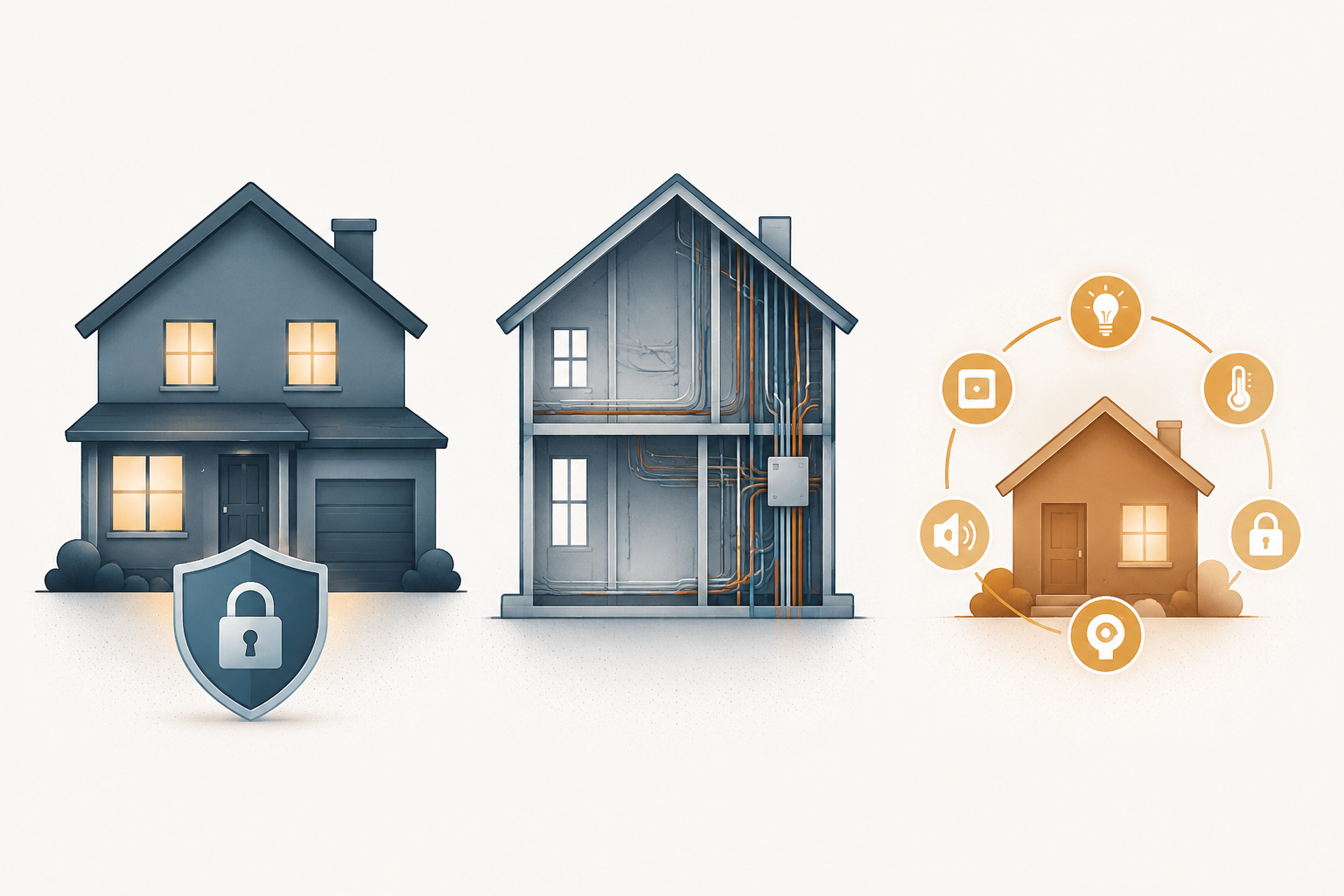
| Giveaway type | What you are really getting | Best fit | Main catch |
|---|---|---|---|
| HGTV Smart Home 2026 | A furnished Orlando prize home with installed smart and entertainment features, including a SimpliSafe security package | Entrants who want the most complete move-in spectacle and can live with a defined security ecosystem | HGTV does not publicly confirm detailed model-level protocol support for every installed device |
| St. Jude Dream Home | A charitable ticket-entry home that may include structured wiring and smart-ready infrastructure, depending on the local build | Entrants who want to choose their own hub, cameras, sensors, locks, and automations | The winner supplies much of the actual smart-home hardware and integration work |
| Brand-level giveaways | A smaller set of devices or a branded package built around one ecosystem | Entrants already committed to that brand’s app, hub, or voice assistant | Cross-platform flexibility depends on the specific devices, which are often not comparable to a full house prize |
That is the useful comparison. Not which rendering looks most expensive, and not which kitchen has the better pendant lights. The setup question is simpler and less glamorous: if you won, what system would you actually inherit?
HGTV Smart Home 2026: the most finished prize, with the clearest lock-in
HGTV Smart Home 2026 is the obvious heavyweight. The official prize package centers on a roughly 3,000-square-foot home in Orlando, Florida, with furnishings, a 2026 Mercedes-Benz GLC Plug-In Hybrid SUV, and $100,000 cash; HGTV lists the approximate retail value at $1,388,796.[1] The public announcement adds the showier smart-home details: SimpliSafe security, electrostatic privacy windows, multi-room audio/video, a multi-sport simulator, and a kitchen island with wireless charging.[2]
That is a real package. It is not just a builder saying the walls are wired and the buyer can figure it out later. The SimpliSafe list includes cameras, glass-break sensors, water sensors, and a smart keypad, which means a winner would receive a functioning security layer rather than a shopping list.[2] For someone who wants a clean front door, leak detection under vulnerable fixtures, and visible cameras without building a system from scratch, that has value.
It is also where the word “smart” needs tightening. Public HGTV materials confirm the brand categories and some installed features, but they do not publish a model-by-model compatibility map for the devices in the house. They do not establish that the installed system is Matter-native, Thread-based, HomeKit-first, Home Assistant-friendly, or built around any open local-control architecture. If your first move after winning would be to ask which hub owns the door sensors, which cameras can leave the vendor cloud, and whether the simulator, privacy glass, AV, security, and kitchen charging surfaces share a control layer, the official materials do not answer all of that.
That does not make the HGTV setup weak. It makes it bounded. A proprietary security package can be exactly right for a winner who wants one app, professional polish, and a known vendor instead of a weekend of pairing sensors. The mistake is treating “turnkey” and “openly integrated” as the same promise. They are not. A turnkey SimpliSafe-centered security setup can work beautifully while still being the wrong inheritance for someone who wants every sensor exposed to a mixed Apple Home, Google Home, Alexa, SmartThings, Z-Wave, Zigbee, Matter, or Home Assistant environment.
The same caution applies to the house’s more cinematic features. Electrostatic privacy windows are great prize-home theater: tap, tint, instant atmosphere. Multi-room AV and a simulator add the kind of “I would absolutely try this before unpacking” energy that these giveaways are built to sell. But unless the public prize documents identify the controllers, integrations, local APIs, and long-term service requirements, those features should be read as installed amenities, not proof of a unified smart-home platform.
For protocol-sensitive entrants, this is where a separate compatibility check matters more than the photo tour. The current Matter landscape is still uneven by device class and vendor implementation, so a giveaway’s “smart” label should not be treated as a shortcut for cross-platform control. NestGrid’s guide to what actually works with Matter in 2026 is the more realistic lens: compatibility has to be verified by device and function, not assumed from the existence of an app.
St. Jude Dream Home changes the value calculation
St. Jude Dream Home is not the same kind of entry. It is a charitable ticket model, with $100 tickets tied to local home giveaways, and St. Jude describes more than 40 Dream Home Giveaway locations nationwide.[3] That matters before the smart-home discussion even starts. Someone buying a ticket may be motivated by the hospital’s fundraising model, not by the same odds-and-prize logic as a free national sweepstakes.
Technically, the St. Jude path is often less finished and potentially more flexible. The research materials support a smart-ready reading: structured wiring, Cat6, pre-wire, donated Bosch appliances, and local builder variation, rather than a standardized national list of installed smart locks, cameras, sensors, hubs, and automations.[3] That is not a downgrade if you are the kind of person who would rather choose the stack yourself.
A wired, unfinished house can be a better starting point for a serious setup than a finished system you immediately want to replace. Cat6 to the right places gives you options for access points, PoE cameras, hardwired backhaul, local servers, and more reliable fixed-device connections. Structured wiring can make the difference between a clean rack and a collection of bridges balanced behind a media console. The tradeoff is obvious on move-in day: the house may be ready for a smart home, but it is not necessarily one yet.
That unfinishedness creates work. A St. Jude winner who wants Apple Home may choose one path; a Home Assistant user may choose another; an Alexa or Google Home household may care more about voice routines; a SmartThings household may prioritize device certification and app continuity. Zigbee, Z-Wave, Thread, Wi-Fi, and Matter decisions still sit with the winner. So do camera privacy, lock selection, sensor placement, and whether automations run locally or depend on cloud services.
That is why the St. Jude version of “smart home dream house giveaway” needs a different checklist. You are not judging whether the installed system fits you. You are judging whether the shell reduces the pain of building your own. Before treating any local Dream Home as smart-ready, a winner would want to confirm where the Ethernet terminates, which rooms are wired, whether camera locations have power or data, what the electrical panel can support, and whether the builder left documentation. NestGrid’s smart home setup checklist for a new house is closer to the real post-win task than a product unboxing.
Brand-level giveaways are smaller, but sometimes cleaner
Brand-level smart-home giveaways do not compete with the HGTV prize on square footage, furnishings, cash, or fantasy value. The useful version of these promotions is narrower: a SimpliSafe package for someone who already wants that security app, a SmartThings-centered bundle for someone already using Samsung’s ecosystem, or an Alexa device package for a household that already runs routines through Amazon. The prize is smaller, but the decision can be simpler.
Because the research materials do not provide specific active 2026 campaign pages for these brand-level examples, they should be treated as a category rather than as a ranked list of current promotions. The pattern is still useful. A single-brand bundle can deliver coherent onboarding, one app, and fewer immediate compatibility surprises. It can also deepen the exact ecosystem dependency you may be trying to avoid.
This is where the smaller prize can beat the bigger one for a very specific entrant. If your home already runs on Alexa routines, a pile of compatible devices may be more useful than inheriting a luxury feature you cannot integrate. If you are trying to build a privacy-first camera setup, a closed camera bundle may be less attractive than buying fewer devices with clearer storage, network, and access-control choices. The same logic applies when shopping outside giveaways; the best smart-home deal is the one that fits the hub and privacy model you actually use, not the one with the longest spec sheet. NestGrid tracks that more practical angle in its guides to privacy-first smart home cameras and smart home product deals by hub.
The winner may not keep the smart home anyway
The technology comparison changes once taxes, carrying costs, and resale enter the room. LiveAbout and Homes.com have both reported that most HGTV Dream Home and Smart Home winners do not keep the homes long-term, with observer estimates commonly putting the sell-or-cash-out share above 90%; that figure should be read as reporting and industry observation, not as a formal peer-reviewed study.[4][5] Still, it explains why the most important smart-home feature may be the one that helps the house sell cleanly.
The entry numbers also keep the whole exercise in perspective. LiveAbout reports that the 2020 HGTV Smart Home winner was selected from more than 103 million entries, and its Dream Home coverage reports that the 2019 HGTV Dream Home winner was selected from more than 97 million entries.[4][6] At that scale, the rational move is not to optimize your life around winning. It is to understand what kind of prize you are entering for, because the difference between an installed security system and smart-ready wiring becomes very real only for the person whose name gets drawn.
Florida Today’s 2026 coverage and KeepTheSweep’s tax discussion both frame the HGTV Smart Home prize as a financial event, not just a lifestyle upgrade.[7][8] A winner who keeps the Orlando home has to think about taxes, insurance, maintenance, utilities, subscriptions, possible HOA obligations, and the ordinary friction of owning a high-value property in a place they may not already live. At that point, whether the water sensors expose status to your preferred dashboard may matter less than whether the house can be carried, sold, rented, or accepted as cash instead.
This does not make the smart devices irrelevant. It changes their job. For a keeper, installed tech affects daily convenience, privacy, service contracts, replacement costs, and how much time the first month disappears into account setup. For a seller, installed tech becomes part of staging and buyer confidence. A neat, recognizable security package may help more than a fragile multi-hub experiment, even if the latter would make a forum thread happier.
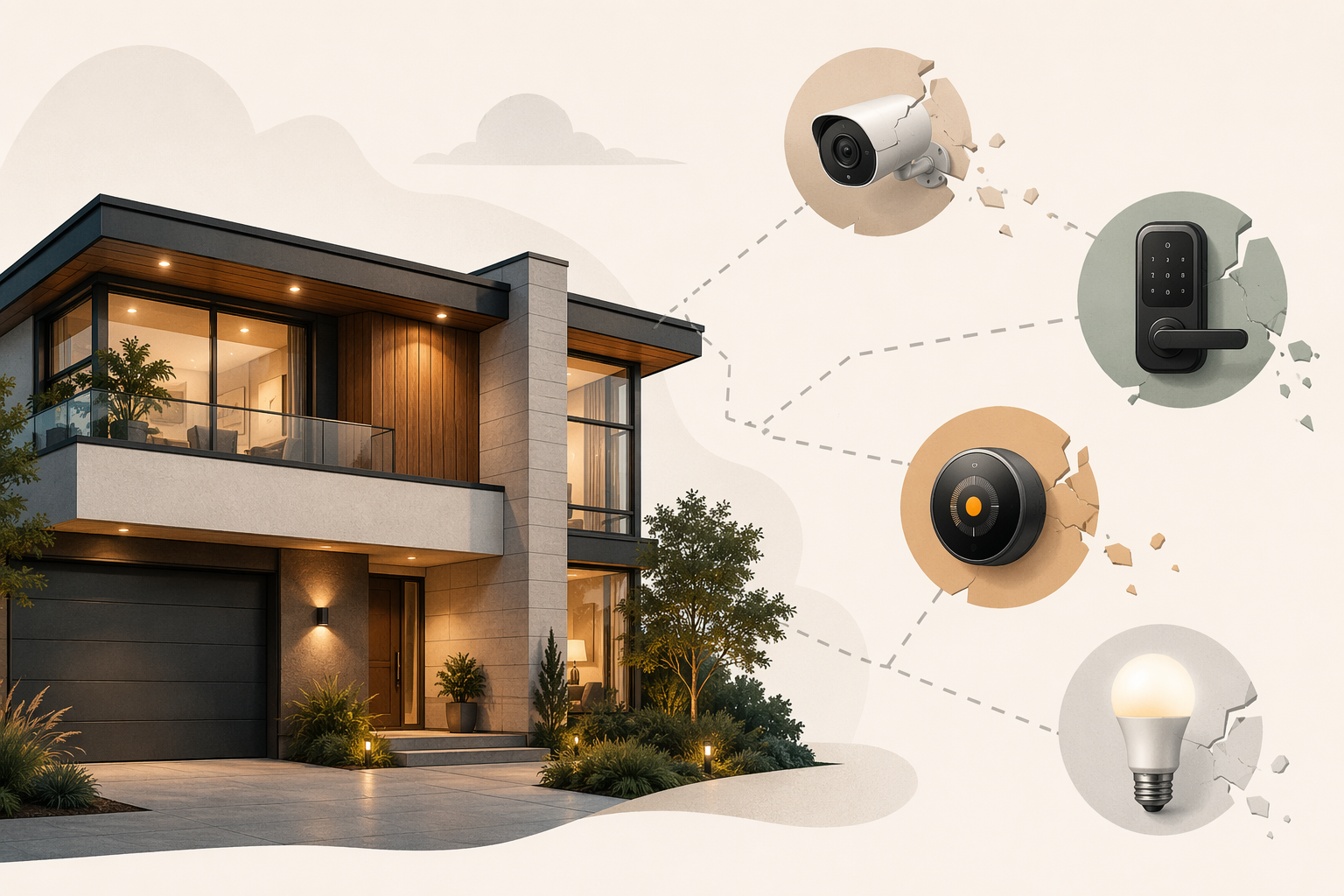
Which giveaway fits your setup?
Choose HGTV Smart Home 2026 if you want the most complete installed experience and you are comfortable accepting a SimpliSafe-centered security layer plus other smart amenities whose detailed protocol behavior is not fully specified in public prize materials. It is the strongest fantasy and the most finished smart-home prize in this comparison. It is not public proof of a fully open, Matter-native, whole-house ecosystem.
Choose St. Jude Dream Home if the charitable ticket model matters to you and you would rather inherit infrastructure than someone else’s device decisions. The upside is flexibility: wire-first homes can support better access points, cameras, hubs, and local control if the build is documented well. The cost is that you become the integrator, buyer, tester, and support desk.
Pay attention to brand-level giveaways when the brand already matches your home. A smaller Alexa, SmartThings, or SimpliSafe-style package can be more useful than a more glamorous prize that adds another silo. If it does not match your ecosystem, treat it like any other bundle: count the devices you would actually keep, then discount the rest.
The plain finding is that none of these major giveaway paths publicly delivers a fully Matter-native, integrated 2026 smart-home ecosystem. HGTV gives you the most installed smart-home experience, with proprietary boundaries. St. Jude gives you a better chance to build your own stack, with more labor. Brand giveaways give you coherence at smaller scale, if you already accept the brand. The real question is not which house looks smartest. It is which kind of unfinishedness you are willing to inherit.
References
- HGTV Smart Home 2026 Sweepstakes Rules, HGTV
- HGTV Unveils HGTV® Smart Home 2026 in Orlando, Florida, PRNewswire
- St. Jude Dream Home Giveaway, St. Jude Children’s Research Hospital
- HGTV Smart Home Winners, Past and Present, LiveAbout
- What Really Happens to HGTV Dream Home Winners?, Homes.com
- HGTV Dream Home Giveaway, LiveAbout
- HGTV Smart Home Florida: Vote Orlando prize taxes, Florida Today, June 12, 2026
- I Won the HGTV Smart Home 2026: The Tax Reality and Your Real Options, KeepTheSweep
Report an issue with this profile
If a compatibility claim looks stale or incorrect, tell us — we re-verify before changing what's published.