
Do Smart Baby Bathtub Drowning Devices Work With Your Hub?
No certified smart baby bathtub drowning-prevention device found as of August 2026 works with a smart-home hub. This status-labeled compatibility audit sorts the three device classes that do surface — Bluetooth wearables, an untested AI tub, and Zigbee leak-sensor workarounds — and ends with a buy-versus-skip verdict for Home Assistant, Apple Home, SmartThings, and Aqara households.
Last updated
As of August 25, 2026, this audit did not find a certified smart baby bathtub drowning-prevention device that works as a normal smart-home device with Home Assistant, Apple Home, SmartThings, or an Aqara hub. The category that surfaces around that search is thinner and messier: one Bluetooth app-alert wearable that was reviewed years ago for pool use, one vendor-described AI bathtub prototype, and water-leak sensors that can report water where the sensor sits.
That matters before price, design, or app polish. A parent shopping for this phrase is not only asking whether something can sense water. They are asking whether an alert can move through a trusted hub path, trigger household escalation, and arrive quickly enough to matter without pretending the device has taken over supervision. In this audit, no product clears that bar.
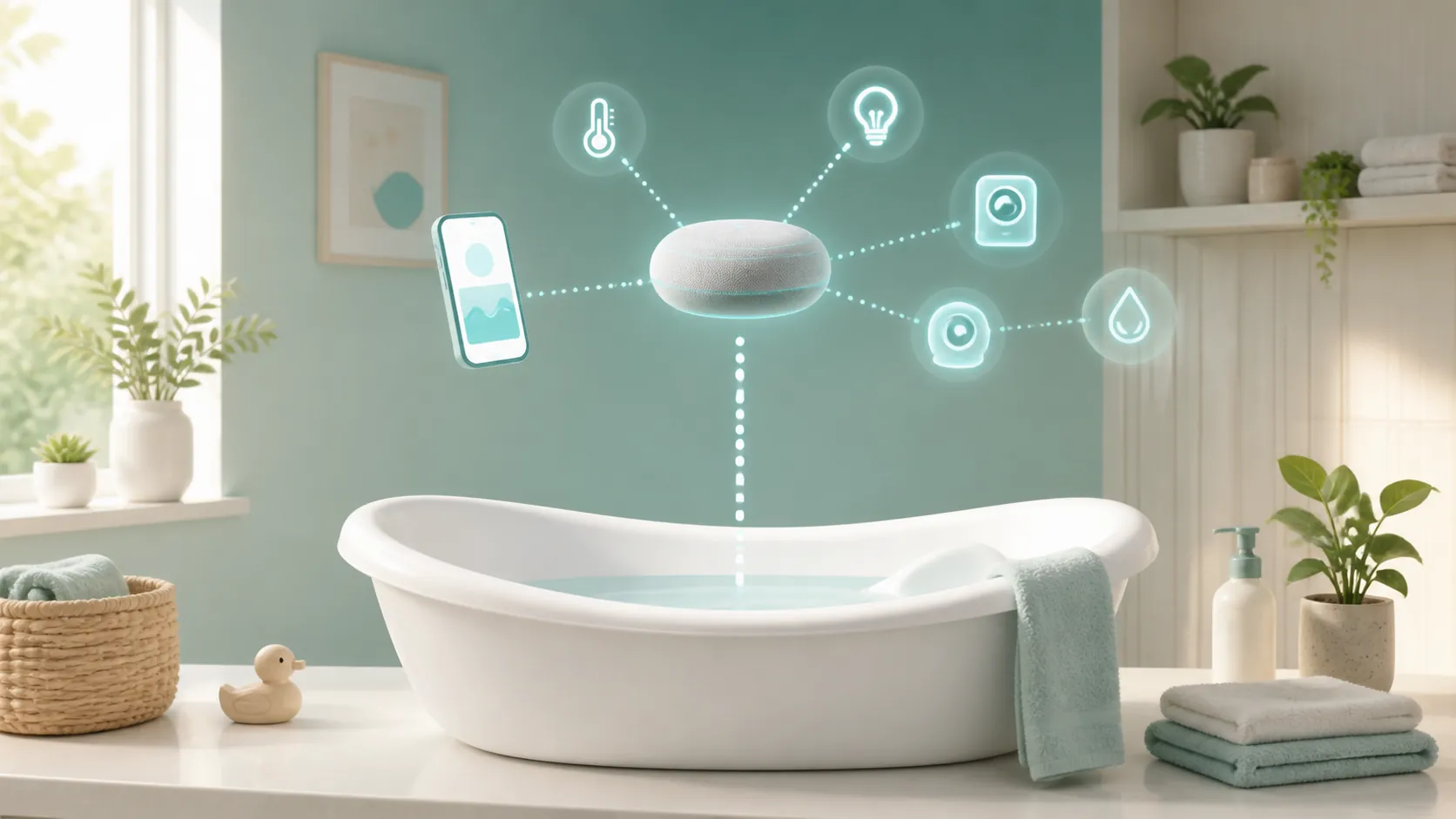
The 2026 compatibility landscape
The practical split is not “smart” versus “not smart.” It is whether the product is actually a baby-bath submersion monitor with a documented hub integration, or whether it is merely drowning-adjacent. The three rows below are the meaningful rows found in this research.
| Status class | Detection method | Protocol / hub requirement | Ecosystem support | What it can and cannot detect |
|---|---|---|---|---|
| Confirmed as reviewed app-only wearable; current vendor documentation should be re-verified | iSwimband wearable, described in a hands-on review as using app-selectable alert thresholds from 10 seconds upward and an approximately 100-foot out-of-range alert | Bluetooth LE to phone app; no smart-home hub requirement described in the reviewed material | No Home Assistant, Apple Home, SmartThings, Aqara, Matter, Thread, Zigbee, or Z-Wave path found in the reviewed material | Can alert a phone app based on the wearable’s configured mode in the reviewed pool-oriented use case; not a baby bathtub fixture, not a hub device, and not evidence of bathtub drowning prevention [1] |
| Investigating; vendor-described proof of concept | NisurgSmartSpa concept using camera and microphone monitoring, nostril tracking, and auto-drain behavior | Proprietary concept; vendor says it integrates with security-monitoring platforms rather than ordinary smart-home hubs | No documented Home Assistant, Apple Home, SmartThings, Aqara, Matter, Thread, Zigbee, or Z-Wave integration found in the vendor description | Sounds directly relevant to bathtub risk, but the available material is vendor self-description: patent-pending 63/741880, proof-of-concept stage, and no independent test evidence in the reviewed source [2] |
| Workaround; water-presence or overflow alert only | Aqara Water Leak Sensor or similar leak sensor placed where water would reach it | Aqara Water Leak Sensor is a Zigbee sensor that requires an Aqara hub; Aqara describes 0.5 mm water detection and HomeKit support through a hub | Aqara route can be HomeKit-adjacent through the hub; Aqara’s 2026 child-safety guide also describes bathtub overflow alerts, iOS Critical Alerts, and the Hub M3 as a Matter-certified controller | Can alert when water touches the sensor or when an overflow path reaches it; cannot detect whether a baby’s face is submerged, whether a caregiver is present, or whether a bath is safe [3][4] |
The table is deliberately status-labeled. “Confirmed” here does not mean confirmed as a baby bathtub safety system. “Workaround” does not mean equivalent. “Investigating” means the idea is relevant enough to watch, but not strong enough to buy around.
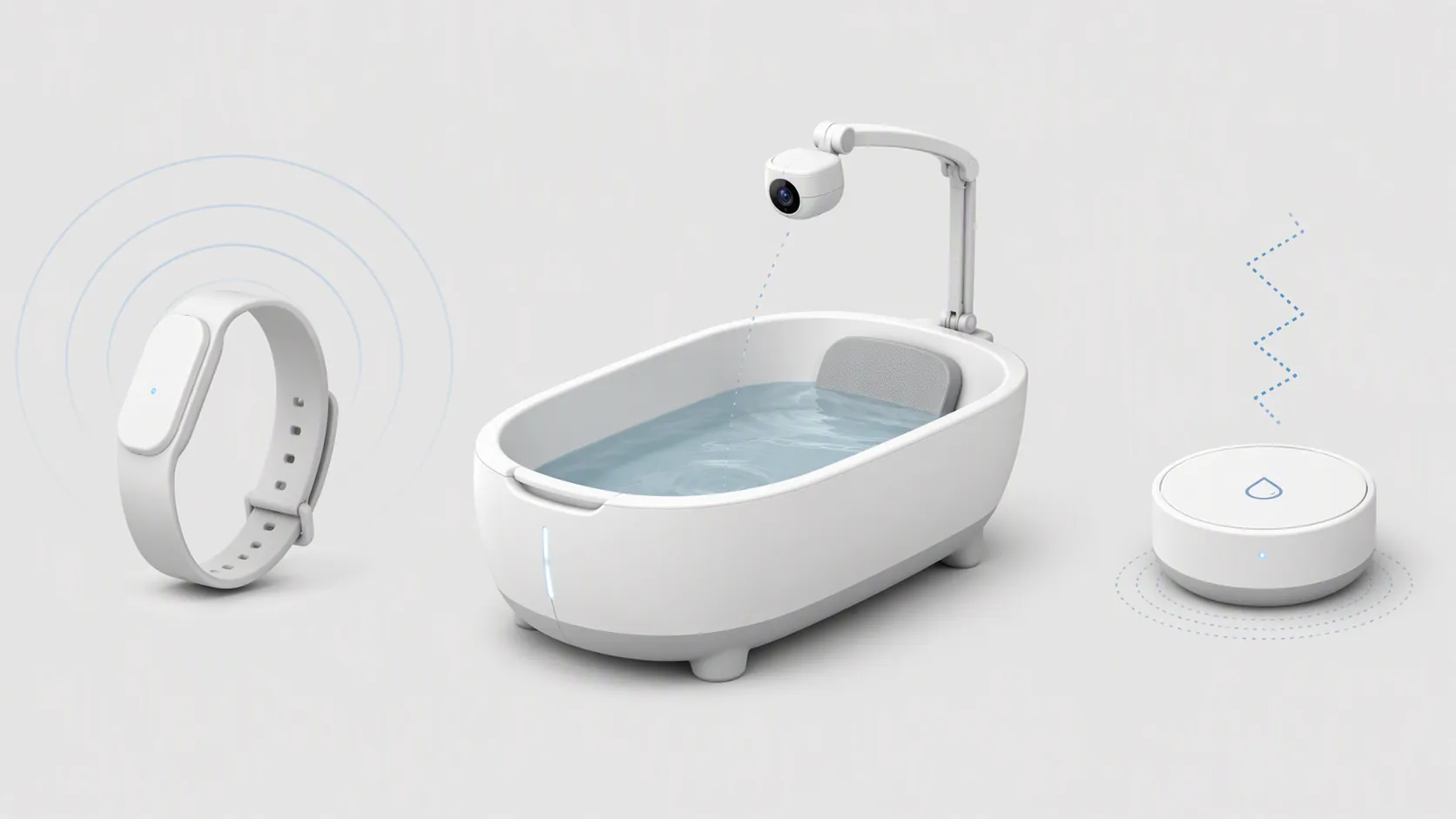
Drowning-adjacent is not the same as hub-integrated drowning prevention
A smart-home parent can reasonably want one more alert path. The problem is the wording. A device that detects water is not automatically detecting danger. A device that sends a phone notification is not automatically part of a household alert chain. A device with a baby or bath in the marketing frame is not automatically certified, validated, or compatible with your hub.
For this category, a product would need to answer several ordinary compatibility questions before it deserved serious pre-purchase consideration: What physical event does it detect? Which protocol does it use? Which hub receives the event? Is the integration local, cloud-dependent, or app-only? What is the failure mode when the phone is muted, the hub is offline, or a caregiver is in another room? None of the products found here gives a clean, certified answer to that chain for baby bathtub submersion.
That is also why the leak-sensor row gets attention without getting promoted. It is the only row that looks like normal smart-home compatibility. A Zigbee sensor can create automations. A hub can route alerts to multiple phones, lights, speakers, or sirens. Those are real advantages for overflow or water-on-floor events. They still do not turn a puck on the floor, counter, or tub-side surface into a monitor of a baby’s airway.
iSwimband: useful to identify, weak for this purchase decision
iSwimband is the most concrete consumer product in the audit, but the fit is poor for the search intent. The hands-on review material describes a Bluetooth LE aquatic safety wearable paired to a phone app, with swimmer and non-swimmer modes, app-selectable alert timing beginning at 10 seconds, and an out-of-range alert around 100 feet. That is a phone-app path, not a hub path [1].
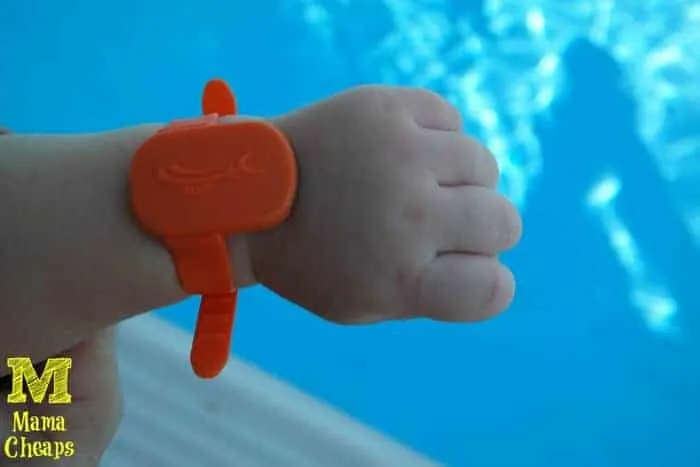
The reviewed use case is also pool-oriented, not baby-bathtub-specific. The older review is useful because it tells us the integration shape: wearable to phone app. It does not establish current availability, current firmware behavior, bathtub suitability, or smart-home support. Before anyone treats iSwimband as a live buying option in 2026, the details need to be checked against current vendor documentation.
For Home Assistant, Apple Home, SmartThings, and Aqara households, the verdict is simple: this is not a native hub device based on the material reviewed. Even if the phone alert works as described, it does not give a hub an event to escalate.
NisurgSmartSpa: relevant idea, not a compatible product pick
NisurgSmartSpa is the row that sounds closest to the target problem. The vendor describes a smart infant bathtub concept using camera and microphone monitoring, nostril tracking, and auto-drain behavior. It also describes a patent-pending system, number 63/741880, at proof-of-concept stage [2].
That description should not be treated as independent validation. The available source is the vendor’s own explanation, not a third-party drowning-scenario test, certification record, recall database entry, or compatibility listing from a major smart-home ecosystem. The vendor language points toward security-monitoring platform integration, not a documented Home Assistant, Apple Home, SmartThings, Aqara, Matter, Thread, Zigbee, or Z-Wave path [2].
For pre-purchase purposes, “Investigating” is the correct label. It may be worth watching if it becomes a shipping product with independent test data and a documented integration surface. It is not something a hub-based household can currently plan automations around from the materials reviewed here.
Aqara and leak sensors: the only real hub route, with a hard boundary
The Aqara Water Leak Sensor is a normal smart-home object in a way the other rows are not. Aqara describes it as a Zigbee water-leak sensor requiring an Aqara hub, with 0.5 mm water detection and HomeKit support through the hub [3]. Aqara’s 2026 child-safety guide explicitly discusses using sensors for bathtub overflow alerts, says iOS Critical Alerts can be used, and identifies the Hub M3 as a Matter-certified controller [4].
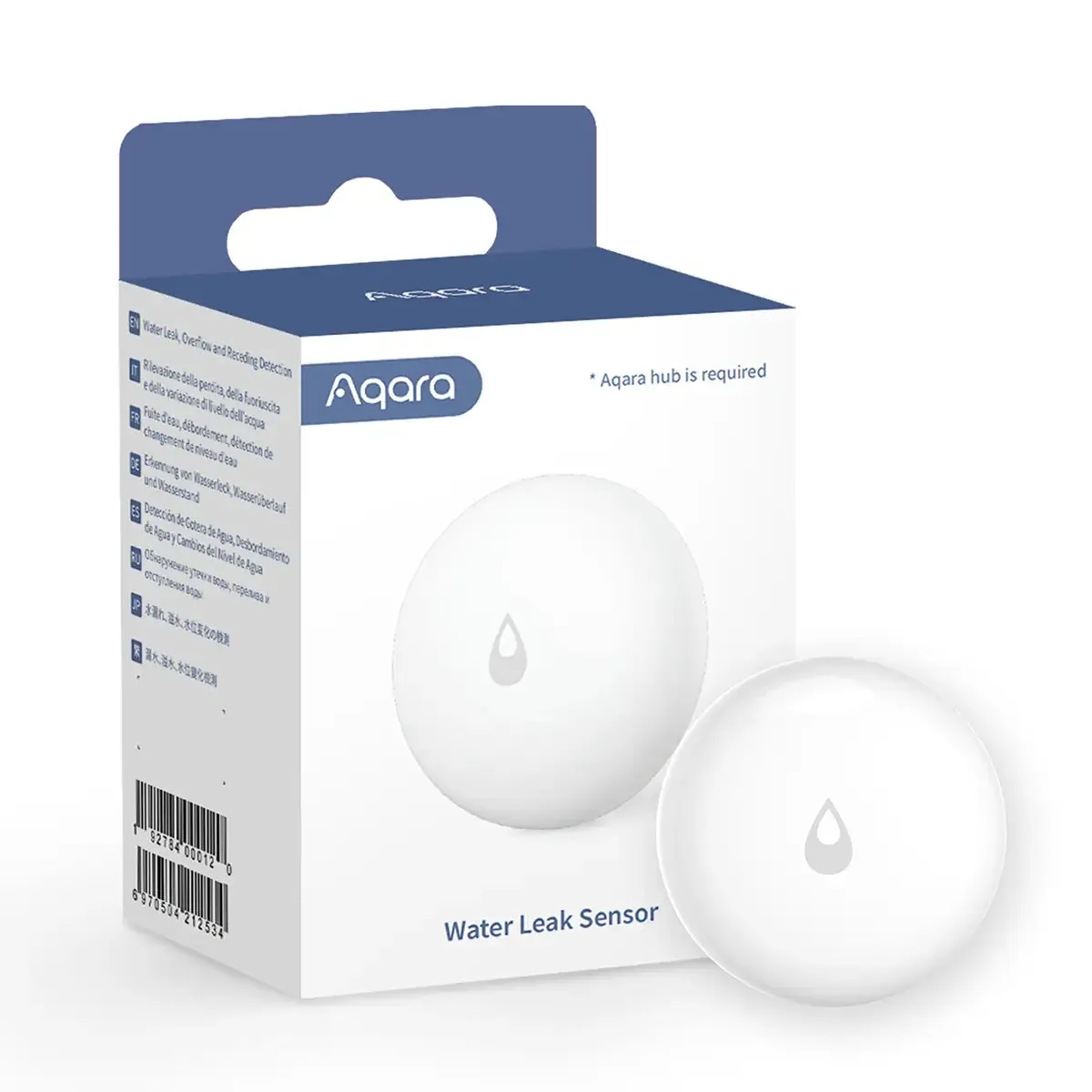
That makes the Aqara route a legitimate overflow-alert workaround. Put plainly, the sensor can report the presence of water where its contacts are placed. If a tub overflows onto the floor, a counter gets wet, or a sensor is placed in a basin-adjacent position where water should not be, a hub can use that event. It can push an alert, turn on a light, trigger a speaker, or run an escalation path like the ones covered in NestGrid’s water leak sensor compatibility guide and flood warning alert setup recipe.
The boundary is just as important as the compatibility. A leak sensor does not know whether a baby is sitting upright, slipping, face-down, crying, silent, supervised, or alone. It does not detect submersion unless the dangerous event happens to create water contact at the sensor. In many bathtub scenarios, the emergency is not an overflow event at all.
If you use this workaround, name it accordingly in your hub: “tub overflow alert,” “bath floor wet,” or “bath counter water.” Do not name it “drowning alarm.” Labels shape behavior, especially when a tired adult is glancing at a phone notification while carrying towels, clothes, or another child.
Hub-by-hub verdict
For a hub household, the buying question is not “Which one is best?” It is whether any row gives your ecosystem a trustworthy event that matches the claimed safety purpose. On August 25, 2026, the answer for baby bathtub drowning prevention is no.
| Household ecosystem | Buy / skip verdict | Why |
|---|---|---|
| Home Assistant | Skip as a drowning-prevention purchase; consider only an overflow or water-presence workaround | No baby bathtub drowning device in this audit exposes a documented Home Assistant integration. A leak-sensor automation may be useful if your setup already supports the chosen sensor, but that is an overflow alert, not a submersion monitor. |
| Apple Home | Skip for drowning prevention; Aqara/HomeKit-adjacent leak alerts may be useful for overflow | Aqara describes HomeKit support through its hub for the Water Leak Sensor, and its child-safety guide describes bathtub overflow alert use. That does not create baby-submersion detection [3][4]. |
| SmartThings | Skip as a baby bathtub drowning-prevention device | The reviewed iSwimband and NisurgSmartSpa materials do not provide a SmartThings path. The Aqara materials reviewed here support the Aqara/HomeKit-adjacent workaround, not a SmartThings-certified baby-bath safety product. |
| Aqara hub | Possible overflow-alert workaround; skip if the requirement is drowning prevention | This is the cleanest route for a water-presence alert because the Aqara Water Leak Sensor is built for the Aqara hub path. It still detects water at the sensor, not a baby’s airway status [3][4]. |
The SmartThings row deserves one extra caution because Zigbee branding often tempts buyers into assuming broad interoperability. This audit is not treating “Zigbee exists somewhere in the chain” as the same thing as a confirmed SmartThings baby-safety integration. For this purchase category, unsupported or half-supported pairing is not good enough.
The safety floor underneath the compatibility answer
The regulatory floor for ordinary infant bath hardware already exists separately from smart-home claims. The CPSC’s mandatory infant bath tub standard, 16 CFR 1234, incorporates ASTM F2670 and applies to infant bath tubs manufactured on or after October 2, 2017 [5]. Bath seats are a separate product class under 16 CFR 1215, and CPSC’s bath-seat recall and warning page includes 2026 activity such as a Trankerloop recall of about 2,380 units in February 2026 and 2026 warnings involving YCXXKJ and Lucakuins products [6].
Those standards and recalls do not validate smart drowning-detection claims. They are the baseline context: baby bath tubs and bath seats already carry known hazards before adding sensors, apps, or automations. A smart device that cannot document what it detects, how it alerts, and which hub receives the event should not get a pass because the underlying product category is frightening.
The drowning statistics explain why the search exists. CPSC’s in-home drowning safety page, reviewed for this August 2026 audit, says about 90 children drown in the home each year, about two-thirds of those deaths happen in the bathtub, and drowning can occur in 2 inches of water [7]. NCHS reported that 75% of drowning deaths among children under 1 year old in 2018–2019 occurred in bathtubs [8].
The caregiver data is the part that should make product language more careful, not more dramatic. In a 2025 hospital cohort, 91% of caregivers intended supervision, but only 24% were engaged; 39% of lapses involved fetching a towel or clothes [9]. That is not a picture of cartoon negligence. It is ordinary household motion at exactly the wrong moment.
Sensor research also argues against loose claims. A 2024 Sensors review discusses issues such as false alarms, calibration limits, and a roughly 15-second submersion threshold reference in drowning-detection work [10]. That does not mean every sensor is useless. It means a vendor needs evidence for the exact detection scenario it is selling, especially when the buyer is a parent trying to cover a few seconds of human lapse.
Pre-purchase verdict
Skip this category if your requirement is a certified, hub-integrated smart baby bathtub drowning-prevention device. This research did not find one for Home Assistant, Apple Home, SmartThings, or Aqara as of August 25, 2026.
Consider the Aqara or similar leak-sensor route only if you are deliberately building an overflow or water-presence alert. Treat it like a household water alert, test the notification path, and keep its label honest. It can be a useful extra warning for water where water should not be. It is not a baby-submersion monitor.
Bluetooth wearables, AI tub concepts, and leak sensors can each be interesting for different reasons. None should be treated as permission to look away from a baby in the bath.
References
- iSwimband Review: Aquatic Safety Device (Swimmer/Non-Swimmer Mode) - Mama Cheaps
- NisurgSmartSpa - Nisurg
- Aqara Water Leak Sensor - Aqara
- Best Smart Sensors for Child Safety and Baby Monitoring - Aqara, 2026
- New Federal Safety Standard for Infant Bath Tubs Takes Effect - U.S. Consumer Product Safety Commission
- Baby Bathtub Seats and Rings - U.S. Consumer Product Safety Commission
- In-Home Drowning Safety Information Center - U.S. Consumer Product Safety Commission
- Unintentional Drowning Deaths Among Children Aged 0–17 Years: United States, 1999–2019 - NCHS Data Brief No. 413
- Johnson et al. 2025 hospital cohort - PubMed Central
- Jalalifar et al. 2024 Sensors review - Sensors
Known issues with this device / protocol
Spec-version history
For active regressions on this protocol, see Update Watch.
No linked Update Watch entries yet.