
Can a Samsung Z4 control your smart home?
The Samsung Z4 can't control a 2026 smart home: Tizen 3.0 can't run the SmartThings app, and the hardware lacks Matter, Zigbee, Z-Wave, and IR capabilities. This status-labeled compatibility check covers every control path, explains the TV-era confusion behind the assumption, and points to what actually works instead.
Last updated
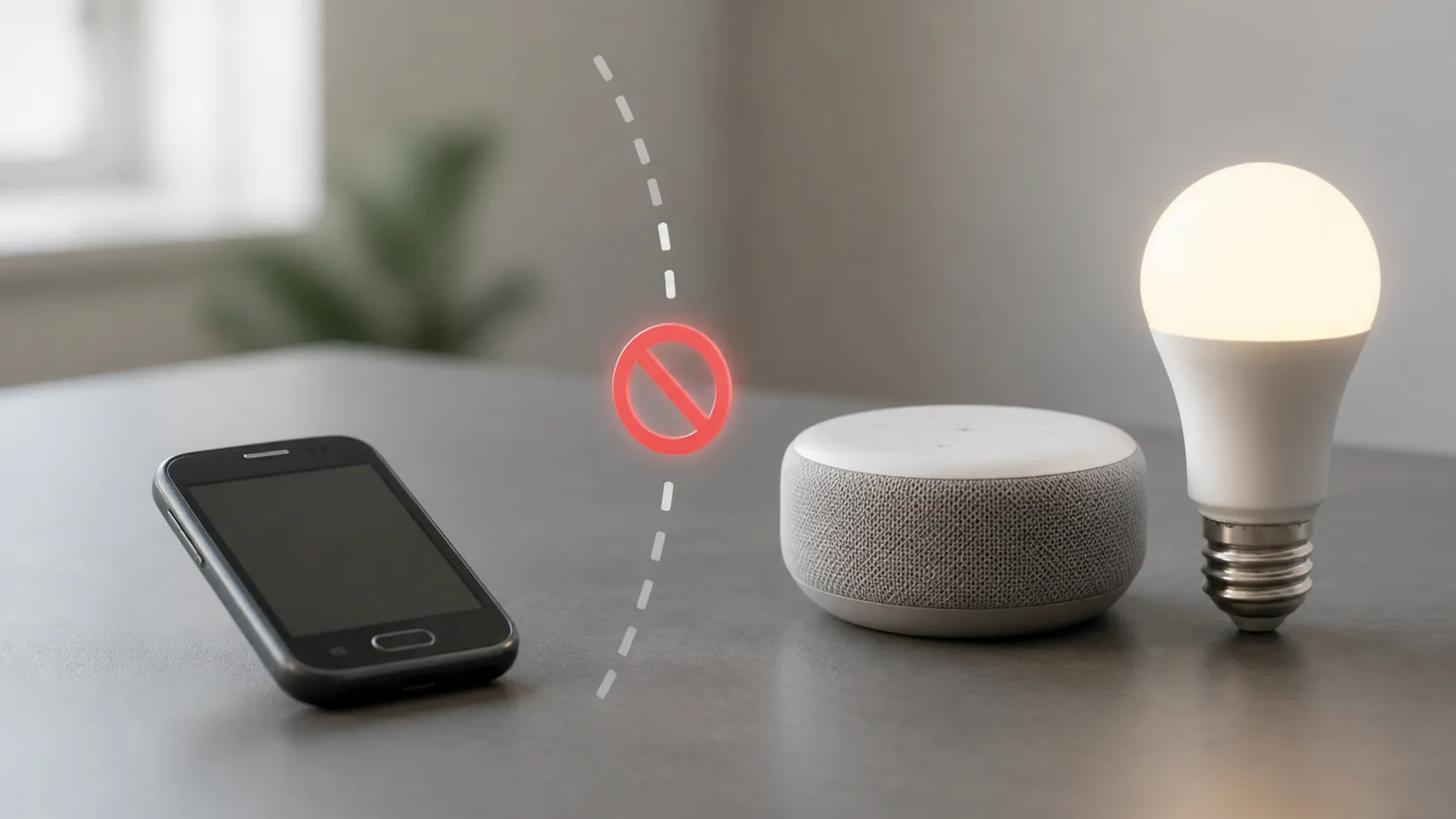
No — not for a 2026 smart home. A Samsung Z4 is a Tizen 3.0 phone, not an Android phone, not an iPhone, and not a tiny SmartThings hub. The normal control paths close before setup begins: today’s SmartThings app requires Android 8.0 or later, or iOS 12.0 or later; the Z4’s own Tizen Store was permanently closed on December 31, 2021; and the hardware does not include the smart-home radios or IR emitter people usually need for direct device control.[1][2][3]
| Compatibility item | 2026 status | What this means |
|---|---|---|
| Device checked | Samsung Z4, Tizen 3.0 | 2017 budget Tizen smartphone with a 4.5-inch WVGA display, 1GB RAM, 8GB storage, Wi-Fi b/g/n 2.4GHz, and Bluetooth 4.0.[1] |
| Hub hands-on tested | None | This verdict is based on structural compatibility: OS, store access, app requirements, radios, and emitter hardware. |
| SmartThings app | Confirmed Not Compatible | The current app requires Android 8.0+ or iOS 12.0+. The Z4 runs Tizen 3.0 and does not use Google Play or the Apple App Store.[1][2] |
| Tizen Store app route | Confirmed Not Compatible | The Tizen Store closed permanently on December 31, 2021, ending new installs and updates for Z-series Tizen phones.[3] |
| Google Home, Alexa, Home Assistant mobile apps | Confirmed Not Compatible | The normal mobile-app route expects Android or iOS app distribution. The Z4 has neither a supported Android/iOS OS nor a live Tizen app channel.[1][3] |
| IR universal remote use | Confirmed Not Compatible | No IR blaster is listed for the Z4; its listed sensors are limited to accelerometer and proximity.[4] |
| Matter, Zigbee, Z-Wave, Thread control | Confirmed Not Compatible | The phone has Wi-Fi 2.4GHz and Bluetooth 4.0, but no listed Zigbee, Z-Wave, or Thread radio, and no supported Matter controller path.[1][4] |
| Browser-based hub dashboard | Unverified / Investigating | A web dashboard is the only theoretical path left, but the Z4’s dated Tizen browser behavior with modern hub dashboards is undocumented here and needs hands-on testing. |
Why the Samsung Z4 fails the app route
The tempting mistake is easy to understand. It says Samsung on the front, SmartThings is Samsung’s smart-home platform, and the phone has Wi-Fi and Bluetooth. That sounds like it should at least work as a cheap wall remote.
The problem is not brand loyalty; it is the operating system boundary. The Samsung Z4 runs Tizen 3.0, while the SmartThings mobile app is supported on Android 8.0 or later and iOS 12.0 or later.[1][2] A Z4 cannot simply download the Android SmartThings app from Google Play, and it is not an iPhone using the Apple App Store. Samsung’s own SmartThings page points users to the Galaxy Store, Google Play, and Apple App Store distribution routes, none of which turn a 2017 Tizen phone into a supported controller.[5]
The old Tizen Store does not rescue it. Samsung’s Tizen phone app store was reported permanently closed on December 31, 2021, with no new downloads or updates for the Z1 through Z4 line.[3] That matters more than whether an old forum post once mentioned a package file or a half-working app. For smart-home control, an unsupported sideload is not a compatibility path; it is a maintenance problem waiting to happen.
That same app-channel problem blocks the normal Google Home, Alexa, and Home Assistant mobile-app approach. This is not a claim that those ecosystems can never be reached from a browser or another device. It is the narrower, more useful point: the Samsung Z4 itself has no supported modern Android/iOS app route for becoming the household smart-home remote.
Wi-Fi and Bluetooth are not the same thing as smart-home control
The Z4’s radio list is modest and ordinary: Wi-Fi b/g/n on 2.4GHz and Bluetooth 4.0.[1] Those are useful phone radios, but they do not make the handset a Zigbee coordinator, a Z-Wave controller, a Thread border router, or a supported Matter controller.
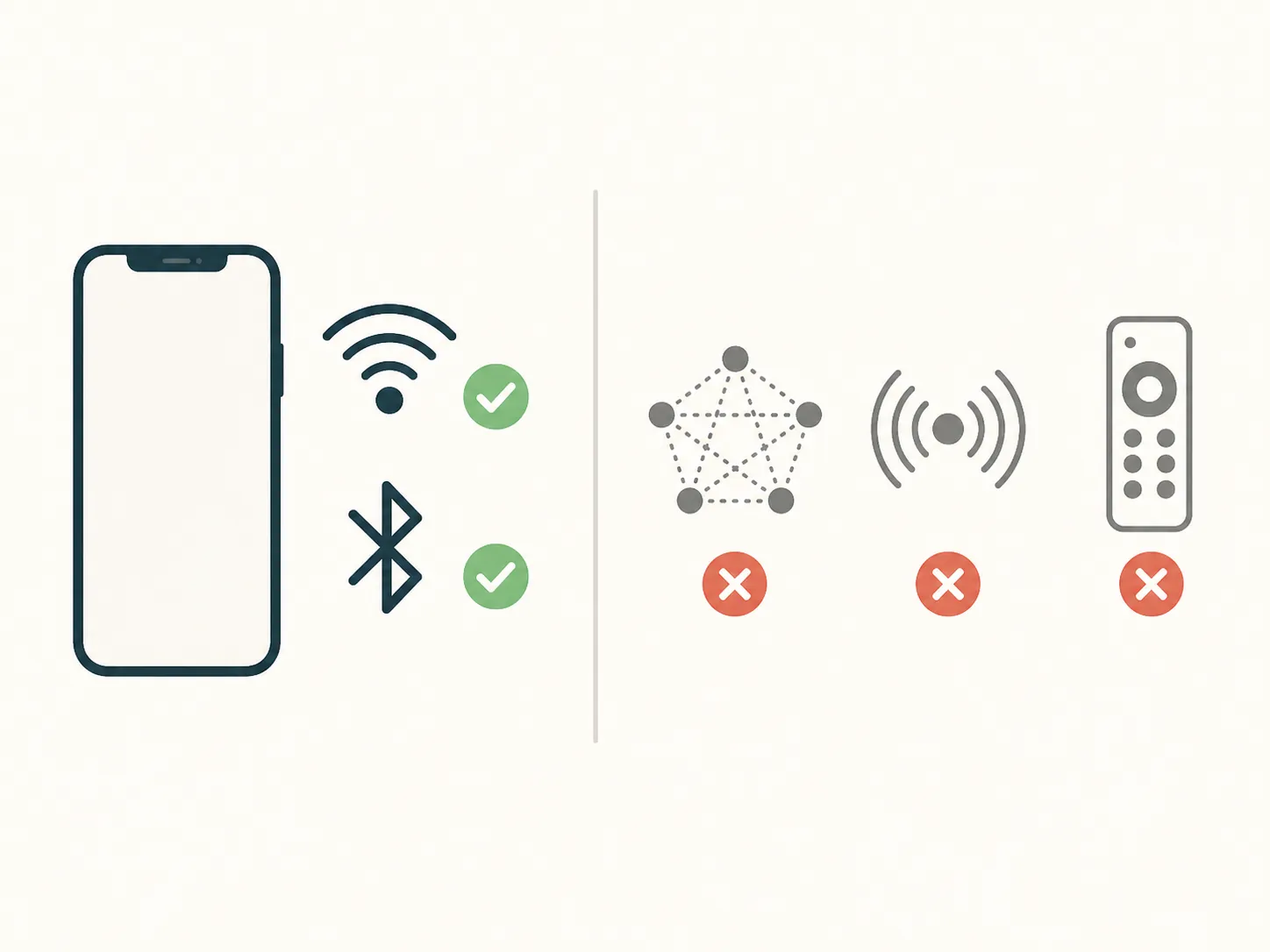
This distinction trips up a lot of otherwise sensible repurposing ideas. A smart bulb may use Wi-Fi, but setting it up and controlling it normally depends on a supported app. A Zigbee sensor does not pair to any random Bluetooth phone. A Z-Wave lock expects a Z-Wave controller. Thread devices need a Thread border router. Matter still needs a supported controller path, and the Z4 does not provide one through SmartThings or another current mobile ecosystem.
IR remote control is a separate dead end. Some old phones were useful as TV or air-conditioner remotes because they had an infrared blaster. The Z4’s listed specifications do not include IR, and DeviceSpecifications lists only accelerometer and proximity under sensors.[4] Without an IR emitter, it cannot become a universal infrared remote by installing an app, even if such an app existed for its platform.
The TV-era Tizen confusion
There is a real reason the assumption keeps appearing: Tizen did not vanish from Samsung products. It survived in Samsung TVs, and Samsung’s current SmartThings material says 2022 and newer Q60-series-or-above TVs can include SmartThings hub functionality with Matter, Thread, and Zigbee support.[5]
That TV fact does not transfer backward to the Samsung Z4. A modern Samsung TV with embedded SmartThings hub capabilities is a different product class with different hardware and current platform support. The Z4 is an old Tizen phone from Samsung’s short-lived phone experiment; it does not inherit the hub role just because both products have used the Tizen name.
What the Z4 actually was
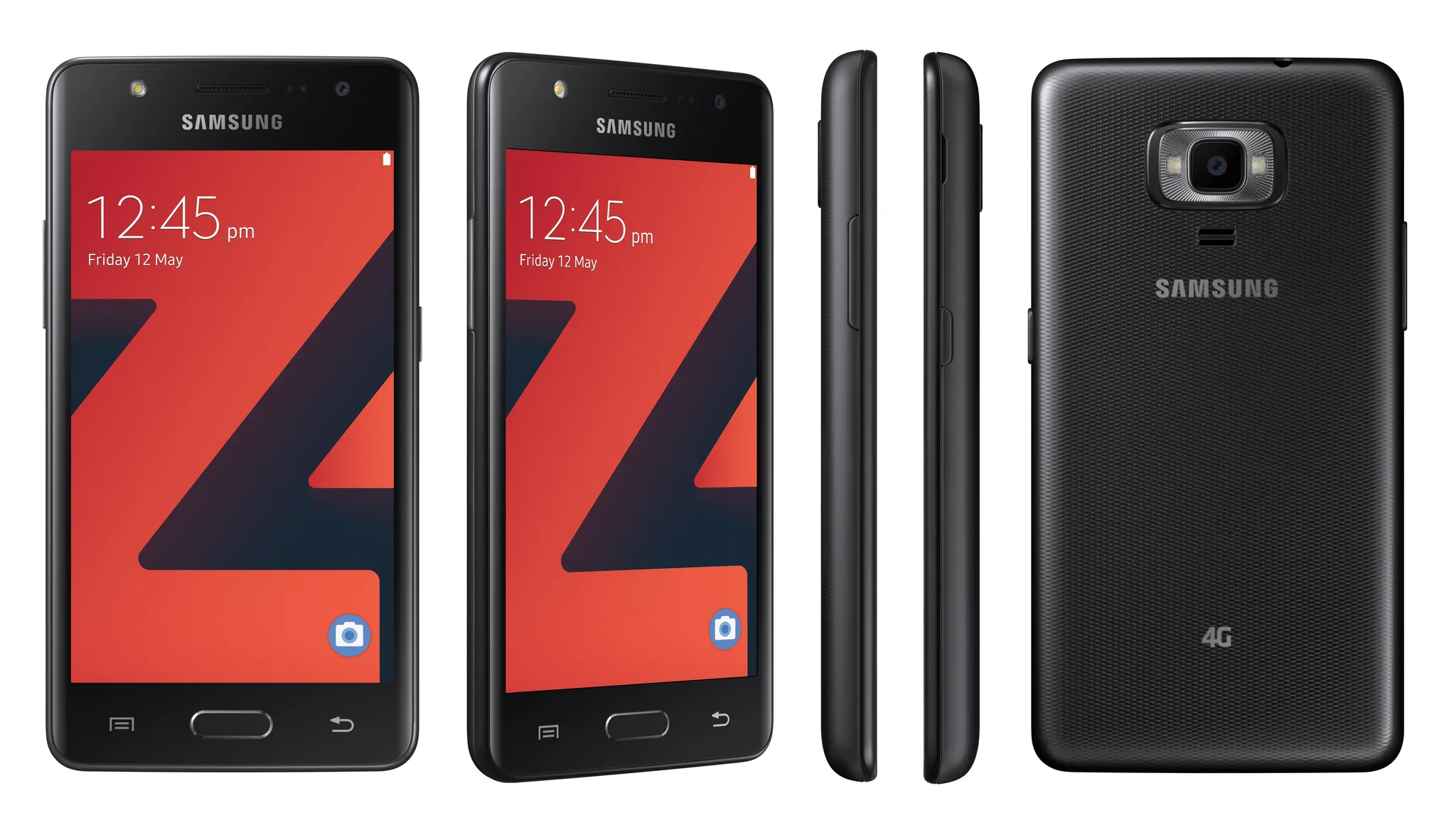
The Samsung Z4 was announced on May 12, 2017, as a simpler, faster Tizen 3.0 smartphone, and Ars Technica described it as launching in India on May 19, 2017, for about $90.[1][6] That origin explains why it still shows up as a tempting reuse candidate: small screen, physical home button, removable-era budget-phone feel, and just enough connectivity to look useful on a wall mount.
Its baseline is also exactly why expectations need to stay low. Samsung listed a 4.5-inch WVGA display, 1GB of RAM, 8GB of storage, a Spreadtrum SC9830A processor, and a 2,050 mAh battery.[1] DeviceSpecifications also lists a 2,050 mAh battery and the same limited connectivity profile; if you see a stray lower battery figure in an aggregator listing, the Samsung and DeviceSpecifications figure is the one to prefer here.[4]
The only remaining idea: a browser dashboard
If I were trying to rescue one of these from a drawer, this is the only path I would still test: open a local web dashboard from a real hub, such as a Home Assistant dashboard, in the Z4’s browser and see whether the interface loads, stays logged in, responds to taps, and remains stable over time.
That status is Unverified, not Compatible. The available materials do not document how the Z4’s Tizen HTML5 browser handles modern smart-home dashboards, authentication flows, local certificates, JavaScript-heavy pages, or long-running wall-panel use. A successful test on one dashboard would also be a single dashboard result, not proof that the phone broadly works as a 2026 smart-home controller.
Security is another reason not to romanticize the always-on panel idea. In April 2017, researcher Amihai Neiderman reportedly disclosed roughly 40 Tizen zero-days, including remote-code-execution issues.[7] That is historical context, not proof of a current exploit against this exact Z4 in your house. Still, an old, unsupported network device left powered on permanently deserves more caution than a working light switch.
What to use instead
If the goal is SmartThings control, use a current Android or iOS device that can install the supported app. If you are choosing a cheap phone specifically for that job, start with a current compatibility list rather than a Tizen relic; our guide to the best Android phones for smart-home control in 2026 is the more useful shopping direction.
If the goal is a wall panel, use a supported tablet, smart display, or a phone that still receives compatible app support. The difference between a phone as a control surface and a real hub matters; the Galaxy Z Flip/Fold smart-home hub compatibility check is a better place to sort out that distinction.
If the goal is direct device coordination — Zigbee sensors, Z-Wave locks, Thread accessories, Matter setup, local automations — buy or use a proper hub/controller. The Samsung Z4 is fine as a curiosity and maybe worth keeping for a display experiment, but it is not a supported smart-home remote, not a SmartThings phone, and not a hidden hub.
References
- Samsung Delivers a Faster, Smarter and Simpler User Experience with the Samsung Z4 — Samsung Global Newsroom, May 12, 2017.
- Using the SmartThings App — SmartThings Support.
- Samsung permanently closed Tizen Store — didn’t survive in the Android era — GizChina.
- Samsung Z4 — DeviceSpecifications.
- SmartThings — Samsung US.
- The Samsung Z4 is Tizen’s new flagship smartphone — Ars Technica, May 2017.
- Samsung Tizen: 40 Zero-Days Found — Infosecurity Magazine.
Known issues with this device / protocol
Spec-version history
For active regressions on this protocol, see Update Watch.
No linked Update Watch entries yet.