
Lowe's vs Best Buy for Smart Kitchen Appliances
Manufacturer minimum pricing keeps Lowe's and Best Buy prices nearly identical, so the real difference for a smart kitchen appliance is post-purchase: return windows, setup services, and how long you have to verify pairing and app integration actually work. Best Buy's longer return window and Geek Squad smart-home setup make it the safer retailer for connected appliances, while Lowe's 48-hour return policy on opened major appliances is too short to catch the failures this category is known for.
Last updated
The awkward part of buying a smart kitchen appliance does not happen in the aisle or on the product page. It happens after delivery, when the refrigerator is leveled, the dishwasher is under the counter, or the range is already sitting where it will sit for the next decade—and the app still has to find it.
That is the point where comparing Lowe’s and Best Buy becomes less about who shows the lower price on a Tuesday and more about who gives you enough time, policy room, and technical help to prove the connected part actually works in your home.
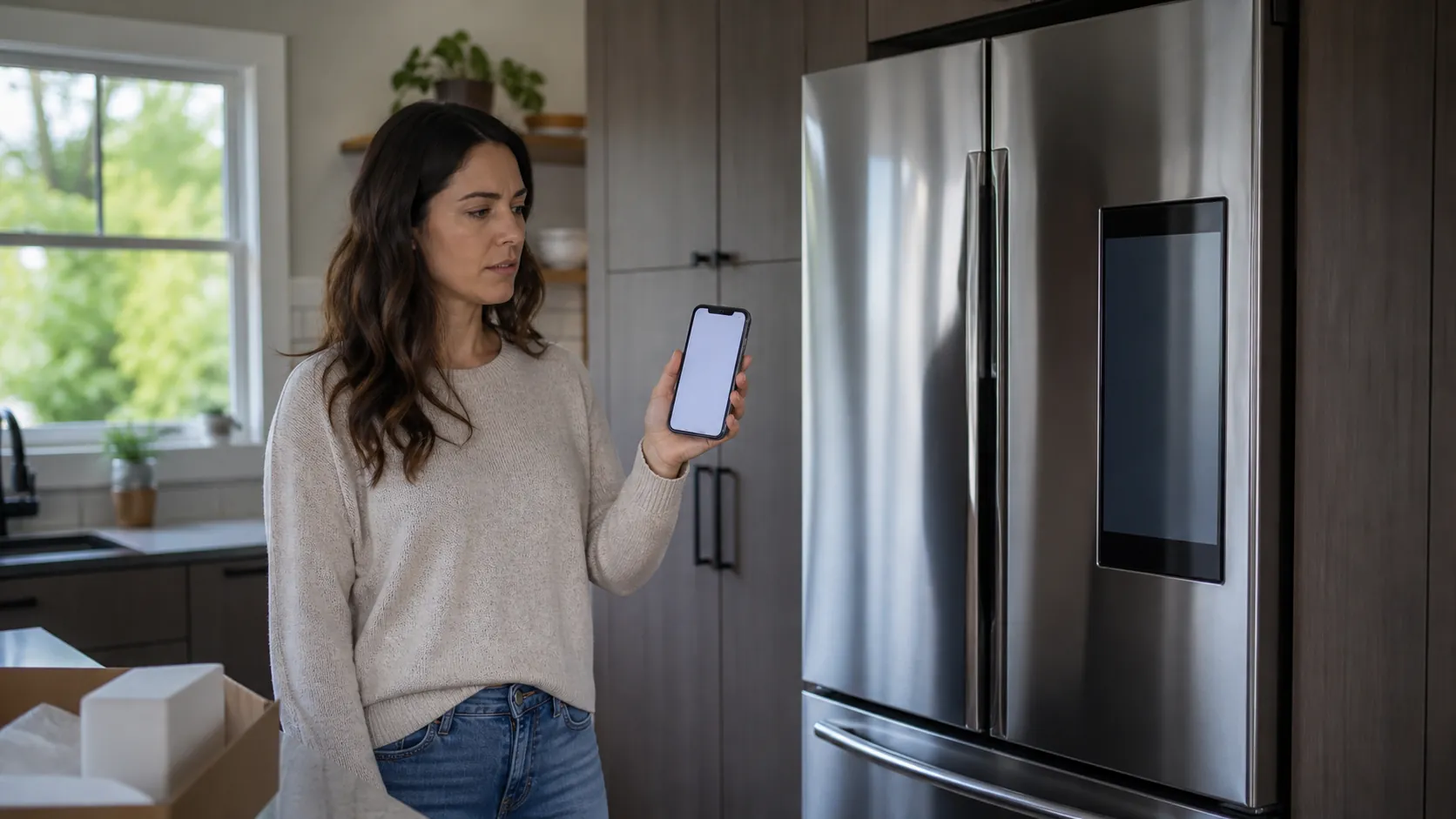
For ordinary headline pricing, the two retailers are often closer than shoppers expect. Appliance manufacturers commonly use pricing programs such as UMRP, MAP, and PMAP to limit how low authorized retailers can advertise or sell major appliances, which compresses the visible price difference between big-box stores. Yale Appliance’s explanation of appliance pricing is blunt about the practical effect: the real variation usually comes from promotions, packages, rebates, closeouts, and open-box opportunities rather than a permanently cheaper shelf price at one chain. [1]
So the useful comparison is not “Which store can shave a few dollars off the same Samsung or LG model this week?” It is “Which store gives the buyer a realistic verification window after installation?” For a smart fridge, range, wall oven, or dishwasher, that window has to include delivery, physical installation, Wi-Fi setup, brand-account login, app permissions, firmware updates, voice-assistant linking, household-member sharing, and sometimes hub or ecosystem testing.
The return window matters more than the sale tag
The sharpest difference is the return policy once the box has been opened. USA Today reported in July 2025 that Lowe’s allows 30 days for unopened major appliances, but only 48 hours for opened major appliances. In the same comparison, Best Buy’s standard appliance return window was 15 days, with 60 days for My Best Buy Plus and Total members. [2]
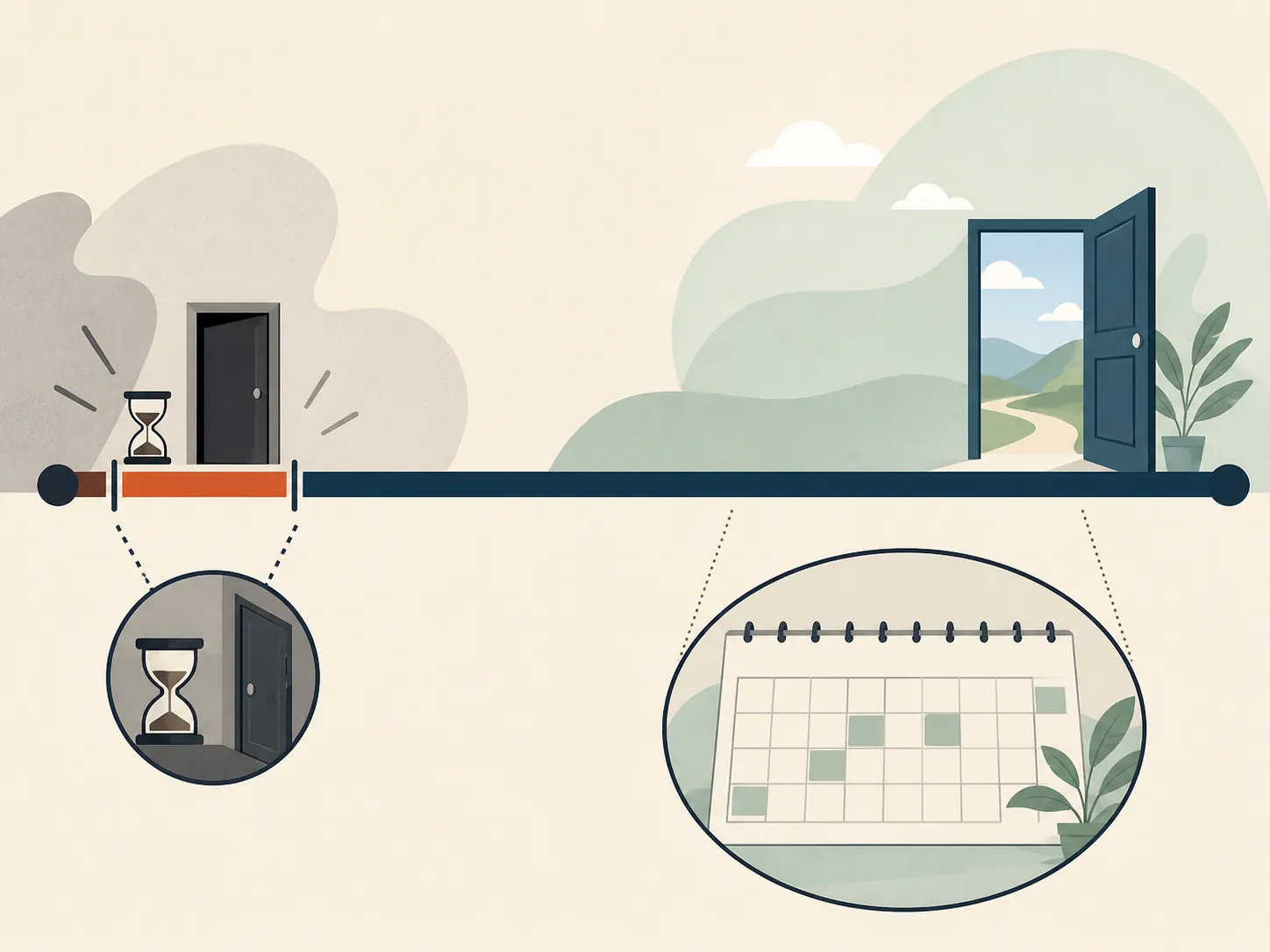
Forty-eight hours is a dents-and-damage inspection window. It can work for checking whether the door is scratched, the ice maker line leaks, or the unit arrived with a crushed panel. It is a poor fit for validating a connected appliance.
A household may not even reach the smart-feature test in the first two days. The installer leaves. Someone has to find the model’s pairing instructions, create or recover a brand account, move through app permissions, wait for a firmware update, link Alexa or Google Assistant, invite another household member, and then discover whether the feature that looked useful online is actually exposed in the ecosystem they use. If the appliance needs a stronger Wi-Fi signal or a different router setting, the clock is already running.
| Retailer or benchmark | Reported return window for major appliances | What it means for smart-feature verification |
|---|---|---|
| Lowe’s | 30 days unopened; 48 hours opened, as reported by USA Today in July 2025 [2] | Enough for visible condition checks, but very tight for app pairing, voice-assistant linking, and household testing |
| Best Buy | 15 days standard; 60 days for My Best Buy Plus/Total members, as reported by USA Today in July 2025 [2] | More realistic for discovering app, Wi-Fi, account, and ecosystem problems after installation |
| Costco benchmark | 90 days for major appliances in the same USA Today comparison [2] | Not part of the Lowe’s-vs-Best Buy choice here, but a useful reminder that appliance verification can reasonably take longer than two days |
That does not mean every buyer should ignore Lowe’s. It means an opened smart appliance at Lowe’s leaves very little margin for the exact category of problems that make connected appliances different from conventional ones. Best Buy’s longer window is not just nicer; it better matches the actual sequence of ownership.
What you have to prove after the appliance is installed
A “smart” appliance claim usually hides several separate tests. The appliance may connect to its own brand app, but not to the voice assistant you use. It may support Alexa and Google Assistant, but not Apple HomeKit. It may show a Matter-related logo or promise, but only expose a limited set of functions through your platform. None of that is visible from a stainless-steel door.
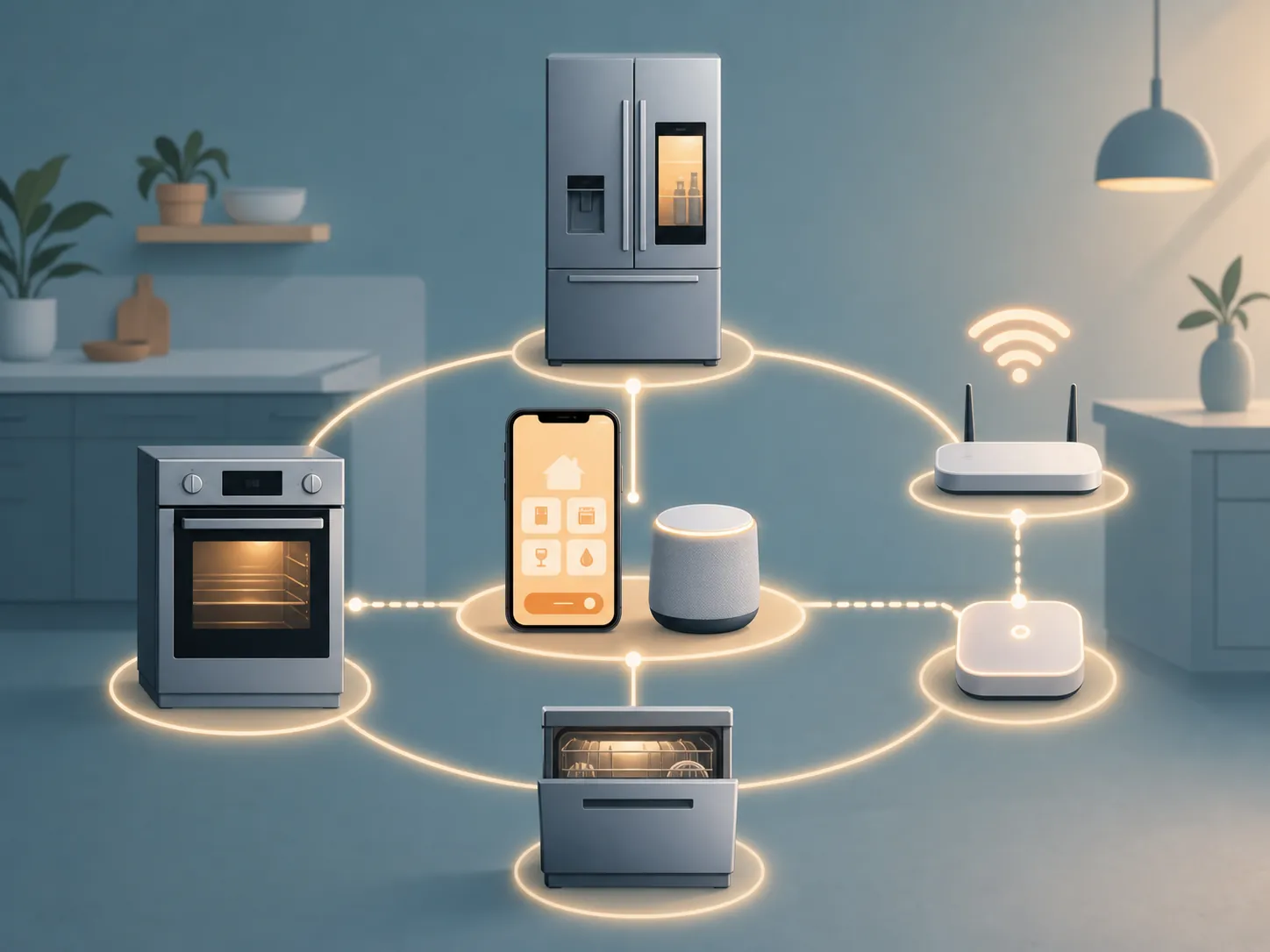
GE’s SmartHQ integration partners page, for example, lists Amazon Alexa and Google Assistant support. It does not list Apple HomeKit on that partner page, so an Apple-first household should not treat “smart” as a substitute for checking the actual ecosystem path before buying. [3]
LG and Samsung add another wrinkle. The Home Connectivity Alliance has been pushing cross-brand appliance control, and The Verge reported in 2023 that Samsung and LG were moving toward letting users control each other’s appliances through SmartThings and ThinQ. That is promising, but it is not the same as saying every appliance, in every region, exposes every function through every ecosystem. [4]
Matter does not erase that caution. Kitchen appliance categories arrived relatively late in the Matter standard: Matter 1.2 added categories including refrigerators, dishwashers, and laundry washers in October 2023, while Matter 1.3 added ovens, cooktops, microwaves, extractor hoods, and dryers in May 2024. [5][6]
That timing matters because standards support and platform support are not the same thing. A spec can include a device category before your preferred ecosystem supports the product in a useful way. A logo can confirm a baseline path without guaranteeing that the exact feature you care about—preheating, cycle alerts, temperature changes, filter status, energy reporting, or remote diagnostics—will appear where you expect it.
The same lesson shows up in other smart-home categories. If you want the broader version of the “logo does not guarantee every feature everywhere” problem, our Matter smart-lock guide is the cleaner place to dig into that pattern. For appliances, the practical takeaway is simpler: before choosing the retailer, write down the ecosystem test you intend to run during the return window.
The verification list should be specific
- Can the appliance join your 2.4 GHz or mixed-band home Wi-Fi without moving the router or changing security settings?
- Does the brand app discover the appliance after installation, not just in a store demo?
- Can every relevant household member access the appliance from their own phone?
- Does Alexa, Google Assistant, Apple Home, SmartThings, ThinQ, SmartHQ, or another chosen platform expose the functions you actually plan to use?
- If a hub, Matter controller, or Thread border router is part of the chain, is it already installed and updated?
- Do alerts arrive reliably when the phone is locked and when another household member is using the appliance?
That list is also why the retailer matters. A buyer who already knows the appliance will be used as a normal fridge or dishwasher can tolerate more uncertainty around connected features. A buyer who is paying for remote alerts, app control, or ecosystem routines needs the policy window to cover those tests.
If you are mapping a kitchen appliance into a larger smart-home system, the planning starts before checkout. Our home automation hub guide is useful for thinking through controller and border-router roles, while the Wi-Fi smart plug buying guide lays out the ecosystem-first shopping habit that applies just as well to bigger, heavier purchases.
Setup help changes the risk calculation
The second reason Best Buy is easier to prefer for connected appliances is service support. Return time is one layer of protection; competent setup help is another. If a smart-home appointment can get the appliance onto the network, confirm the app connection, link the voice assistant, and leave you with a documented setup rather than a half-paired device, the purchase has less unresolved risk.
Best Buy’s Geek Squad smart-home services are the practical advantage here, especially for buyers who are not afraid of apps but do not want to spend the first weekend after delivery debugging router placement and account-linking screens. Best Buy has advertised a 90-day workmanship warranty on smart-home services, but before relying on that advantage, check the live Best Buy service page for the current scope, pricing, and warranty language. Retailer service terms can change, and the exact protection matters if the installation works on day one and fails a week later.
This is not the same as saying a paid setup appointment can guarantee ecosystem compatibility. It cannot make GE SmartHQ appear in Apple Home if that path is not supported. It cannot force an appliance model to expose a feature through Matter that the platform does not expose. What it can do is separate a household-network problem from a product-compatibility problem quickly enough that you still have options.
Membership and protection-plan math is real, but secondary
Memberships and protection plans can change the final cost, but they should not be allowed to blur the main issue. Best Buy’s longer 60-day return window is tied to Plus and Total membership in the USA Today comparison, while Lowe’s extended protection is typically attached to the individual product rather than a broad electronics-and-appliance membership. [2]
That structure can favor different buyers. A household buying several devices from Best Buy may get more value from a membership than someone buying one refrigerator and nothing else. A Lowe’s shopper chasing a specific appliance promotion, package rebate, or per-product protection plan may come out ahead on that transaction. The only safe way to compare is to price the exact model, delivery, haul-away, installation, membership, protection, and return-policy value together.
Do not overread selection snapshots, either. Regional, point-in-time comparisons can show that one retailer has more listed models or a lower entry price in a given metro area, but that does not prove a national selection advantage for the specific appliance you should buy. Smart-appliance shopping gets safer when you start with the model and ecosystem requirements, then compare the retailers that can actually deliver that model under tolerable return and service terms.
Which retailer should you choose?
| Buyer profile | Safer choice | Why |
|---|---|---|
| You intend to use the smart features | Best Buy | The longer return window gives you more time to test app pairing, account linking, Wi-Fi behavior, and voice-assistant integration after installation. |
| You are buying your first connected kitchen appliance | Best Buy | Setup support is more valuable when you do not yet know whether the problem will be your router, the app, the platform, or the appliance. |
| You already verified the exact model, app, and ecosystem path | Either retailer, with caution | If the connected path is already confirmed and the promotion is better at Lowe’s, the shorter opened-appliance window may be less of a concern. |
| You will use the appliance mostly as a conventional appliance | Lowe’s becomes more plausible | If smart features are a bonus rather than the reason for purchase, delivery quality, local availability, installation terms, and promotions may matter more. |
| You are strictly price-first | Compare promos, bundles, open-box, rebates, and membership math | Base prices are often compressed by manufacturer pricing programs, so the meaningful savings are more likely to come from the deal structure than the sticker. |
| You are Apple Home-focused | Best Buy only if the exact model’s Apple path is verified | Some appliance brands support Alexa and Google Assistant more clearly than Apple HomeKit, so retailer choice cannot substitute for compatibility checking. |
For a connected refrigerator, range, oven, or dishwasher, Best Buy is the safer default because it gives the buyer more time to find out whether the smart appliance is actually smart in that home. Lowe’s can still make sense when the appliance is being bought mainly as a conventional machine, when compatibility has already been verified model by model, or when a specific promotion is strong enough to justify the tighter opened-appliance return window.
The mistake is treating Lowe’s and Best Buy as if they are separated mainly by shelf price. In this category, the more expensive failure is not usually paying a little more at checkout. It is discovering, after the appliance is installed and the return clock is almost gone, that the connected feature you paid for does not work the way your household needs it to.
References
- Appliance Prices: Big Box vs. Local, Yale Appliance, https://blog.yaleappliance.com/appliance-prices-big-box-vs-local
- Return policy for appliances at Walmart, Lowe’s, Home Depot, USA Today, July 28, 2025, https://www.usatoday.com/story/money/shopping/2025/07/28/return-policy-appliances-walmart-lowes-home-depot/85378896007/
- SmartHQ Connect Integrations, GE Appliances, https://products.geappliances.com/appliance/gea-support-search-content?contentId=34271
- Samsung and LG are going to let you control each other’s appliances, The Verge, Aug. 29, 2023, https://www.theverge.com/2023/8/29/23850250/samsung-lg-app-home-connectivity-alliance-appliances-ifa
- Matter 1.3 Specification Released, Connectivity Standards Alliance, May 8, 2024, https://csa-iot.org/newsroom/matter-1-3-specification-released/
- These device types are available in the Matter standard, matter-smarthome.de, https://matter-smarthome.de/en/development/these-device-types-are-available-in-the-matter-standard/
Known issues with this device / protocol
Spec-version history
For active regressions on this protocol, see Update Watch.
No linked Update Watch entries yet.