
The iPhone 18 Pro Price Increase and What It Means for HomeKit
With the iPhone 18 Pro rumored to cost $100–$300 more, this article examines whether an Apple Home smart home still makes financial sense in 2026 and where buyers actually waste money — on hub confusion, unfulfilled Matter promises, and hidden subscription costs.
Last updated
As of Q3 2026, the iPhone 18 Pro price increase is still a pre-launch rumor, not Apple’s launch pricing. The estimates also do not agree with each other. Mark Gurman, cited via Forbes, has pointed to roughly a $100 increase; IDC and The Wall Street Journal have been reported around $200; Jeff Pu of GF Securities has floated $250 to $300. The reported pressure is not imaginary, though: The Wall Street Journal’s reporting described DRAM costs rising from about $39 to about $145, with the starting bill of materials up about 25% to roughly $726, while Tim Cook has described memory pricing as a “100-year flood” and Apple is expected to move the A20 chip to TSMC’s 2nm process. [1]
That is enough to make an Apple household pause before buying another flagship phone and a box of smart-home gear in the same year. It is not enough, by itself, to make Apple Home a bad bet. If you already live through iPhone, Apple Watch, iCloud, HomePod, and the Home app, the more useful question is not whether Apple hardware is getting expensive. It is where the extra spending actually leaks out after you decide to stay.
The phone price raises the stakes, not the verdict
A $100 increase is annoying. A $300 increase changes the shape of a shopping cart. But either way, the iPhone 18 Pro is not the only cost center in an Apple smart home, and it is usually not the most avoidable waste.
The phone is the visible purchase. The quieter losses come later: buying a Matter device that does not behave the way it claimed to in Apple Home, skipping the home hub because an iPhone can control some devices locally, or choosing cameras and sensors whose useful features sit behind recurring fees. Those mistakes are especially irritating because they feel preventable. Nobody can verify Apple’s final iPhone 18 Pro price before Apple announces it. A buyer can verify whether a device works in Apple Home today.
There is also no clean escape hatch in switching ecosystems if the underlying problem is memory pricing. The reported pressure is industry-wide, not an Apple-only surcharge. A different phone platform may change the smart-home interface, privacy tradeoffs, or device selection, but it does not magically remove component inflation from premium hardware.
The first cost trap: thinking the iPhone replaces a home hub
This is the place where the 2026 buying decision can go sideways. iOS 18 allows a compatible iPhone to locally control compatible Matter devices without a home hub. That is a useful improvement. It does not mean an iPhone becomes a full Apple Home hub for every feature a household expects from a smart home.
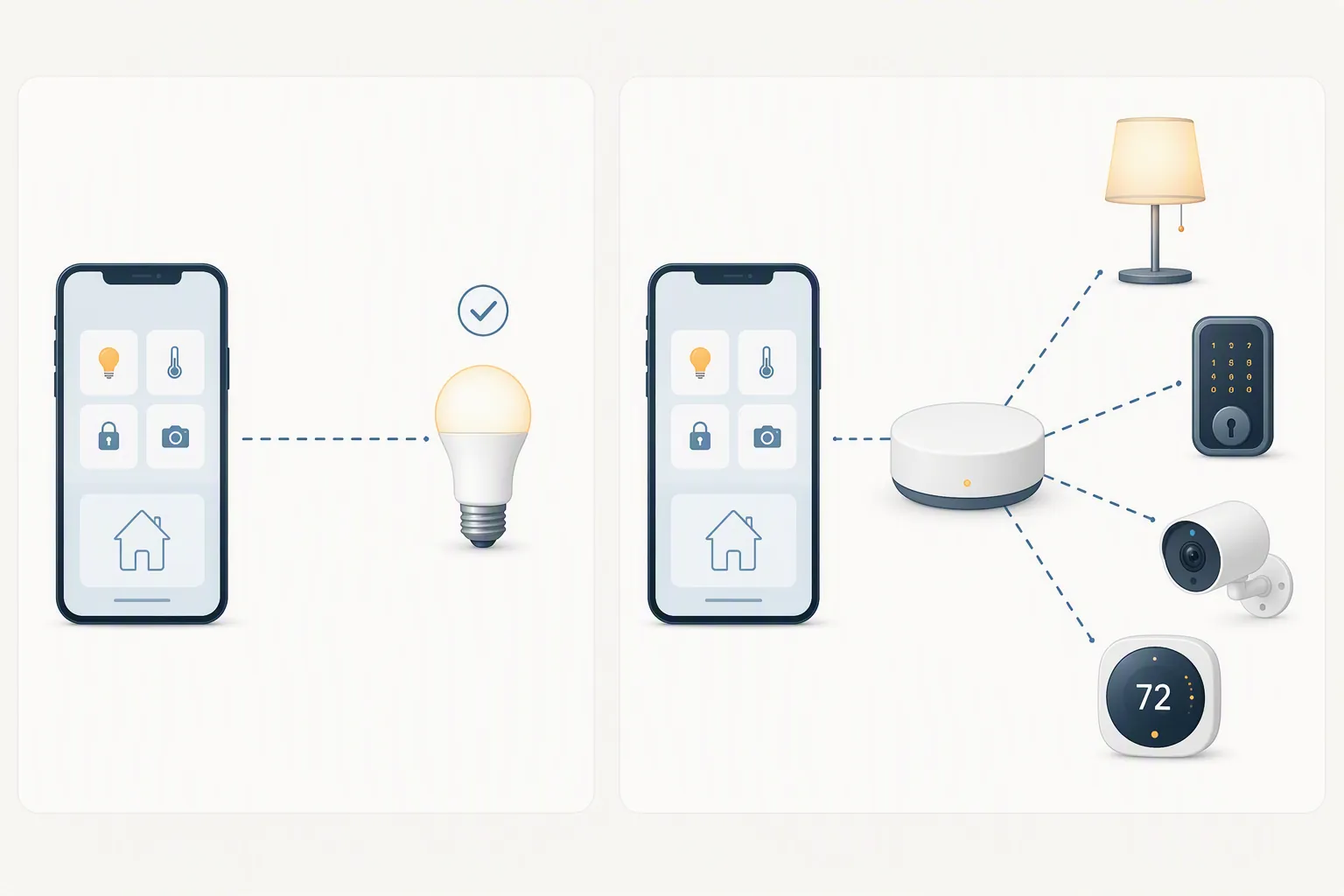
That distinction matters because “local control” sounds like the hard part. In daily use, it is only one part. A real household usually wants more than standing near a device and turning it on. It wants the front door to lock automatically, motion alerts to arrive while nobody is home, lights to run on schedules, accessories to keep responding when the phone owner is away, and new Matter accessories to be added without discovering a missing infrastructure requirement after checkout.
For those broader Apple Home features, the home hub still matters. Automations, notifications, remote access, and adding Matter accessories are exactly where buyers can overread iOS 18’s local Matter control and spend incorrectly. That is not a small footnote. It determines whether a starter kit behaves like a room-level remote control or like a household system.
| What the buyer may assume | What to verify before buying |
|---|---|
| “My iPhone can control Matter devices locally, so I do not need a hub.” | Whether the features you want include automations, notifications, remote access, or Matter accessory onboarding that still require a home hub. |
| “The device says Matter, so Apple Home setup should be straightforward.” | Whether the device has shipped Apple Home-compatible Matter support now, not only announced future support. |
| “The device price is the real cost.” | Whether cloud storage, monitoring, video history, AI detection, or advanced alerts require a subscription. |
The practical budget line is simple: if Apple Home is meant to run the home rather than demonstrate a single bulb, budget for the correct Apple home hub before buying accessories. That may feel like one more Apple line item in a year when the iPhone 18 Pro may already cost more. It is still cheaper than building a half-working setup and replacing pieces because the first purchase was based on a misunderstood compatibility claim.
A home hub is not a luxury add-on if the home must work when you are away
The most common bad version of this decision looks like this: someone sees the iPhone price rumors, trims the smart-home budget, and decides to skip the hub because the phone already supports local Matter control. Then the household expects remote control, alerting, or reliable automations and finds out the saved money removed the behavior they actually wanted.
That is not an argument for buying the most expensive version of everything. It is an argument for assigning jobs correctly. The iPhone is the interface. The home hub is the always-available household presence. If you are making a multi-year Apple Home decision in 2026, do not let a rumored phone increase push you into saving money on the part that keeps the system coherent.
The second cost trap: buying Matter promises instead of Apple Home support
Matter was supposed to make smart-home shopping less tedious. In one important way, it has helped: buyers can now look for a cross-platform standard instead of memorizing every brand’s ecosystem badge. But in a store listing, “Matter,” “Thread,” “planned,” “coming soon,” and “works with Apple Home” are not the same claim.
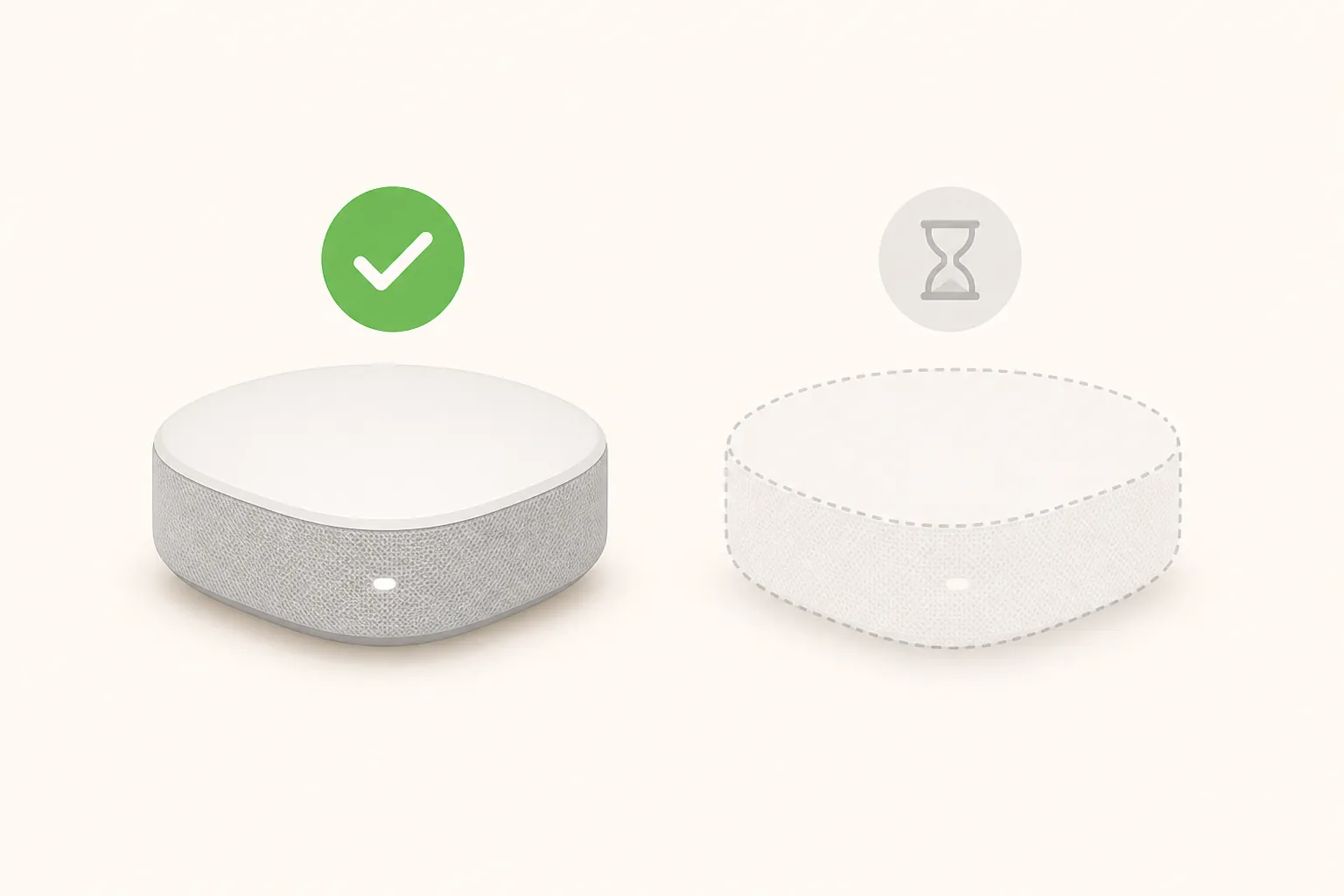
The expensive mistake is buying roadmap language. A device may have a Matter plan, a Thread radio, or a manufacturer statement about future support and still not be the Apple Home accessory you thought you were buying today. If the feature has not shipped, it does not belong in the same column as current compatibility.
This is where Apple Home’s discipline helps and frustrates at the same time. When an accessory is actually supported, the experience can be clean: setup in the Home app, shared control for the household, scenes, automations, and Siri access where appropriate. But Apple’s neat surface can hide the amount of verification needed before purchase. The words on the box are not enough if the implementation is partial, delayed, or limited by device type.
For 2026, the useful buying standard is stricter than “Matter-compatible.” Check whether the exact model, firmware state, and feature set are supported in Apple Home now. If the manufacturer says Apple Home support is coming later, treat that as a future bonus, not as part of the value you are paying for.
- Prefer listings that explicitly say the device works with Apple Home today, not only Matter in general.
- Look for support by exact model, not just by product family.
- Check whether the Apple Home feature you need is supported, not merely whether the device can be added.
- Do not count promised firmware updates as savings. Count them as uncertainty.
That last point is the one that saves money. A promised update can be delayed, narrowed, or implemented in a way that does not expose the feature you bought the device for. If the iPhone 18 Pro ends up at the high end of the rumored increase, the worst response is to make smart-home purchases more speculative to compensate.
The third cost trap: subscriptions that rewrite the price after setup
The cleanest smart-home purchase is a device that keeps doing the job you bought it to do after you plug it in, pair it, and forget the receipt. Cameras, security services, video storage, monitoring, richer detection, and advanced alerting are where that simplicity often breaks.
A subscription is not automatically a trick. Cloud video storage costs money to run. Professional monitoring is a service, not a chip inside the device. The problem is when the product page makes the hardware look like the whole purchase and the useful version of the product appears only after account setup.
This can change the smart-home budget more than the iPhone rumor. A one-time accessory purchase may look modest next to a flagship phone. A recurring camera plan across several devices can become the cost you keep paying long after the phone upgrade is old news.
Before buying cameras or security-adjacent devices for Apple Home, separate three prices: the hardware price, the required platform hardware, and the ongoing service price. If the device depends on a plan for the feature you actually want, write that into the first-year and multi-year cost before deciding whether the system is “worth it.”
So, is a HomeKit smart home still worth it with a pricier iPhone 18 Pro?
For a committed Apple household, yes — with verification. Apple Home still makes sense when the people in the home already use iPhone, Apple Watch, HomePod, iCloud, Siri, and the Home app as part of daily life. The value is not that every Apple-adjacent purchase is cheap. It is that the control layer, permissions, household sharing, and automation model fit the devices the household already carries.
The iPhone 18 Pro rumor changes the mood of the purchase, not the ecosystem math. If the phone rises by $100, the smart-home budget needs discipline. If it rises by $300, the budget needs even more discipline. In neither case does it make sense to save money by buying devices with vague Matter claims, skipping a needed hub, or ignoring recurring fees.
The right 2026 Apple Home purchase order is therefore less exciting than the rumor cycle and much more useful: decide whether you are staying in the Apple ecosystem, include the home hub if you need full Apple Home behavior, buy only devices with shipped Apple Home support, and treat subscriptions as part of the device price. Do that, and the rumored iPhone 18 Pro price increase becomes a reason to verify harder — not a reason to abandon Apple Home.
References
- iPhone 18 Pro and Pro Max May See $200 Price Increase — MacRumors
Known issues with this device / protocol
Spec-version history
For active regressions on this protocol, see Update Watch.
No linked Update Watch entries yet.