
How ARM Chip Demand Is Reshaping Smart Home Compatibility
ARM-based chips now power the majority of smart home devices, driven by Matter's multi-protocol requirements, edge AI processing, and Thread 1.4 mesh networking. This shift is measurably reducing compatibility failures and return rates, giving buyers stronger confidence that future devices will work together.
Last updated
The smart home compatibility problem usually arrives in a cardboard box. A sensor says it supports the right ecosystem, a bulb says it works with the right app, and a hub says it can bridge the difference. Then commissioning stalls, the app asks for a reset that does not help, and the product goes back. HIRI identifies incompatibility as a major barrier behind high smart product return rates in its 2026 smart home market discussion, which matters more to a buyer than any polished ecosystem diagram.[1]
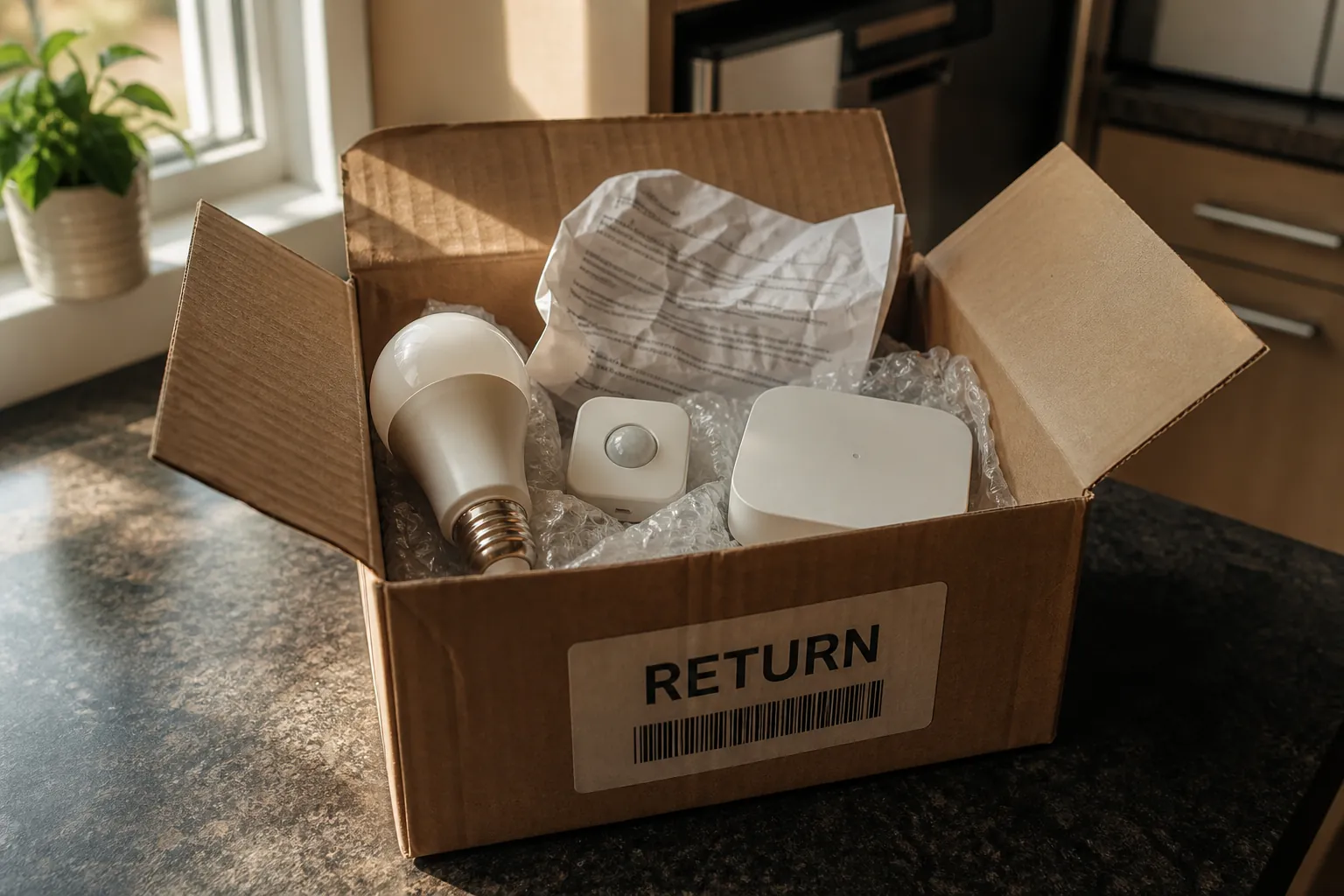
That is the practical reason ARM chip demand in smart home devices is not just a semiconductor-market story. It is becoming a compatibility story. Manufacturers are buying silicon that can run more protocols, process more events locally, and support the commissioning rules that Matter and Thread now expect. The chip does not guarantee that a device will work in a particular home, but it increasingly decides whether the product has the hardware foundation to try.
The scale is large enough to change product roadmaps. Mordor Intelligence values the global smart home market at $164.13 billion in 2026 and projects it will reach $311.22 billion by 2031. In the same research area, Mordor reports the IoT microcontroller market growing at a 15.66% CAGR from 2026 to 2031 and says ARM-based MCUs captured 71.89% of IoT MCU shipments in 2025.[2] Those are not first-party ARM forecasts, and they should not be read as ARM promising anything. They do show why device makers are designing around ARM-based microcontrollers and SoCs while the smart home category expands.
Why the Chip Is Now Part of the Compatibility Test
Older smart home products often treated connectivity as a single-lane choice. A Wi-Fi plug stayed on Wi-Fi. A Zigbee sensor needed a brand-compatible bridge. Bluetooth was used for setup, then disappeared into the background. That could work inside one carefully controlled ecosystem, but it became brittle when a buyer mixed brands, replaced a hub, or expected a voice assistant to discover everything cleanly.
The current demand for ARM-based smart home silicon is being pulled by a different product requirement: one device may need a low-power application core, enough memory and security support for Matter, a radio path for commissioning, and another radio path for the mesh network it will use after setup. Synaptics frames next-generation smart home connectivity around this convergence of processing, edge AI, and multi-protocol wireless, including SoCs that combine ARM Cortex cores, NPUs, and Wi-Fi, Thread, and BLE connectivity on a single die.[3]
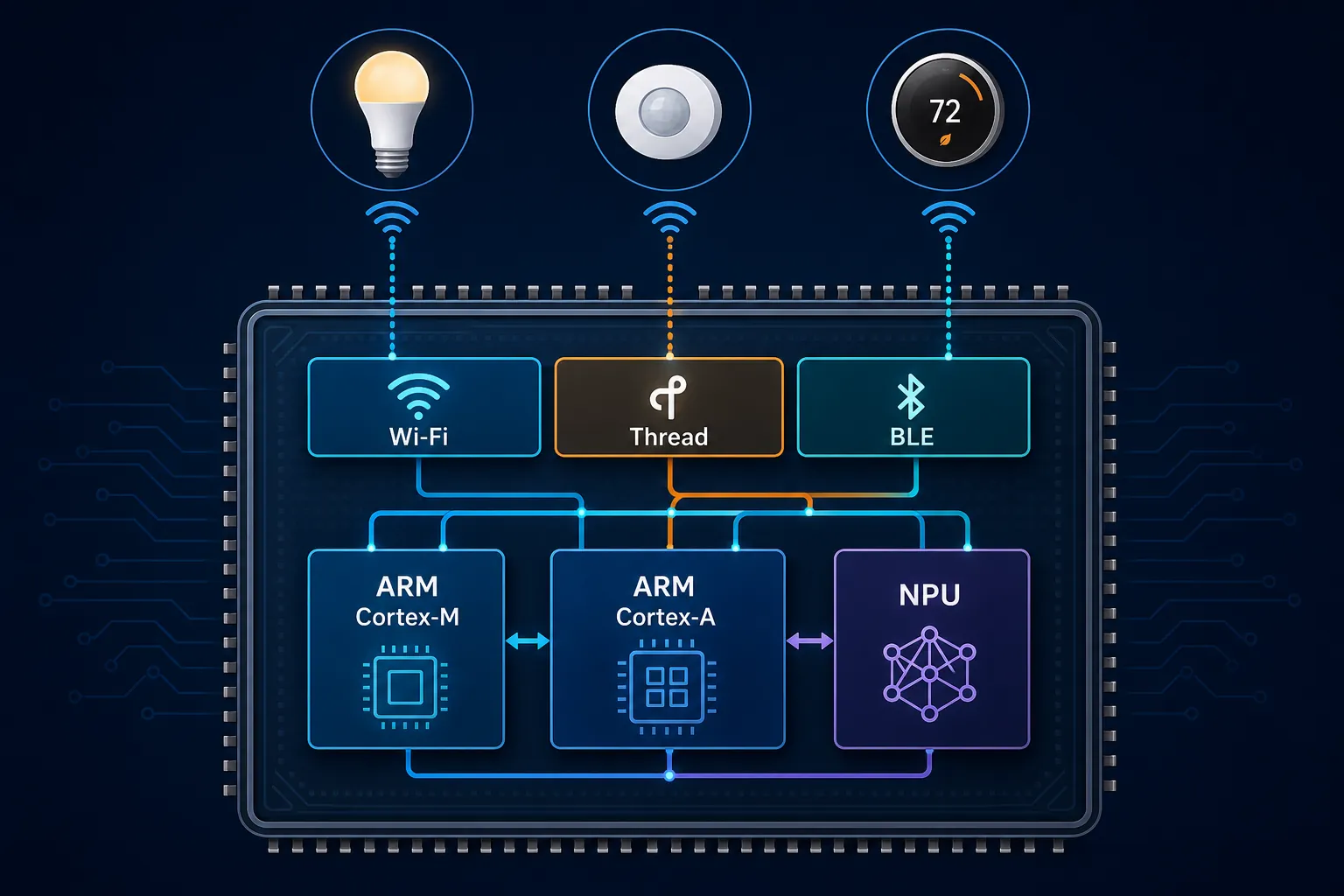
That single-die detail matters. A product that depends on separate chips, bridge logic, and cloud detours can still be good, but every boundary adds another place where firmware, certification, radio behavior, or account linking can drift. When the MCU or SoC is built to handle the required radios and local workloads together, the manufacturer has fewer excuses for a device that only works under ideal lab conditions.
Matter Raised the Hardware Bar
Matter did not make the smart home magically simple. It did, however, change what serious device makers have to build for. A Matter device needs to identify itself consistently, commission into a fabric, expose standardized device behavior, and communicate over approved network paths. A hub or controller needs enough protocol support to act as more than a branded remote control. For a buyer-facing explanation of the current state, NestGrid's Matter home automation guide is the better place to start than a chip spec sheet.
The chip-level consequence is still real. Matter products often need BLE for onboarding, Wi-Fi or Thread for normal operation, secure storage for credentials, and enough compute headroom for firmware that will be maintained after launch. That favors ARM-based MCUs and SoCs that arrive with mature software stacks, security features, and radio integration already aimed at IoT device makers. It also explains why demand is not just coming from flashy displays or cameras. Door sensors, plugs, thermostats, switches, locks, and border-router-capable hubs all need dependable embedded silicon if they are going to behave like members of the same home instead of guests from rival hotels.
Matter 1.6, released in June 2026, and Thread 1.4 credential sharing are especially important because they aim at the old setup failure rather than merely adding another logo to the box.[4] Credential sharing means a Thread network can become less fragmented across controllers, which is exactly the kind of plumbing change that buyers rarely see but immediately feel when setup either completes or collapses. For readers trying to identify the device already doing that job, NestGrid's guide to Matter border routers is the practical companion to the protocol discussion.
Thread 1.4 Makes Multi-Brand Mesh Less Fragile
Thread was always attractive on paper for battery-powered smart home devices: low power, IPv6-based, and built for mesh behavior. The buyer problem was not the concept. It was the household reality of multiple border routers, multiple apps, and devices that appeared to be on compatible networks but still acted like they lived in separate neighborhoods.
Thread 1.4's credential-sharing direction narrows that gap by helping compatible controllers participate in a more unified Thread fabric instead of creating isolated meshes.[4] This is where the radio stack and the chip choice start to matter in a visible way. A hub with the right Thread radio, maintained firmware, and Matter controller support can reduce the need for brand-specific bridges. A device with BLE for commissioning and Thread for normal operation can enter the home through one path and then settle into a lower-power mesh without depending on a proprietary cloud hop for every basic event.
That does not mean every Thread-labeled product will behave the same. The date matters. The protocol version matters. The hub firmware matters. An Apple TV, Google TV Streamer, or other border-router-capable device may be excellent in one configuration and disappointing in another if the necessary firmware or ecosystem support is missing. NestGrid's setup guides for Apple TV as a Thread 1.4 smart home hub and Google TV Streamer as a Thread border router are written for that narrower but more useful question: what works in this house, with this hub, now?
Edge AI Is Pulling More Work Onto Local ARM Silicon
The AI part of the ARM demand story is easy to overstate, so it helps to keep it concrete. A thermostat does not need a data-center model to decide whether occupancy has changed. A camera does not need to send every frame to the cloud before it can classify motion. A sensor hub does not need a remote round trip for every small inference if local processing is available.
That is why Cortex-M-class microcontrollers paired with NPUs matter in smart home devices. The ARM core handles embedded control and network behavior; the NPU accelerates selected inference workloads; the radios keep the device available to the rest of the home. Synaptics describes this blend of edge AI and multi-protocol connectivity as part of the next-generation IoT technology stack for smart home products.[3]
| Silicon capability | Compatibility consequence |
|---|---|
| BLE plus Wi-Fi and/or Thread on the same SoC | The device can use one path for commissioning and another for everyday network behavior. |
| ARM Cortex MCU or application core | The product has a mature embedded platform for Matter logic, security, and firmware maintenance. |
| On-device NPU or AI accelerator | Some detection and classification can happen locally instead of depending on a brand cloud. |
| Integrated security and credential handling | Commissioning and network membership can be managed with fewer brittle handoffs. |
For compatibility, local inference is not mainly about novelty. It is about reducing dependency. If a device can make basic decisions locally and still expose standard state through Matter, the buyer is less exposed to one vendor's cloud outage, account migration, or discontinued automation feature. That is a quieter improvement than a new app screen, but it is exactly the kind of improvement that prevents a working home from becoming a troubleshooting project after an update.
What Manufacturers Are Actually Buying
The current smart home SoC shopping list is less about raw CPU speed than about collapsing formerly separate functions into a manageable package. Device makers want ARM Cortex processing, secure boot and update support, enough memory for protocol stacks, an NPU where local inference is useful, and radios that cover BLE setup plus Wi-Fi, Thread, or both. Synaptics, Infineon, and STMicroelectronics are among the companies shipping SoCs in this direction, combining ARM cores with AI acceleration and multi-protocol wireless aimed at connected home products.[3]
This explains why ARM demand rises even in categories that do not look computationally glamorous. A contact sensor, smart lock, or room controller may not need a large application processor, but it may need dependable low-power behavior, secure credential storage, OTA update capacity, and standards support that survives beyond the launch firmware. Those requirements map naturally to the embedded ARM ecosystem already used across IoT MCUs.
The verification gap remains. A teardown can confirm a chip family. A product page can claim Matter or Thread support. Neither automatically proves that a given firmware build supports the exact behavior a buyer needs. That is why a compatibility claim should be read with a date attached: certified for what version, updated when, tested with which hub, on which app, and using which network path?
The RISC-V Counter-Pressure Is Real, but Different
ARM is not the only architecture competing for smart home and IoT design wins. AESTECHNO reports RISC-V MCU shipments growing at a 16.41% CAGR, which is strong enough to treat as a real counter-trend rather than a footnote.[5] RISC-V is attractive where companies want architectural flexibility, licensing control, or custom acceleration paths.
The scope has to stay clean. AESTECHNO's broader aggregate-share framing covers CPU, MCU, and AI accelerator categories together, while Mordor's 71.89% ARM shipment share is specifically about IoT MCUs in 2025.[2][5] Those figures should not be blended into one architecture scoreboard. For today's smart home buyer, the more immediate point is that ARM-based silicon has the volume, software ecosystem, and vendor momentum behind many Matter, Thread, and edge-AI product designs. RISC-V may shape future device classes, but it does not erase the current ARM-centered compatibility push.
How This Changes a Buying Decision
Chip architecture should not be the first filter for most buyers. A normal homeowner should not have to choose a door sensor by MCU family. But the silicon trend changes which product claims deserve more trust. A Matter-certified device with current Thread support, a maintained firmware record, and a hub known to share Thread credentials in the right ecosystem is a stronger bet than a product that only promises app compatibility through a proprietary bridge.
- Check the protocol, not just the badge: Matter over Wi-Fi and Matter over Thread solve different household problems.
- Check the hub role: a Matter controller is not automatically a Thread border router.
- Check the version and date: Thread 1.4 behavior depends on firmware and ecosystem support, not the radio label alone.
- Check the failure path: if cloud service, account linking, or a brand bridge is still required for basic operation, the compatibility risk is higher.
- Check real hub testing: a product that works with one controller may still expose gaps with another.
This is also where beginner language can mislead. A Matter smart home app may control devices, commission them, or simply display a compatibility claim. Those are different jobs. The underlying ARM-based SoC may be capable of supporting the right protocol stack, but the app, hub, firmware, and ecosystem policy still decide what the buyer experiences on Saturday afternoon.
A Positive Shift, Not a Solved Problem
The best reading of the current ARM chip demand surge is conditional optimism. The smart home market is growing, IoT MCUs are expanding, and ARM-based MCUs already hold a large shipment share in that market.[2] More importantly, the chips being bought now are better aligned with what compatibility actually requires: multi-protocol radios, local processing, secure commissioning, Thread mesh participation, and enough headroom for Matter-era firmware.
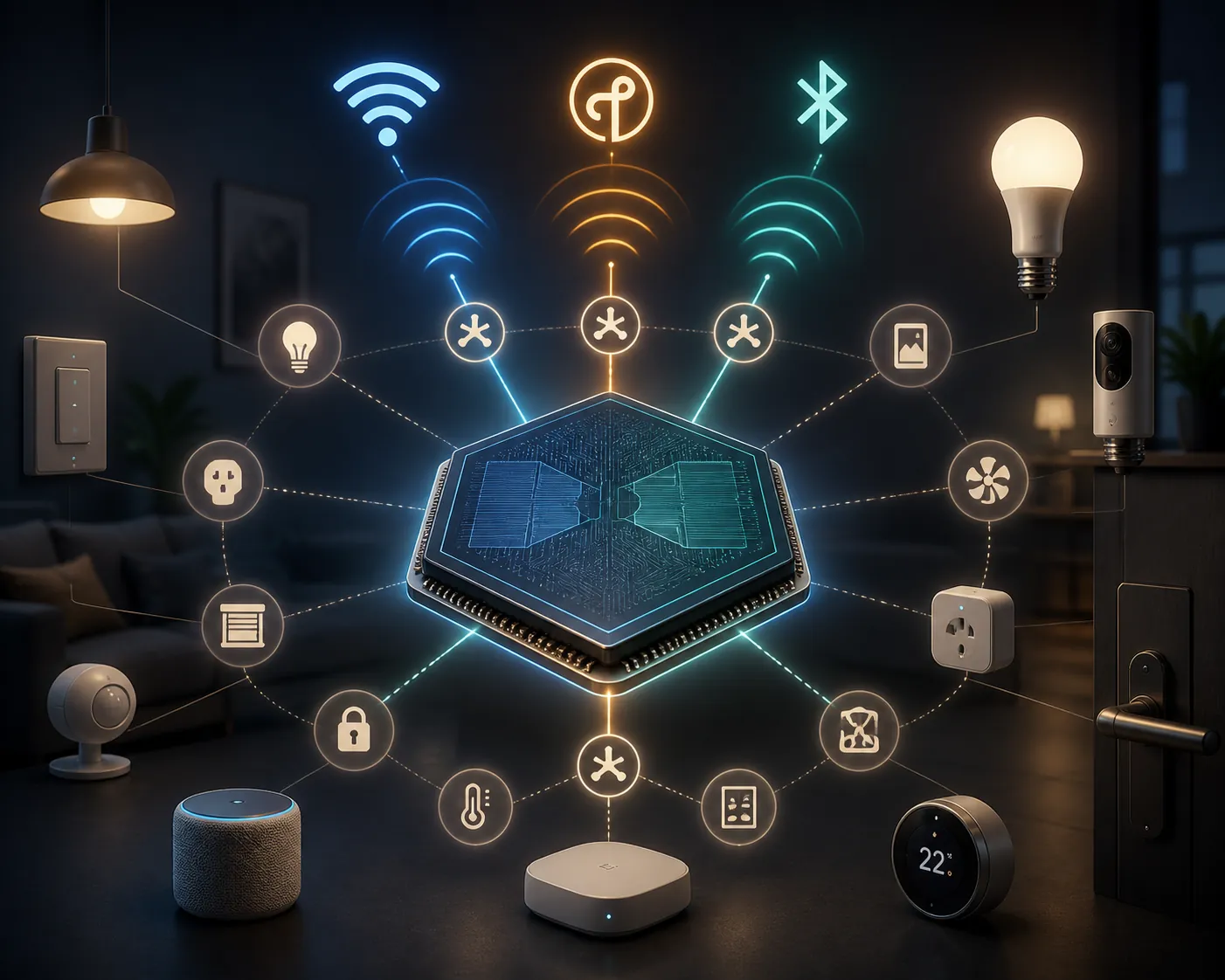
That gives buyers stronger reasons to believe future devices will work together than they had in the bridge-heavy years. It does not give anyone permission to stop checking. Chip architecture, certification, and protocol version are promising signals. The final purchase decision still belongs to the verified device, the verified hub, the firmware version, the protocol path, and the date you are installing it.
References
- Trending Markets for Smart Home Devices in 2026, HIRI
- IoT Microcontroller Market Size, Share & Trend Analysis, 2031, Mordor Intelligence
- Smart Home Connectivity: Trends, Challenges and the Role of Next-Gen IoT Technology, Synaptics
- Matter and Thread Explained: What Works in 2026, DataWire Solutions
- RISC-V in 2026: 25% Market Share Against x86 and ARM, AESTECHNO
Known issues with this device / protocol
Spec-version history
For active regressions on this protocol, see Update Watch.
No linked Update Watch entries yet.