
Is the Growatt MINA home battery backup as promised?
No independent Growatt MINA reviews exist yet. This audit separates shipped backup specs from roadmapped features and ends with a verify-before-buying list.
Last updated
As of Aug. 25, 2026, a true hands-on Growatt MINA hybrid inverter home battery backup review would be premature. MINA was announced in early August 2026, and at time of writing there are no independent owner reports, lab tests, or long-term field reviews specific to this system. The honest question is narrower: which backup claims are already consistent enough to put in front of an installer, and which ones still need to be pinned down in writing before anyone signs a quote?
| Item | Status in Q3 2026 |
|---|---|
| Product status | Newly announced all-in-one hybrid inverter and home battery system; official launch dated Aug. 4, 2026 [1]. |
| Launch regions | Australia plus Germany, Netherlands, Italy, Spain, UK, and other EU countries are named in launch coverage; no US availability was found at time of writing [2]. |
| Review status | No independent MINA owner or lab reviews found as of Aug. 25, 2026; current assessment is a launch-spec audit, not a performance test. |
| Backup headline | 63A whole-home backup connection, sub-10ms switchover, and 150% peak output are consistently repeated by Growatt and trade coverage, but remain vendor-published claims [3][4]. |
| Verdict boundary | Promising backup-first candidate if the quote, datasheet, region, and warranty document match the buyer’s actual installation. |
The backup claims are the strongest part — with one important label
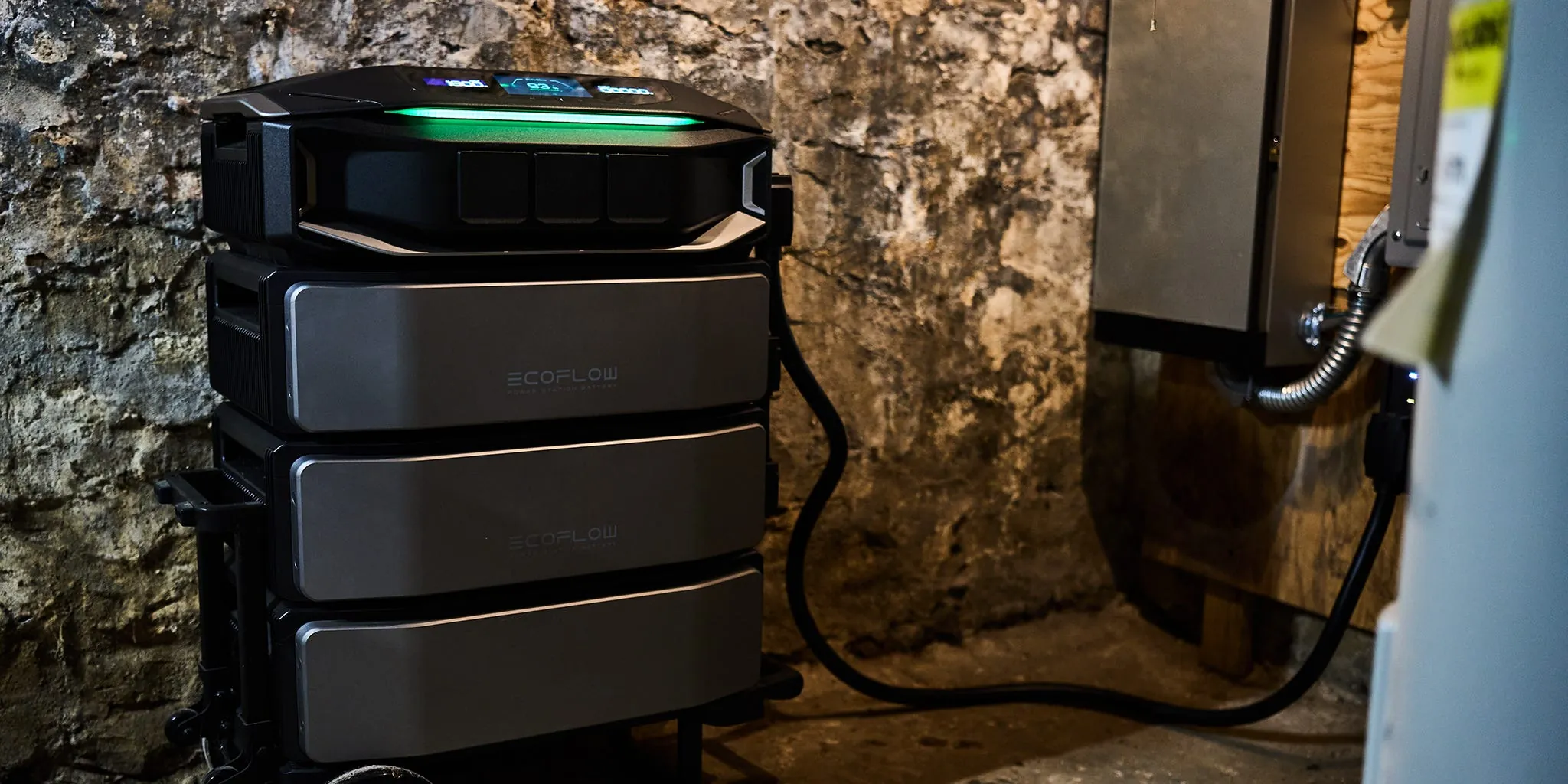
MINA is being positioned less like a small self-consumption battery and more like a whole-home outage product. The three numbers that matter most for that promise are the 63A backup connection, sub-10ms switchover, and 150% peak output. They appear across Growatt’s own product material and are repeated by ess-news and pv magazine Australia, which is enough to treat them as the launch specification set — not enough to treat them as independently tested behavior [3][4][5].
The 63A figure is the one a homeowner will feel in the quote. A battery that only backs up a few selected circuits can still be useful, but it changes the design conversation: which lights, outlets, refrigerator, router, garage door, or heating controls are protected, and which are not. A 63A whole-home backup connection suggests a more ambitious installation path, where the backup side is not automatically limited to a tiny essential-loads board. That does not mean every appliance can run at once, or that a site’s switchboard, grid rules, and battery capacity stop mattering. It means the installer should be able to explain, in writing, what “whole-home” means for that specific house.
The sub-10ms switchover claim is also useful, but it should not be oversold as a universal promise that every device will ride through every outage without noticing. Growatt and trade coverage repeat the figure; the missing piece is independent testing across real loads, firmware versions, and installation conditions [3][4]. For a homeowner who works from home or relies on medical, networking, or security equipment, the question is not just whether MINA is fast on paper. It is whether the installer will identify anything that still needs its own UPS.
The 150% peak output claim is the right kind of specification to ask about when motors and compressors are involved. Pumps, refrigerators, and some air-conditioning loads can draw more at startup than during steady running. A peak-output allowance helps on paper, but it still needs to be matched against actual circuits. If the quote says “whole-home backup,” it should also say which large loads are backed up, which are load-managed, and which are excluded during an outage.
The capacity conflict is not a footnote
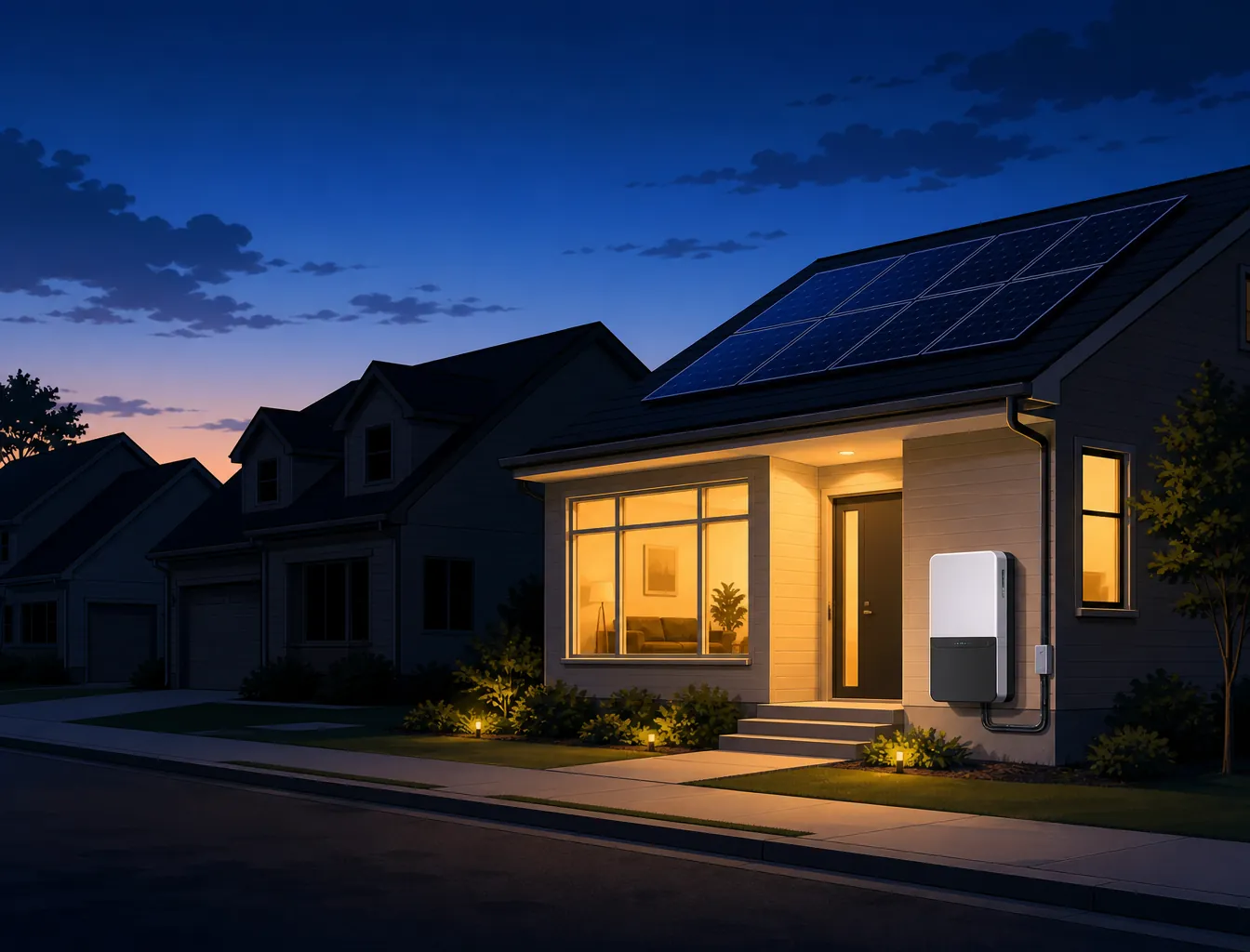
MINA’s capacity story is where the launch material stops being tidy. EU-facing launch coverage describes configurations from one to six 5 kWh modules, for 5–30 kWh usable capacity [3][4]. Growatt’s Australia-facing FAQ, however, describes 7 kWh modules, with examples such as 14 kWh from two 7 kWh modules and expansion up to 49 kWh [6]. Those are not small differences in wording. They change the battery size, the number of modules, the price comparison, and the amount of stored energy available during a long outage.
| Configuration claim | What it means for a buyer |
|---|---|
| EU launch coverage: 1–6 × 5 kWh modules, 5–30 kWh usable [3][4] | A six-module system tops out at 30 kWh in the published EU framing. |
| Australia FAQ: 7 kWh modules, up to 49 kWh; 14 kWh shown as 2 × 7 kWh [6] | The same “two modules” language could mean a different usable capacity in Australia. |
| Regional versions are not automatically interchangeable [6] | The quote must identify the market version and exact module size, not just the MINA name. |
This is the clearest reason not to shop MINA from a generic product page. A homeowner comparing “two modules” against a Tesla, Sigenergy, Enphase, BYD, or other battery quote could be comparing different amounts of usable storage without realizing it. The installer’s proposal should state the battery module size, the number of modules, usable capacity, backup output limit, and whether that configuration is the version approved for the buyer’s market.
Capacity also changes the meaning of the backup numbers. A fast switchover helps at the moment the grid fails; stored energy decides how long the house can keep going. For a deeper look at what whole-home backup can and cannot cover during an outage, see this site’s guide to home battery backup during a grid blackout.
The battery optimizer is the genuinely interesting expansion feature
MINA’s per-module battery optimizer deserves attention because it addresses a real problem in home batteries: expansion after the first installation. Growatt says the optimizer manages each module independently and allows owners to add modules without pre-charging [6]. If that holds up in field installations, it could make staged battery sizing less awkward for households that want to start smaller and expand after seeing real outage behavior or time-of-use savings.
The careful wording is “could.” The optimizer is a launch feature, not just a future promise, but the buyer still needs the practical limits: supported old-versus-new module combinations, maximum age gap between additions, installer labor, commissioning procedure, and whether adding modules resets, changes, or complicates warranty coverage. Expansion features are most valuable when they survive contact with the service department.
Solar and retrofit fit: enough hardware to be taken seriously
For new rooftop solar, Growatt’s Australian MINA product page lists three MPPTs, a DC/AC ratio up to 2.0, and 18A strings [5]. That combination is relevant for homes with multiple roof faces, modern higher-current panels, or a design that deliberately oversizes the PV array relative to inverter output. It is not a substitute for string design, shading assessment, or local grid export approval, but it does make MINA look like more than a battery box with a token solar input.
For existing solar homes, the AC-coupled retrofit support matters just as much [5]. It suggests MINA may be considered without tearing out a working PV inverter, depending on site rules and installer design. Retrofit monitoring can get messy when solar production, battery behavior, and smart-home data come from different devices. If that is part of the purchase decision, this site’s smart-home solar battery compatibility guide covers the AC-versus-DC monitoring boundary in more detail.
V2G, generator support, and parallel operation are not launch reasons to buy
Some of MINA’s most eye-catching ecosystem features are explicitly not available at launch. The 25 kW bidirectional DC V2G capability is listed as not commercially available, while generator support and parallel operation of multiple units are described as under development [3][4][6]. Those may become valuable later. They should not be used to justify a 2026 purchase unless the written contract says exactly when, how, and at what cost they will be enabled.
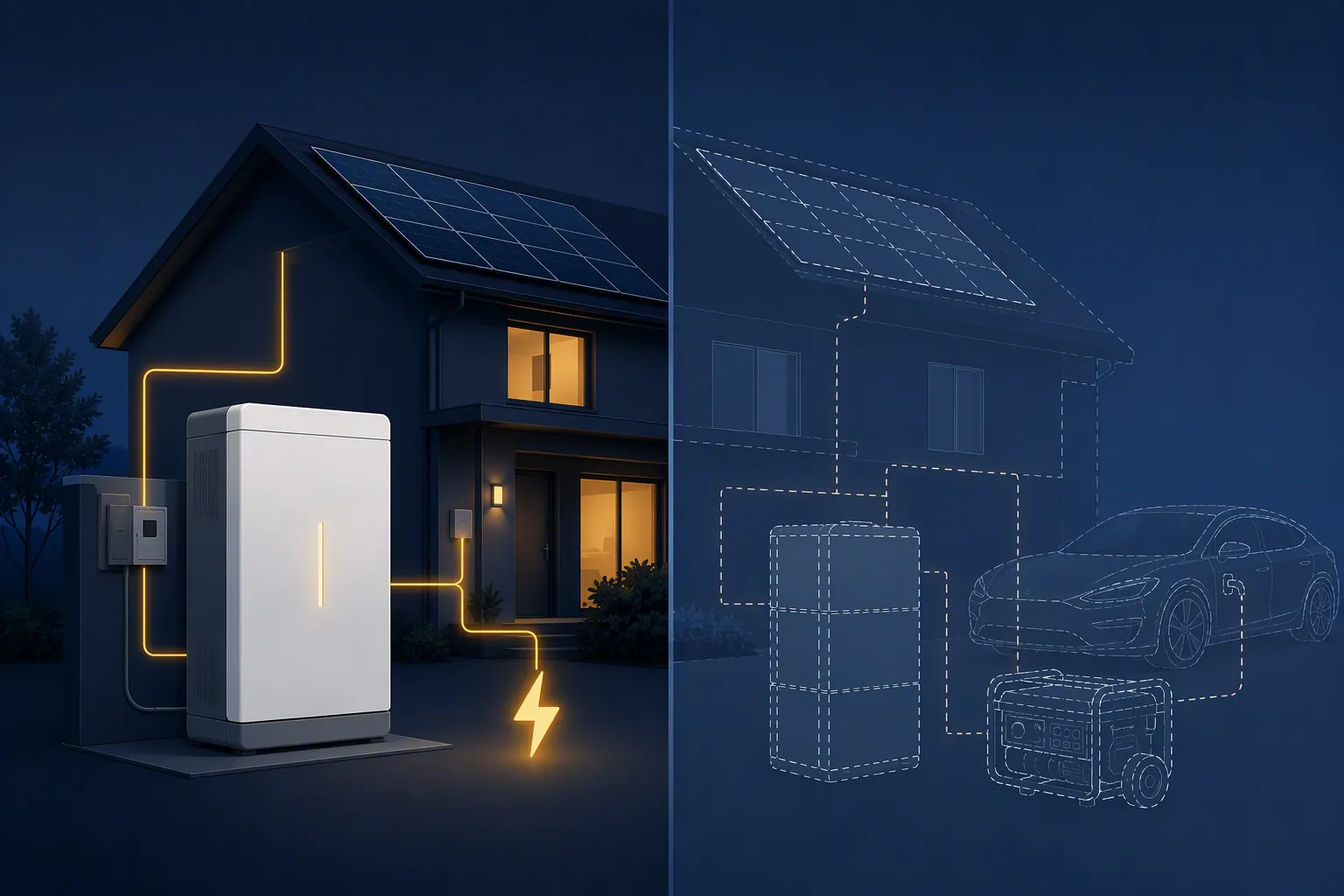
This is not a complaint that Growatt has a roadmap. Most battery platforms do. The problem starts when roadmapped features sit beside shipped specifications in sales material and the buyer has to discover the difference after installation. In a quote, “supports generator backup” and “generator support under development” are completely different statements.
Warranty is the weak spot until MINA’s own document appears
The warranty question is not academic with Growatt batteries. SolarQuotes’ Finn Peacock previously called an older Growatt battery warranty “the worst I’ve read to date,” because the 10-year term could effectively collapse to about 13 months under daily full cycling. SolarQuotes later noted a September 2023 update for ARK batteries to 10 years or 6,670 kWh throughput per ARK module [7]. That history does not prove anything bad about MINA. It does prove that the exact warranty document matters more than the phrase “10-year warranty” in a brochure.
The Australian market has also moved. Energy Matters’ 2026 Growatt inverter review states that 10-year warranties are now common in Australia [8]. That makes the absence of a public MINA-specific warranty term more important, not less. If competitors are routinely offering long written terms, a buyer should not have to infer MINA’s coverage from older Growatt products or from another region’s inverter warranty page.
At time of writing, no public MINA-specific warranty document was found in the reviewed materials. That means the warranty line in a quote should not be vague. It should identify the warranted product, term in years, throughput limit if any, retained-capacity promise, labor coverage, travel coverage, transferability, installer obligations, firmware or internet requirements, and who handles the claim if the retailer disappears.
Smart-home status: investigating, not assumed
Home Assistant users should be cautious. The official Growatt integration is cloud polling, lists 5-minute data updates, and warns that username/password authentication is rate-limited and can lead to account lockout for up to 24 hours. Its API-token-supported model list does not include MINA [9]. That does not prove MINA will never work with Home Assistant. It means “MINA works with Home Assistant” is unverified in Q3 2026 unless a retailer or installer can show the actual integration path.
For many homeowners, this will be a minor issue compared with backup behavior and warranty. For others, local automation decides whether the home sheds EV charging, pauses a heat pump, or protects network equipment during an outage. If smart-home control is part of the system design, ask whether MINA exposes local data, cloud-only data, or no supported third-party path at all.
What to verify before buying MINA in 2026
MINA looks credible as a backup-first all-in-one system because the core outage specifications are consistent across Growatt’s own pages and independent trade coverage. But the decision in 2026 belongs in the documents, not the launch page. Send this list to the installer or retailer before accepting a quote:
- Confirm the exact regional version being supplied and whether it is approved for the installation address.
- State the battery module size in the quote: 5 kWh, 7 kWh, or another market-specific figure.
- State the number of modules, usable capacity, and whether future expansion uses the same module type.
- Confirm whether 63A whole-home backup is included in the quoted configuration, not merely available on another MINA variant.
- List which circuits and high-startup loads will be backed up, load-managed, or excluded.
- Confirm the shipped switchover and peak-output behavior, while recognizing those figures are vendor-published until independently tested.
- Attach the MINA-specific warranty document, including years, throughput, retained capacity, labor, transferability, and claim process.
- Mark V2G, generator support, and parallel operation as excluded unless the contract says they are commercially available for this installation.
- Provide installed pricing, not just product positioning, because no public MINA pricing was found in the reviewed sources.
- Confirm monitoring and smart-home expectations, especially if Home Assistant or local automation is part of the design.
That is the fair 2026 verdict: MINA is promising and unusually backup-focused for a new Growatt all-in-one system, but it is too new for a hands-on reliability judgment. Buy only the configuration, warranty, and shipped features that the paperwork actually confirms.
References
- Growatt Launches MINA: A Smart All-in-One Home Energy Storage System for Residential Solar Markets — Growatt, Aug. 04, 2026
- Growatt Launches MINA: A Smart All-in-One Home Energy Storage System for Residential Solar Markets — AOL, Aug. 5, 2026
- Growatt brings MINA to all-in-one home storage — ess-news, Aug. 06, 2026
- Growatt launches all-in-one energy storage system for residential solar market — pv magazine Australia, Aug. 12, 2026
- MINA All-In-One ESS — Growatt AU
- Growatt Single-Phase All-in-One Home Battery System — Growatt
- Growatt | Battery Review: Pros, Cons & Final Verdict — SolarQuotes
- Growatt Inverter Review in 2026: What to Know? — Energy Matters
- Growatt - Home Assistant — Home Assistant
Known issues with this device / protocol
Spec-version history
For active regressions on this protocol, see Update Watch.
No linked Update Watch entries yet.