Best Smart Air Purifier for Wildfire Smoke by Hub Ecosystem
A smart purifier is only worth buying for wildfire smoke when its smoke CADR clears the EPA/AHAM sizing bar and it connects to the hub or app you already use. Here are the best picks per ecosystem — Apple Home, Matter, Zigbee, app-only Wi-Fi — and the smoke-CADR threshold behind each.
Last updated
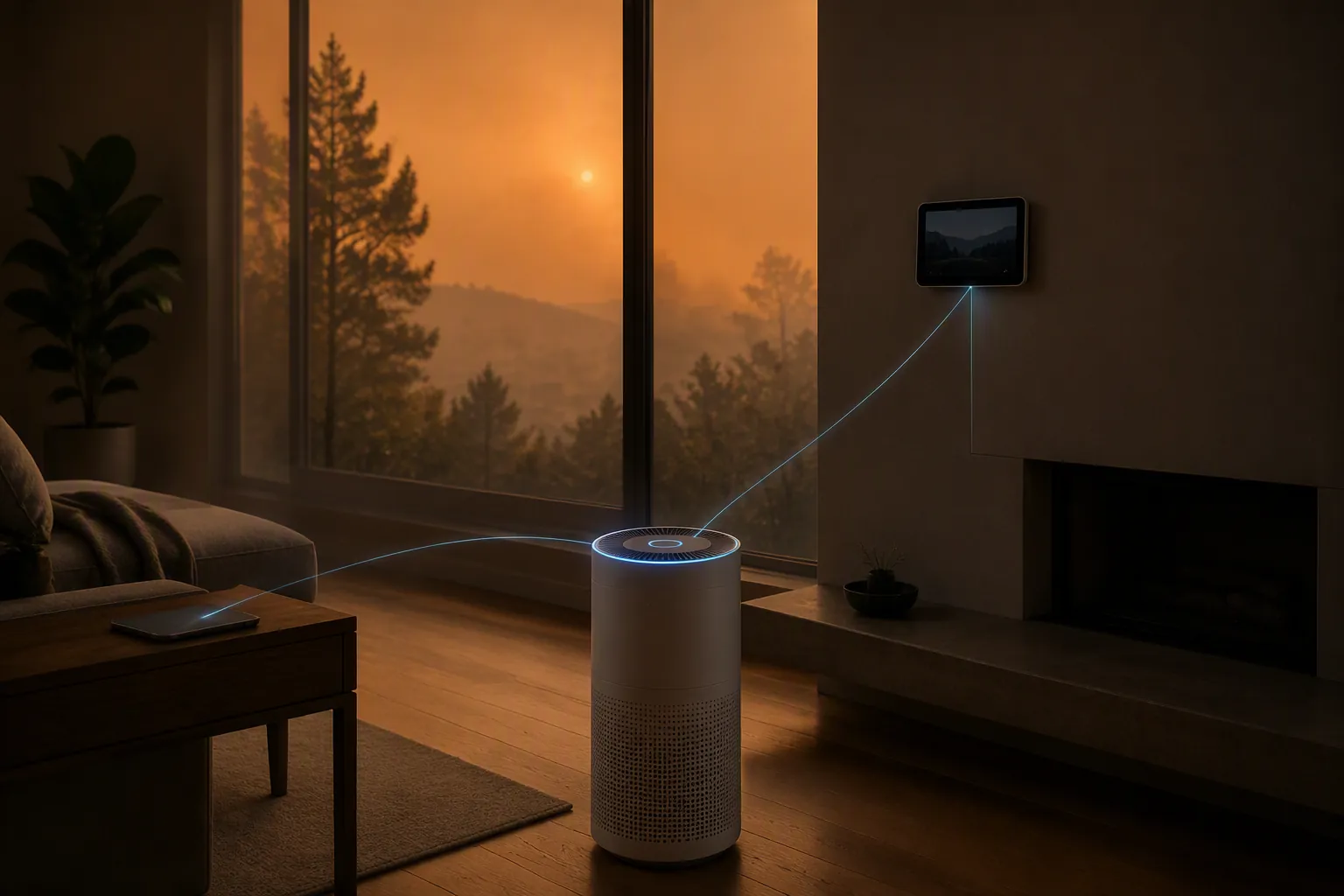
The awkward answer to “best smart air purifier for wildfire smoke 2025” is that some of the strongest smoke machines are not smart at all, and some of the cleanest smart-home integrations do not move enough air for the room people put them in. That mattered during the January 2025 Los Angeles fires, and it still matters in Q3 2026 after the July Canada-to-Minnesota smoke wave pushed wildfire smoke back into everyday buying decisions across the Midwest and East.
Start with the unglamorous rule: for wildfire smoke, the purifier’s smoke-capable CADR should be roughly two-thirds of the room’s square footage, and about 200 cfm is a practical floor for a normal living space. Then check whether the purifier talks to the system you already trust when the house is closed up and everyone is asking why it smells like a campfire.
That is why a Levoit Vital 200S, a Coway Airmega ProX, and an AirFanta 3Pro cannot be judged on the same “smart purifier” scale. HouseFresh measured the Levoit Vital 200S at 249 cfm PM1 CADR and called it a strong smart value around the $200 class; the Coway Airmega ProX cleared their test faster at 462 cfm PM1 CADR but, in that hands-on account, had no app connectivity; the AirFanta 3Pro reached 353 cfm PM1 CADR for roughly $165 with no smart features at all.[1]
The smoke bar comes before the hub badge
EPA guidance for portable air cleaners points buyers toward clean-air delivery and air changes rather than app labels, and the common AHAM sizing shortcut is to choose a smoke CADR equal to about two-thirds of the room’s area in square feet.[2] In practice, a 300-square-foot bedroom wants about 200 cfm; a 450-square-foot family room wants about 300 cfm; a large open-plan space can outrun many attractive “smart” cylinders before the app even becomes relevant.
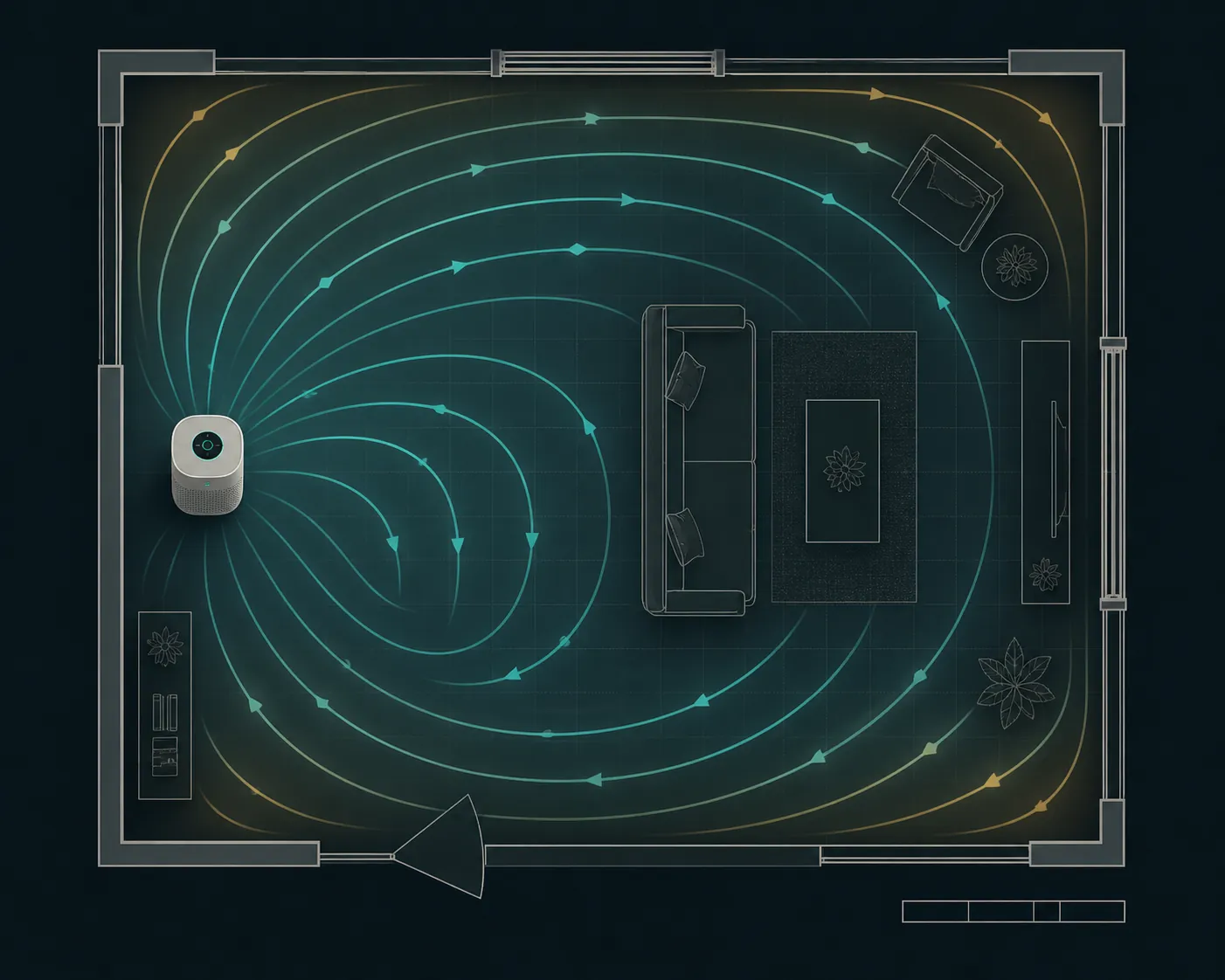
CARB’s wildfire-smoke guidance is more encouraging about what a correctly sized unit can do: indoor particle levels can drop by more than 90% in some cases.[3] The catch is hidden in “correctly sized.” A purifier that is excellent in a sealed test chamber or small bedroom may be a polite white-noise machine in a vaulted living room.
Do not blend CADR figures from different sources into one leaderboard. HouseFresh reports measured PM1 CADR in cfm. Sylvane lists smoke CADR figures. AHAM and Energy Star data may use PM2.5 or dust CADR. Manufacturer room-size claims often assume different air-change targets and marketing-friendly conditions. The number is useful only when its source standard stays attached to it.
| If your home runs on… | Best-fit models to check first | Smoke-performance evidence available | Protocol or app dependency | What the hub can and cannot expose | Practical recommendation |
|---|---|---|---|---|---|
| Apple Home / Thread | Airversa AP2 | Thread and Apple Home support are the main reason to consider it; the cited sources here do not establish a high smoke CADR number comparable to the larger smoke performers. | Thread; Apple Home visibility. | Apple Home exposes modes, air quality, and fan speed, but AppleInsider found that filter life and night mode were not exposed in the Home app.[4] | Buy only for smaller rooms where its CADR fits the space and Home visibility matters more than full device control. |
| Matter over Wi-Fi | AiDot Welov P200 Pro; also check current listings for SwitchBot Air Purifier Table, GoveeLife H7126, xCREAS Cyclone 400, Dyson HP2 De-NOx | Matter 1.2 defines air purifiers as a device type using fan control, air-quality sensing, and filter condition; Matter Alpha identified the AiDot Welov P200 Pro as a Matter-over-Wi-Fi purifier with HEPA 99.97%, PM2.5 sensing, and about 1,570 sq ft/hour coverage claim.[5][6] | Matter over Wi-Fi; ecosystem behavior depends on the controller and platform version. | Certification does not guarantee that Apple Home, Google Home, Alexa, SmartThings, or Home Assistant expose every useful control cleanly. | Good lane for Matter-curious buyers, but verify current platform controls before treating it as a smoke automation device. |
| Zigbee / Home Assistant | IKEA STARKVIND | Chosen for integration reliability rather than for being the biggest smoke performer in the market; CADR must still be matched to room size. | Zigbee through ZHA or Zigbee2MQTT; can also act as a Zigbee router according to Home Assistant community reports.[7] | Home Assistant can control the purifier locally through Zigbee, but STARKVIND lacks an onboard air-quality sensor.[7] | Best fit when you already run Home Assistant and are willing to pair it with a separate PM2.5 sensor. |
| App-only Wi-Fi | Levoit Vital 200S / VeSync; Coway IoCare models such as Airmega 400S where available | HouseFresh measured Levoit Vital 200S at 249 cfm PM1 CADR; Sylvane lists Coway Airmega 400S at 350 smoke CADR and Blueair Blue Pure 211i Max at 410 smoke CADR.[1][8] | Vendor cloud/app account; integration depth varies by brand and unofficial bridge. | The native app may expose schedules, filter life, auto modes, and sensors better than a general smart-home hub, but cloud dependency is part of the bargain. | Often the strongest smart-smoke lane for buyers who accept app control and want higher CADR than most hub-native options. |
| Not smart, but smoke-strong | Coway Airmega ProX; AirFanta 3Pro; other high-CADR manual units | HouseFresh measured Coway Airmega ProX at 462 cfm PM1 CADR and AirFanta 3Pro at 353 cfm PM1 CADR; Sylvane lists Coway Airmega Pro X at 568 smoke CADR, which should be treated as a different source/standard rather than merged with HouseFresh’s PM1 result.[1][8] | Manual control, or a smart-plug workaround only if the purifier safely resumes after power restoration and the plug is rated for the load. | Your hub controls power at best; it usually cannot see fan speed, filter life, PM2.5, or mode state. | Choose this lane when the smart models in your ecosystem do not meet the room’s smoke-CADR requirement. |
Apple Home: Thread visibility is useful, but it is not the whole purifier
Apple Home buyers have a very specific problem: they do not just want another vendor app. They want the purifier visible beside thermostats, sensors, locks, and scenes, so a smoke response can be part of the same family-facing control surface everyone already understands.
Airversa AP2 is the cleanest example of that trade. AppleInsider described it as a Thread-enabled Apple Home purifier and found that the Home app could see modes, air quality, and fan speed. The same review also found that filter life and night mode were missing from Apple Home exposure.[4] That is not a minor footnote if your smoke-season automation depends on knowing whether the filter is exhausted before the next bad-air day.
For an Apple Home household, AP2 can still make sense in a bedroom, nursery, or office if its clean-air delivery fits the room. The win is not that Apple Home magically makes it a better smoke purifier. The win is that basic controls and air-quality status can sit where the household will actually use them. If the room needs substantially more CADR, the better Apple Home answer may be a non-HomeKit purifier left running on high during smoke events, with a separate sensor or plug doing the limited automation work.
Matter air purifiers: the device type exists; the experience still needs checking
Matter 1.2 added air purifiers as a formal device type, combining fan control, air-quality sensing, and filter condition into the specification.[5] That is the right direction. It is also not the same thing as saying every Matter controller now gives you a complete purifier dashboard.
The AiDot Welov P200 Pro is the cleanest documented Matter-over-Wi-Fi example among the models covered here. Matter Alpha identified it as a Matter purifier with HEPA 99.97%, PM2.5 sensor support, and an approximate 1,570 sq ft/hour coverage claim.[6] Coverage claims are not a substitute for labeled smoke CADR, but they do tell you what the manufacturer thinks the unit is meant to cover.
For SwitchBot Air Purifier Table, GoveeLife H7126, xCREAS Cyclone 400, and Dyson HP2 De-NOx, the buying step is not “does the box say Matter?” It is “does my controller expose the controls I need today?” Fan speed, mode selection, PM2.5, filter condition, child lock, display brightness, and sleep mode do not always land in every ecosystem with equal maturity. In a smoke event, a partial integration can be more annoying than no integration because it looks automated until the one missing attribute forces you back into the vendor app.
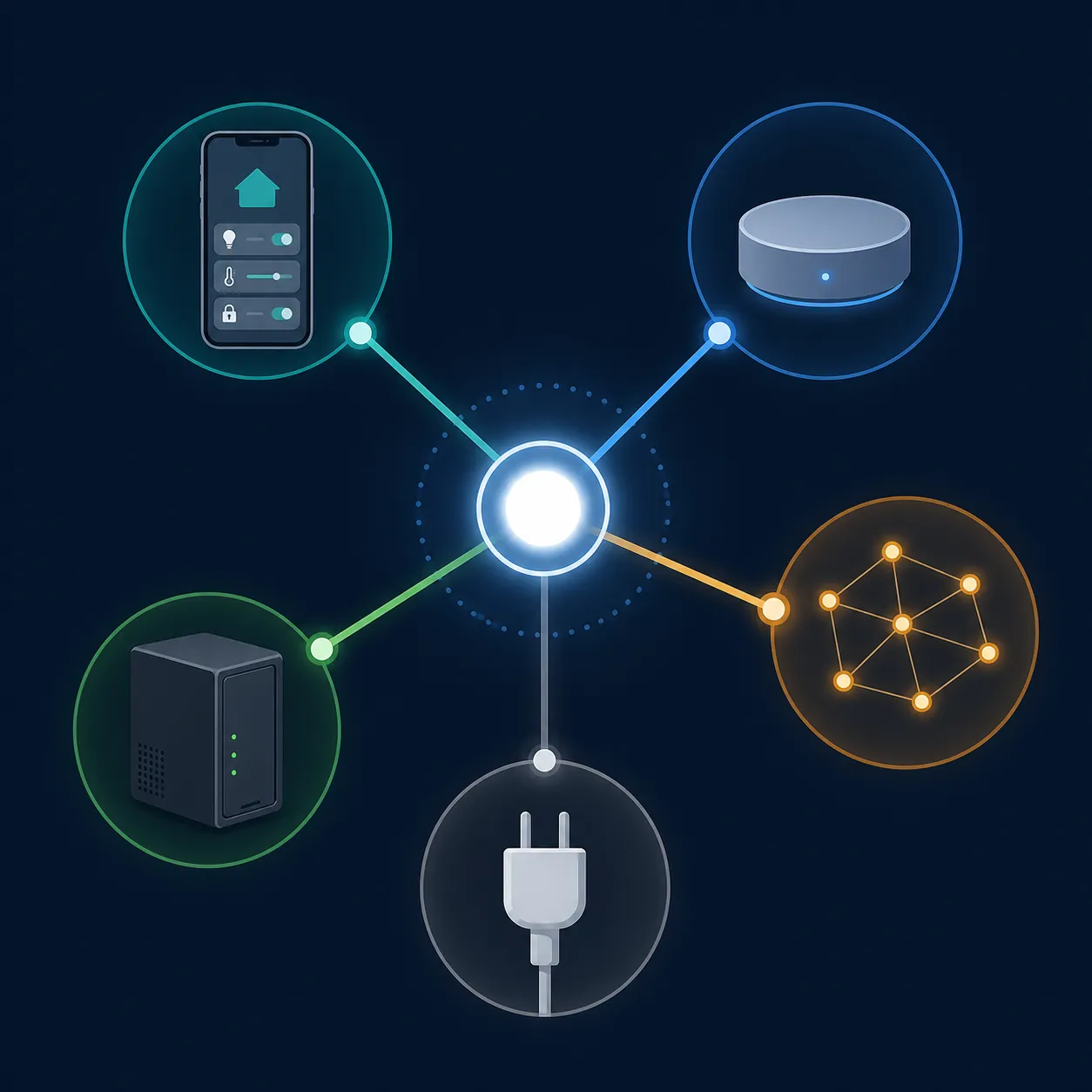
Home Assistant and Zigbee: STARKVIND is useful because it is boring
IKEA STARKVIND keeps coming up in Home Assistant discussions because it behaves like a Zigbee device rather than a cloud appliance wearing a local-control costume. Community reports point to support through ZHA and Zigbee2MQTT, and note that it can double as a Zigbee router. The same reports are clear about the limitation: STARKVIND has no onboard air-quality sensor.[7]
That limitation changes how you build the system. STARKVIND should not be the only smoke detector in the room. Pair it with a separate PM2.5 monitor that Home Assistant can read, then let the automation decide when the purifier ramps up. If you are still choosing that sensor, start with How to Choose a Smart Home Air Quality Monitor in 2026 rather than assuming the purifier’s own sensor is the source of truth.
There is another boundary worth stating plainly: no Z-Wave purifier was found in the cited sources as of August 2026.[7] If your home is built around Z-Wave, expect to bridge this category through a plug, relay, cloud integration, or Home Assistant—not through a native Z-Wave air purifier.
App-only Wi-Fi: often stronger for smoke, weaker for ownership
The uncomfortable truth for hub-first buyers is that app-only Wi-Fi models can be better smoke choices. Levoit’s Vital 200S has a useful smart layer through VeSync and HouseFresh measured it at 249 cfm PM1 CADR.[1] Coway’s connected models can also sit in the higher-CADR tier: Sylvane lists the Airmega 400S at 350 smoke CADR for a 1,560-square-foot room-size claim, while the Blueair Blue Pure 211i Max is listed at 410 smoke CADR with a 1,524-square-foot claim.[8]
The price is dependency. VeSync and IoCare can expose useful purifier-specific controls—filter status, schedules, modes, sensor readings—that Apple Home or Matter may not surface. They can also depend on cloud accounts, vendor apps, and API behavior outside your control. For casual air cleaning, that may be fine. For smoke automation, it means you should know what happens if the internet is down, the app is logged out, or the vendor changes an integration.
If you already use Alexa or Google Home mostly as a voice layer, app-only Wi-Fi may be the least painful path. If you run Home Assistant or Apple Home because local behavior matters, treat vendor-cloud control as a conscious compromise, not a hidden cost discovered during a red AQI alert.
Great smoke purifiers that are not smart
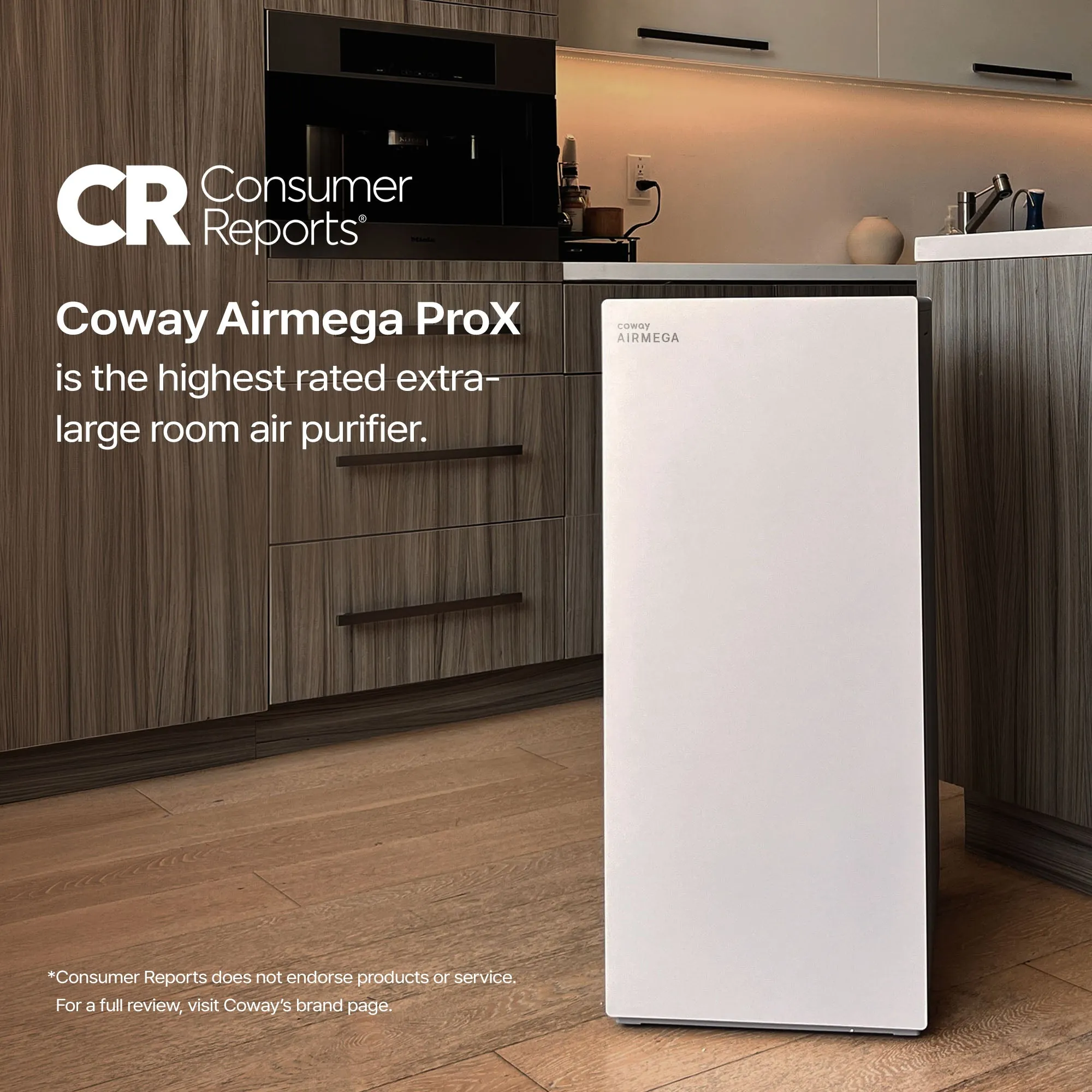
The Coway Airmega ProX and AirFanta 3Pro are exactly why a smart-home buyer should not shop this category by integration first. HouseFresh measured the ProX at 462 cfm PM1 CADR and the AirFanta 3Pro at 353 cfm PM1 CADR, both ahead of many connected models in raw smoke-relevant performance.[1] Sylvane separately lists the Coway Airmega Pro X at 568 smoke CADR, which may reflect a different standard, source, or variant; it should be labeled rather than merged into HouseFresh’s PM1 result.[8]
A dumb high-CADR purifier can be the right purchase if it has simple physical controls, safely resumes its previous state after power loss, and does not exceed the rating of the plug or outlet controlling it. That opens a modest but useful smart-plug path: pre-run the unit before smoke enters the house, turn it off after air improves, or alert when power draw suggests it is no longer running as expected.
Do the electrical homework before putting a purifier on a plug. Use the Wi-Fi Smart Plug Buying Guide for load and reliability basics, compare remote-control tradeoffs in Smart Plug Remote Methods Compared, and for Home Assistant power-monitoring ideas, see 5 Smart Plug Automation Recipes for Home Assistant Using Energy Monitoring.
Models to be careful with for wildfire smoke
This is not a brand blacklist. It is a smoke-sizing filter. A small purifier can be reasonable on a nightstand and still be a poor answer for a smoky family room.
- Low-CADR compact units, including models in the Levoit Core 300 class, should not be treated as whole-room wildfire-smoke solutions unless the room is genuinely small.
- Very small budget cylinders such as AROEVE MK01-style units may be useful for close-range particle reduction but should not be bought as primary smoke machines for normal rooms.
- Purifiers with unclear HEPA filtration claims, including models marketed heavily around broad “medical-grade” language, need extra verification before a smoke-season purchase.
- Ionizer-forward or ionizer-only behavior is the wrong place to compromise for wildfire smoke; prioritize mechanical filtration and labeled CADR.
Wirecutter’s wildfire-smoke guidance keeps the Coway Airmega Mighty/AP-1512 family in the conversation for rooms up to about 350 square feet, which is a useful reminder that proven non-hype units still matter even when the smart-home layer is limited or absent.[9]
How I would choose by room and hub
For a bedroom in an Apple Home household, I would look at Airversa AP2 only after confirming the room-size math. The Home app gaps are annoying, but fan speed and mode visibility are still better than handing every family member a separate purifier app.
For a larger living room where smoke performance is the first problem, I would start with measured CADR and work backward. Levoit Vital 200S is the app-smart value lane among the models covered here. Coway Airmega 400S and Blueair Blue Pure 211i Max deserve attention where their listed smoke CADR and current connectivity match the buyer’s tolerance for vendor apps.[1][8]
For Home Assistant, I would rather have a reliable Zigbee STARKVIND plus a good PM2.5 sensor than a prettier cloud purifier that disappears from automations at the wrong time. The missing onboard sensor is not fatal if the room already has trustworthy air-quality data.
For a Matter-first home, I would treat 2026 as a verification year, not a victory lap. The specification supports the category, and devices exist, but a smoke-response automation depends on the controller you actually own exposing the attributes you actually need.
For any ecosystem where the smart choices miss the CADR target, I would buy the smoke-strong purifier and solve control separately. That may mean manual high-speed operation during events. It may mean a correctly rated smart plug. It may mean adding an air-quality monitor and accepting that the purifier itself remains dumb. Clean air beats a beautiful dashboard.
The same pattern applies to other environmental automations: size the device for the physical risk first, then connect it to the hub that will respond reliably. If you are building a broader emergency setup, Configure Your Smart Home for Automated Heat Wave Safety follows that same discipline.
As of August 2026, compatibility claims in this category are firmware- and app-version-dependent, and availability changes quickly. Verify the current app, hub, and Matter or Zigbee behavior before buying. Keep CADR figures labeled by source—PM1 CADR, smoke CADR, PM2.5 CADR, dust CADR, or manufacturer coverage claim—and do not let a connectivity badge turn an undersized purifier into a smoke solution.
References
- The best air purifiers for wildfire smoke, HouseFresh
- Guide to Air Cleaners in the Home, U.S. Environmental Protection Agency
- Indoor Air Cleaners and Wildfire Smoke FAQ, California Air Resources Board
- Airversa AP2 Air Purifier review, AppleInsider, January 8, 2026
- Matter 1.2 Arrives With Nine New Device Types & Improvements Across the Board, Connectivity Standards Alliance
- AiDot Welov P200 Pro Air Purifier Review, Matter Alpha
- Best HA compatible air purifier, Home Assistant Community
- Best Air Purifiers for Smoke, Sylvane
- The Best Air Purifier for Wildfire Smoke, Wirecutter, The New York Times
Known issues with this device / protocol
Spec-version history
For active regressions on this protocol, see Update Watch.
No linked Update Watch entries yet.