Can 5G Drone Detection Really Protect Your Home?
5G drone detection (ISAC) made real headlines in 2026, but no consumer device or home service can use it as of August 2026. This status-labeled verdict explains what the carrier and government demonstrations actually showed, why mid-band sensing physics don't suit home security, and which Remote ID and RF detection tools work today.
Last updated
Status as of August 2026: 5G drone detection is real in carrier, government, and research demonstrations, but it is not available as a consumer home-security product. There is no 5G drone-detection box to mount under an eave, no homeowner subscription from a named carrier, and no app that lets your house borrow nearby cell towers as a private drone radar. What exists is infrastructure-level integrated sensing and communication — usually shortened to ISAC — operated by network owners and researchers, not by individual homeowners.
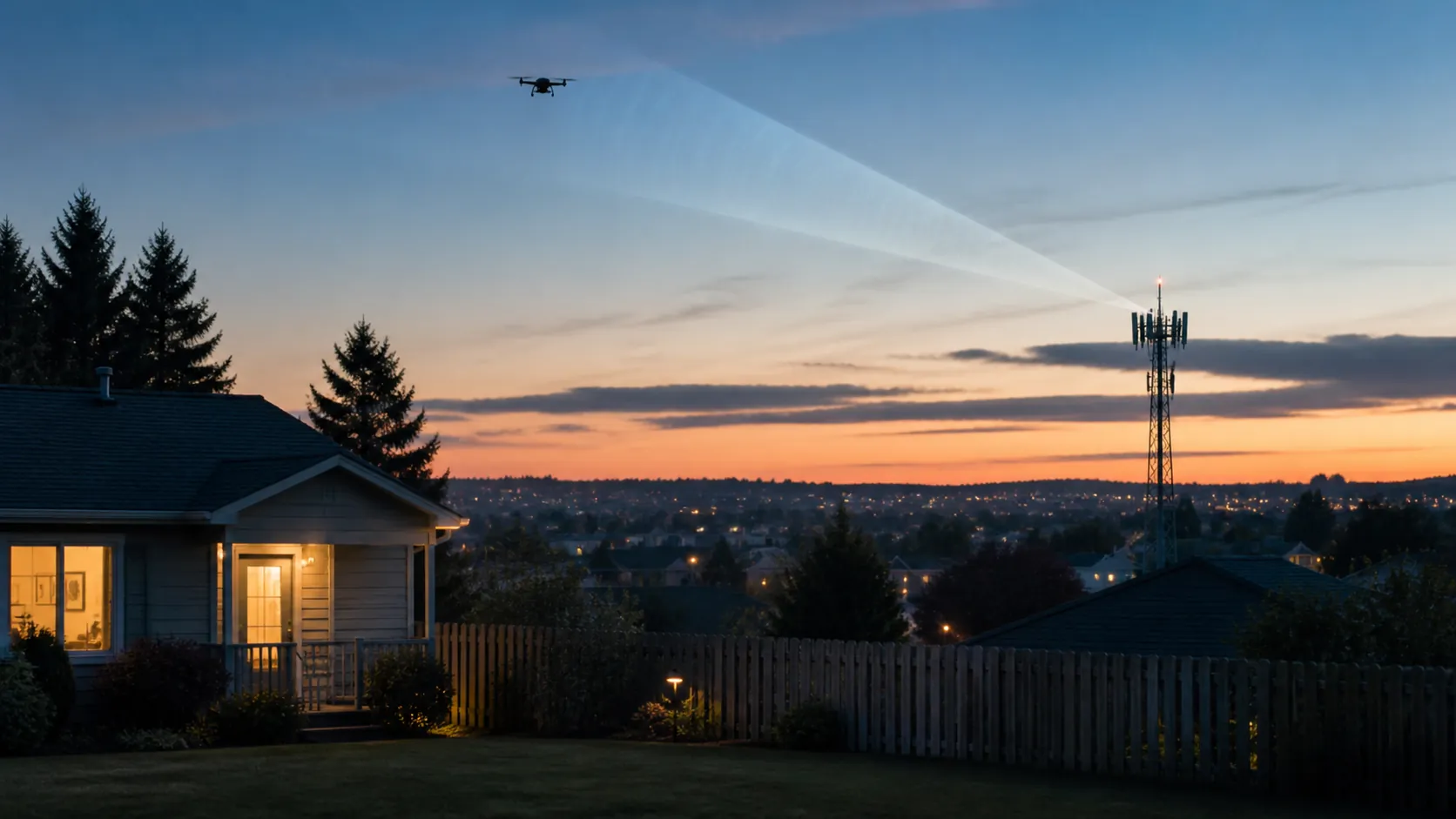
That distinction matters because the phrase “5G drone detection for home security” sounds like a compatibility feature: buy the thing, connect it to the network, get alerts when a drone flies over your yard. The 2026 reality is much narrower. The network-side sensing research is clever. The home-security route is missing.
| Question | August 2026 answer |
|---|---|
| Can 5G networks detect drones in demonstrations? | Yes, under carrier/research control. |
| Can a U.S. homeowner buy 5G drone detection for one house? | No consumer route is available. |
| Does the 2026 AT&T/Ericsson demo prove home protection? | No. It proves an infrastructure demonstration, not a residential service. |
| What can a homeowner use today? | Remote ID scanner apps or receivers, and specialized RF/radar tools when the situation justifies professional equipment. |
What “5G drone detection” actually means
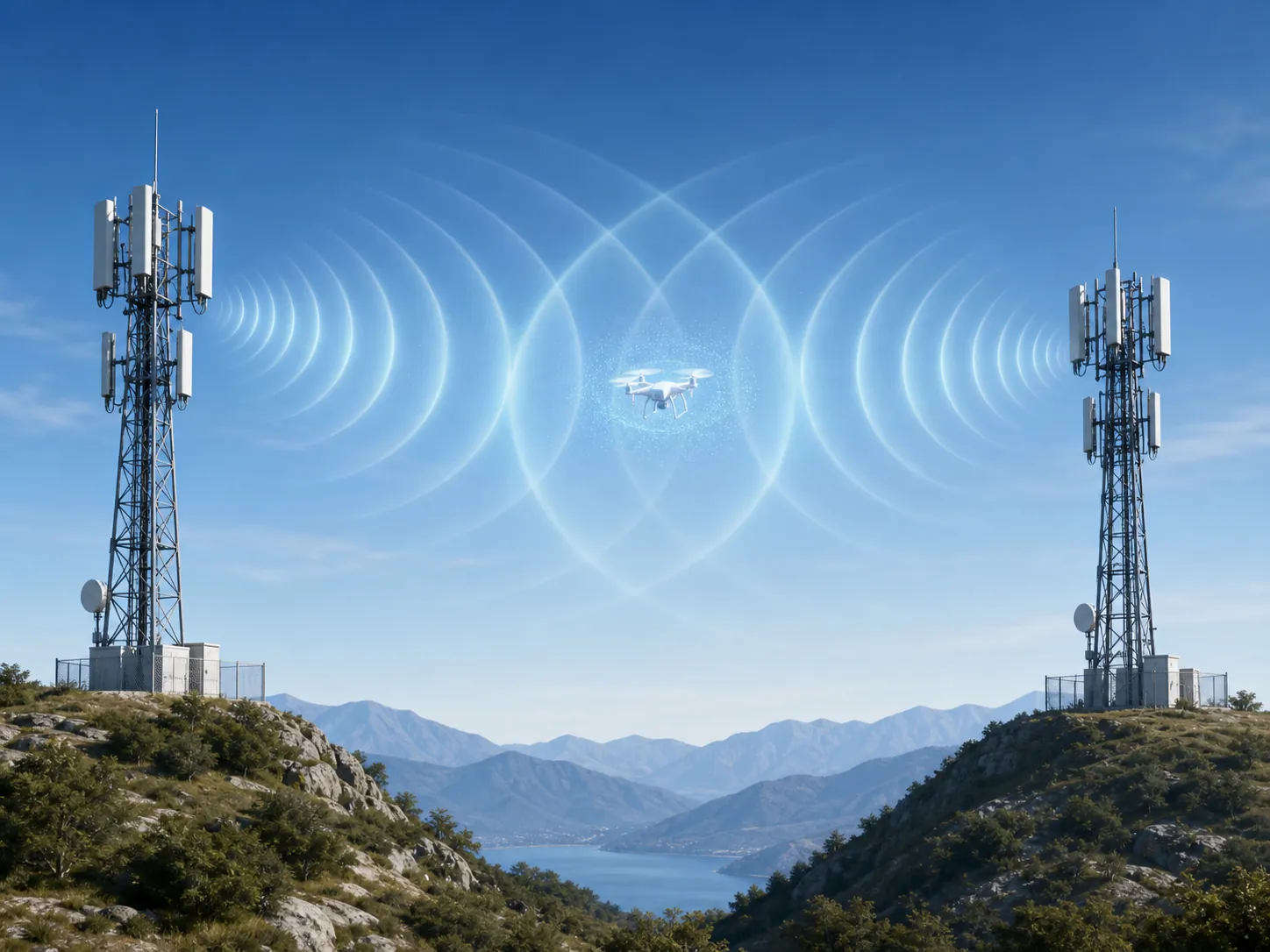
In the serious version of the claim, 5G drone detection means ISAC: integrated sensing and communication. Instead of treating a cellular signal only as a way to move data, the network also analyzes how radio signals reflect, scatter, and arrive back from objects in the environment. Ericsson describes ISAC as reusing OFDM communication waveforms for radar-like sensing, with possible mono-static, bi-static, and multi-static network topologies.[1]
That is not the same class of product as a motion sensor, camera, driveway radar, or Wi-Fi-connected gadget. The useful hardware is the cellular infrastructure: towers, radios, antennas, timing, spectrum access, baseband processing, and network coordination. In a multi-static setup, more than one radio site can participate, which is part of why the idea is technically interesting. A drone becomes a small moving radio-reflection problem inside a network geometry, not something your doorbell camera suddenly learns to identify.
The standards timing also argues against treating this as a near-term consumer feature. Ericsson’s ISAC explainer places 3GPP Release 19 in the initial study phase for ISAC and frames commercial deployment as a 6G-era expectation in the 2030s.[1] That does not mean nobody can test the technique before then. It does mean a homeowner shopping in 2026 should not read “5G can sense drones” as “my carrier can sell me drone protection this month.”
The AT&T/Ericsson stadium demo was real — and still not a home service
The headline demonstration worth taking seriously is the July 10, 2026 Ericsson announcement with AT&T. At AT&T Stadium in Arlington, the companies demonstrated detection, location, and tracking of multiple drones flying at 300 to 400 feet, using existing towers in a multi-static Massive MIMO configuration.[2]
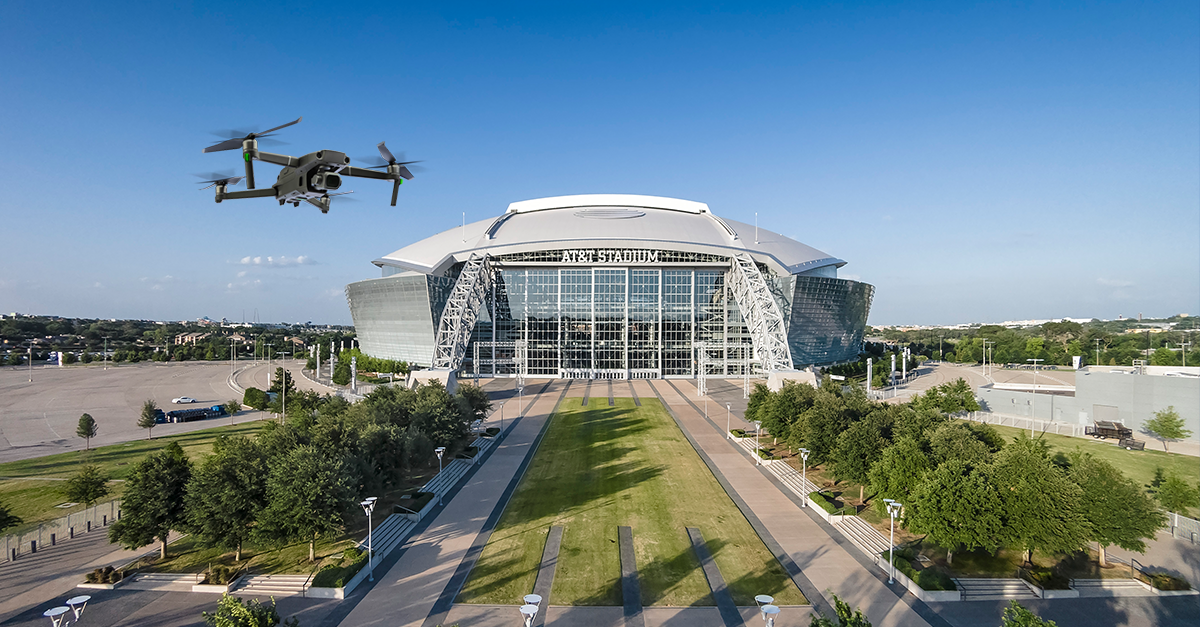
That is a good infrastructure demo. A stadium is exactly the kind of place where the idea makes sense: dense network planning, known venue geometry, a strong public-safety reason to monitor airspace, and an operator that controls the radio network. If a carrier can use existing infrastructure to add sensing around a high-value venue, that is worth engineering attention.
It is also a long way from a porch-camera promise. The demonstration did not say that nearby homeowners could subscribe to the sensing feed. It did not describe a consumer alerting product. It did not turn the AT&T network into a general-purpose residential drone alarm. The party with the useful equipment was the network operator, not the person standing under the flight path.
The attribution matters here because a lot of 5G-sensing excitement gets inflated in transit. Ericsson’s release reports the demonstration and the drone altitude, but it does not publish range, error-rate, or resolution figures.[2] If you see precise range or centimeter-level resolution numbers attached to this event, treat them as third-party commentary unless the carrier or vendor publishes them as part of the official performance claim.
Other activity around the category points in the same direction. The EU drone-security action-plan discussion, Lockheed Martin’s NetSense positioning, and field research such as the Shanghai study are evidence that network-assisted drone sensing is an active institutional and defense-adjacent topic. They do not create a consumer path for a single-family house. The important split is not “real or fake.” It is “who operates it, who receives the result, and what performance limits are published.”
Why the home-security version is a bad fit even before availability
A stadium operator mostly wants to know whether something is in controlled airspace, where it is moving, and whether security teams need to respond. A homeowner’s question is messier: was that small moving thing over the backyard a drone, a bird, a plastic bag, or a reflection off something nearby? Did it cross the property line? Was it filming? Is there enough evidence to call anyone?
Mid-band cellular sensing is not naturally tailored to that last-mile judgment. With about 100 MHz of sensing bandwidth, the basic range-resolution math is roughly 1.5 meters. That can be useful for tracking movement at an infrastructure level, but it is coarse for the kind of fine-grained residential question people actually care about when a small object passes near trees, roofs, utility lines, birds, and neighborhood RF clutter.
Detection is also not classification. A sensing system may detect that a small object is moving through a radio scene. That does not automatically mean it can tell a homeowner, with useful confidence, “this was a quadcopter, not a bird.” The drone-versus-bird problem is not a cute edge case at a house; it is the whole problem. The yard is where false alarms become daily annoyance and where vague alerts create more anxiety than evidence.
There is another practical wrinkle: communication networks are built first to communicate. ISAC is attractive precisely because it reuses communication infrastructure and waveforms, but sensing windows in a TDD system have to coexist with communications traffic. That is a reasonable engineering tradeoff for a network operator. It is less satisfying if the imagined customer is a homeowner expecting a dedicated, always-on drone sentry over one roof.
None of this makes 5G sensing unimpressive. It makes it poorly matched to the way consumer security products are bought and judged. Home security wants accountable alerts, clear ownership, local evidence, privacy controls, and published limits. A carrier-scale sensing layer might eventually feed some public-safety service, but that is not the same as a device you can add to a smart-home setup.
What a homeowner can use instead
The usable 2026 options are less glamorous than “the 5G tower sees everything,” but they have one advantage: a homeowner can actually get them. They also have narrower claims, which is a good thing when the subject is security evidence.
Remote ID scanner apps
Remote ID scanner apps are the lowest-friction starting point. They can show nearby Remote ID broadcasts when a compliant drone is broadcasting and your phone can receive the signal. That can help turn “I saw something” into a timestamped observation with identifying and location-related broadcast details, depending on what the app receives.
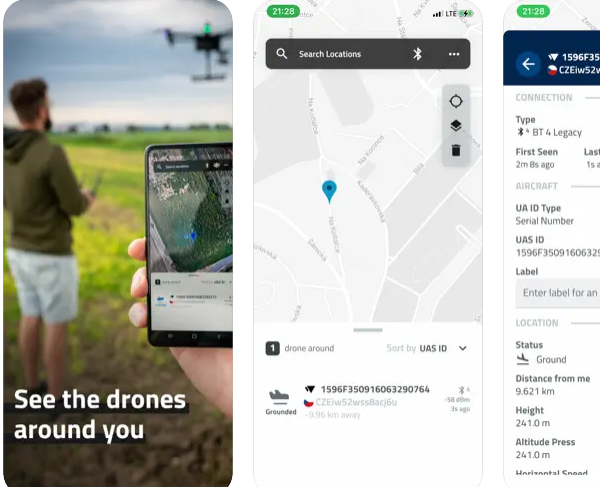
The limitation is just as important: Remote ID is not a radar. It will not detect every airborne object. It will not help if the aircraft is not broadcasting in a way your device receives. It is useful evidence when it works, not a complete perimeter.
Portable Remote ID receivers
A dedicated Remote ID receiver can be a better fit if you want something more consistent than opening a phone app after the drone is already gone. The same boundary applies: it is listening for Remote ID broadcasts, not independently sensing every object in the sky. For a homeowner trying to document repeated incidents, that may still be enough to justify the purchase.
Professional RF and radar detection
Professional counter-drone systems use combinations of RF detection, radar, optical sensors, and software classification. They are the right category for campuses, venues, critical infrastructure, and security teams with a budget, a response plan, and a legal review. For an ordinary home, they are usually disproportionate unless the risk is unusual and documented.
A practical homeowner approach is simpler: record the time and direction of the sighting, try a Remote ID scanner or receiver if this is recurring, keep ordinary camera footage if it captures the event, and avoid buying equipment that claims consumer 5G drone detection without naming the carrier service that powers it.
The buying rule for 2026
Do not buy anything marketed as consumer 5G drone detection for home security in 2026 unless it can answer four plain questions: which carrier operates the sensing infrastructure, what subscription gives your address access to it, what drone-detection performance limits are published, and how the service distinguishes drones from birds and other small moving objects.
As of August 2026, the answer to those questions is effectively: no named consumer route. Use Remote ID tools if you need evidence today. Consider professional RF/radar help only when the risk and budget justify it. Revisit 5G or ISAC drone detection when a named carrier or public agency offers an actual consumer-facing service with published limits, not when a stadium demo gets repackaged as a porch-camera feature.
References
- Integrated sensing and communication (ISAC) — Ericsson.
- Ericsson and AT&T demonstrate 5G drone detection — Ericsson, July 10, 2026.
Known issues with this device / protocol
Spec-version history
For active regressions on this protocol, see Update Watch.
No linked Update Watch entries yet.